
The Shift from Point-Solution SaaS to Multi-Agent AI Architectures
Multi-agent AI architecture replaces per-seat process-mediation SaaS with execution layers that share one context store, validate every tool call and route work to the cheapest capable model. Here is what it cost us to build one.
By Founders360 Team
The $2 trillion software sell-off proves that per-seat, process-mediation SaaS is dead. Enterprise value has shifted entirely from user interfaces to autonomous execution layers. You can see the same verdict without a stock chart: seat-based renewals are cut at every budget review, and the first question a buyer now asks a vendor is what the software does on its own when nobody is logged in. Multi-agent AI architecture is the answer to that question. We chose it for Founders360, fifteen agents on one founder memory, and this piece is what that choice cost us to learn.
Why per-seat process mediation lost to execution
Per-seat SaaS charged for access to a form that a human filled in. That priced value by headcount, so every efficiency gain a customer made cut the vendor's revenue, and every integration between two point solutions was a manual export owned by nobody.
An execution layer prices outcomes. Three consequences follow:
- Interfaces stop being the moat. Accumulated, structured context about the customer is not.
- Integration cost moves inside the platform. Agents that share one store need no connector between them.
- Failure visibility becomes a design requirement. An agent can fail silently and still return a plausible paragraph, so observability is part of the product.
For an accelerator choosing cohort tooling, this is the difference between twelve logins per founder and one system that remembers each company between sessions. That is the case we make on our white-label portal for institutions: the demo we sell is the shared store, not the agent list.
Legacy point-solution SaaS versus agentic platforms
The table below is the comparison we run when a CTO asks whether to keep a stack or replace it.
| Dimension | Legacy point-solution SaaS | Agentic platform | |---|---|---| | Time-to-value | Weeks: onboarding, data entry, training | Minutes: the first agent output seeds the store | | Context density | Low: each tool holds its own slice | High: one per-company store read by every agent | | API overhead | One connector per pair of tools, owned by the customer | Internal tool registry, one interface, no pairwise connectors | | Execution autonomy | None: the human triggers every step | Bounded: agents run tool loops under caps and policy | | Integration cost | Grows with the square of the tool count | Flat: a new agent reads the same store | | Failure visibility | Binary: the form submitted or it did not | Must be built: every call logged, every extraction stamped with its outcome |
The row that matters most is context density.
Context window bloating is the failure mode of naive multi-agent design
Context windows are finite, attention degrades on long inputs, and the cost of every call scales with the tokens you send.
Our answer is a structured store we call Shared Context. Every agent output passes through an extractor that writes typed facts (a TAM figure, a competitor name, a legal entity type) into a per-organization table, each with a source agent, an importance score and a timestamp. The next agent invoke receives no transcripts, only a ranked block of at most ten facts, chosen by importance with time decay applied, so a strong fact from March cannot crowd out a fresh one forever. In production, roughly two thirds of all facts were written by the Market Researcher, and the Funding Finder reads them onto the market-size slide without being told.
[IMAGE: Architecture diagram of the invoke pipeline: a founder prompt enters, company profile and ranked Shared Context facts are injected, the request is routed to a reasoning model with a fallback ladder, and the output passes to a background extractor that writes typed facts back into the per-organization store read by every other agent | Alt: Diagram of a multi-agent pipeline where fifteen agents read from and write to one per-company Shared Context store]
The lesson came from our HR agent. Its write-back was broken for the entire life of the feature by one wrong dictionary key: hr where every caller sent hr-agent. A key that matches nothing does not raise, log or fail a request, so the allowlist read like coverage while nothing was written. We now have a test that asserts every key is an id the system actually dispatches, and a health command that reports attempted-versus-produced per agent. If you are building an AI co-founder that writes to memory, build that report first.
Latency overhead and schema validation at the tool boundary
Every tool call is a round trip, and a reasoning model that calls four tools serially has quadrupled the latency of a chat response. The mitigations we use, ordered by how much they saved:
- Cap the loop. Tool-selection turns request a small output budget, and the loop stops when the cap is spent or the same tool with the same arguments errors twice.
- Validate at the boundary, not in the prompt. Every tool has a JSON Schema in one registry. Arguments the model emits are validated before execution, and a typed result model (Pydantic or its equivalent) means a malformed return never reaches the next turn as free text.
- Treat provider errors as definitive. A 400, 403 or 404 is never re-sent to a fallback model, and the ladder never sends the same prompt to the same model twice.
- Test the second turn. Our public lead chatbot captured zero leads for seven weeks because every conversation that called a tool failed on the next turn: we sent the tool result back on a role the API does not accept, and pricing questions always called a tool. The highest-intent question a visitor asks was the broken path the whole time.
[IMAGE: State-machine diagram of one agent invoke: Prompt Received, Context Injected, Model Call, Tool Call Requested, Schema Validation with pass or reject branches, Tool Executed, Result Appended, loop back to Model Call until Cap Reached or Final Answer, then Extract and Stamp Outcome | Alt: State machine showing the tool-calling loop of a single agent invoke with schema validation and a call cap]
Hybrid model routing: cheap extractors, expensive reasoning
Route each job to the cheapest model that can do it, and write the test that asserts the call count. That is the whole rule, and it is the one that keeps a multi-agent platform solvent.
Classification and extraction are structured, short and repetitive. Teams with a self-hosted footprint run local micro-models through Ollama for exactly these jobs: a small model that tags an intent or pulls five fields from a paragraph costs nothing per call and never leaves the machine. Reasoning, planning and long-form drafting go to a cloud model with a real context window.
We run the same split on a hosted stack. Every agent conversation goes to a fast reasoning model with a tripwire on output size, because that model degenerates roughly one call in three on very heavy prompts, and a fallback ladder moves the call to a second model when it does. Background extractors that write facts into Shared Context run on the cheapest model in the ladder with a length guard, so a long answer never becomes an expensive extraction. Deterministic prompts go through a result cache. An organization with no explicit budget gets a daily floor of five hundred tool calls rather than unlimited. Our guide to controlling LLM costs in a startup covers the numbers.
Human-in-the-loop governance is an architecture decision, not a policy
Autonomy stops where an action leaves your system. The moment the next step is an email to a real person or a public post, a human or a hard guard must sit in the path.
Our daily social calendar shows the shape. The drafting code has no way to post. A separate publisher can post an approved row behind four guards: a kill switch that defaults to off, a daily cap per platform, an idempotency key (the platform's own returned post id, so a retry cannot double-post) and a heartbeat row per run. A reviewer model scores every draft out of 100 and only 90 or more skips the human tap.
The lesson that cost us came from the outbound email program, which runs on a separate cron service with its own environment variables. We set the "require human approval" flag on the API service instead. It looked like it worked, and the cron sent a cold email to a program director who was supposed to be reviewed first. A kill switch must live on the process that acts, and you verify by reading it back from there.
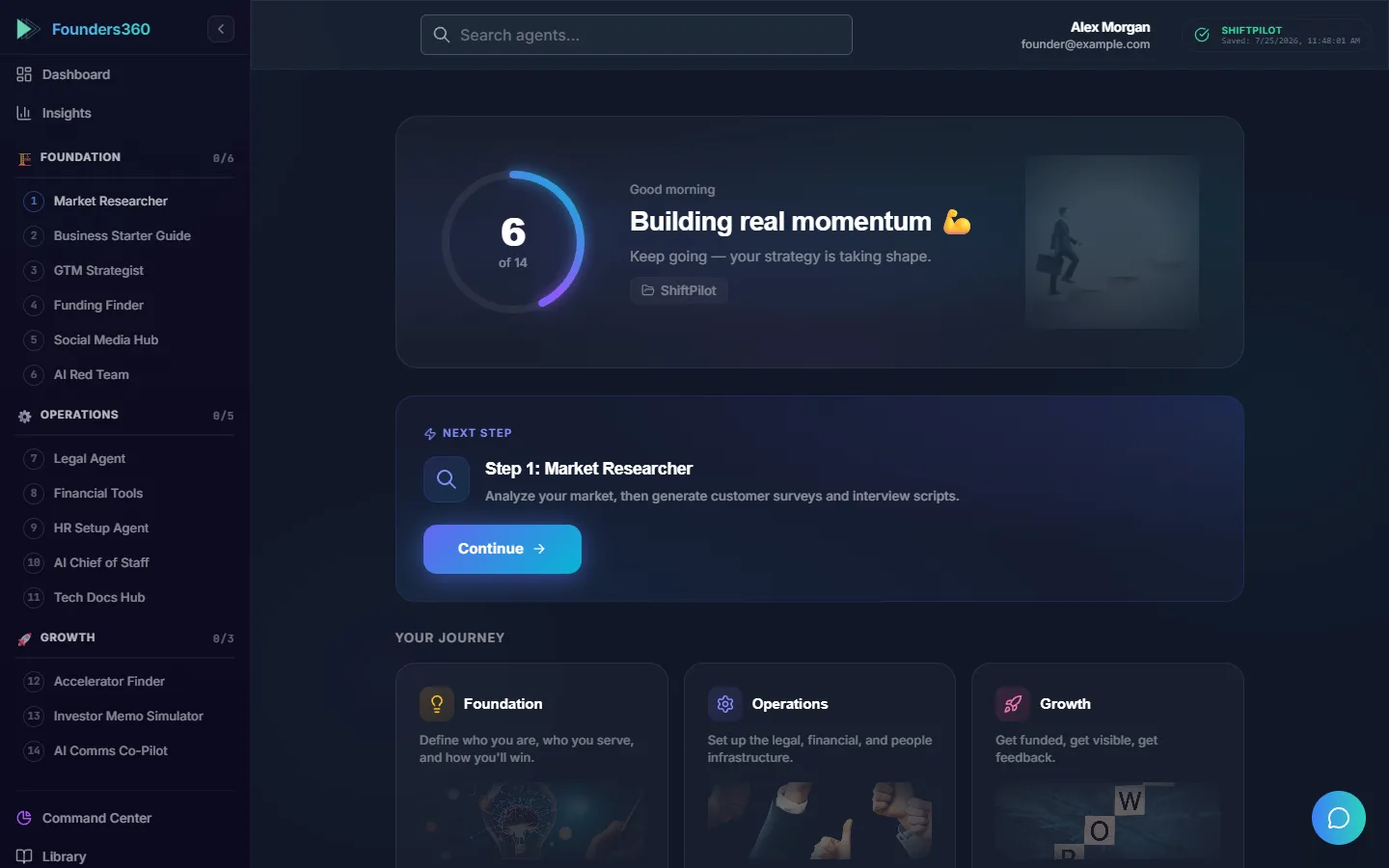
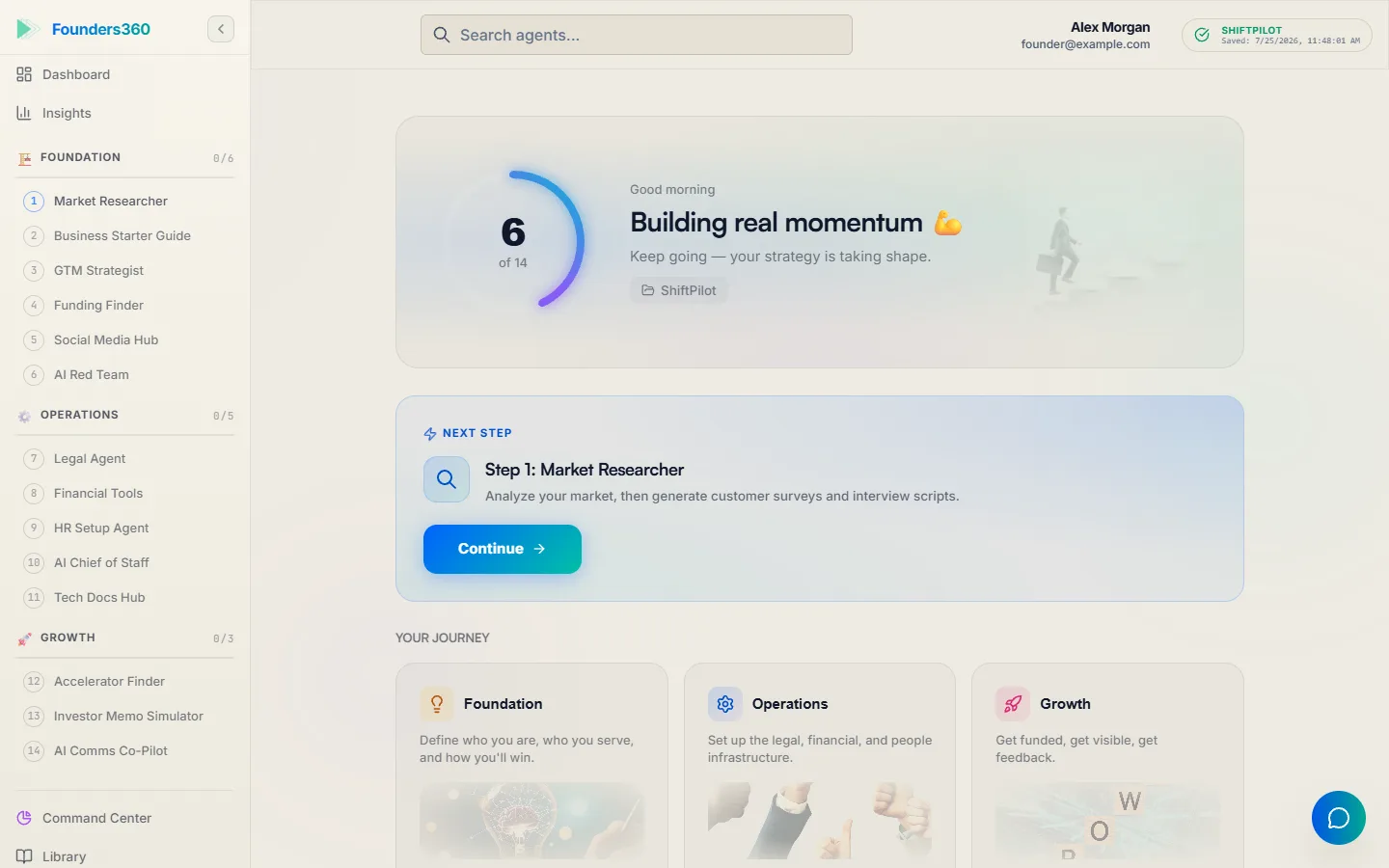
[IMAGE: Execution-control dashboard mockup with a kill-switch toggle per autonomous job, a count of today's actions against each daily cap, the last heartbeat timestamp per scheduled job, and a queue of drafts awaiting human approval with their reviewer score | Alt: Mockup of an execution-control dashboard showing kill switches, daily caps, heartbeats and a human-approval queue]
A one-week framework for auditing a legacy application stack
Run this in five working days.
- Inventory every tool and its seat count. List what each one stores that no other tool can read.
- Map the manual handoffs. Every export, copy-paste or re-keyed field between two tools is an integration you pay for in hours.
- Classify each workflow as mediated or executed. Mediated means a human triggers every step; executed means the system completes the task on a schedule or an event.
- Grade failure visibility. For each executed workflow, ask whether a silent failure would be detected within a day.
- Design the store before the agents. Decide what typed facts the system must remember, who writes them and how they decay.
- Split the model budget. Route classification and extraction to a micro-model, local or cheapest cloud tier, and reserve the reasoning model for planning.
- Place the human gate. Draw the line where an action leaves the system, put a kill switch on the process that acts, and read it back from there.
Score candidate platforms against that list, not feature counts; our review of startup operating systems applies the same scorecard.
Frequently Asked Questions
What is a multi-agent AI architecture?
A system in which several specialized agents, each with its own prompt, tools and model routing, operate on one shared state store instead of isolated conversations.
Why does a larger context window not solve the memory problem?
A larger window still costs tokens on every call, degrades attention on long inputs and cannot grow with a customer indefinitely. A ranked, decayed store of typed facts injects only what the next task needs.
Where should schema validation live in an agent loop?
At the tool boundary. Validate the model's arguments against a JSON Schema before execution and type the result before it is appended, so a malformed call fails locally instead of poisoning the next turn.
When should a local micro-model replace a cloud LLM?
For classification, extraction and tagging: short, structured, high-volume jobs where a small model is accurate enough and cost or data residency matters. Keep planning and long-form reasoning on the larger model.
How much autonomy should an agent have before a human approves?
Full autonomy inside the system under caps and policy; none for actions that leave it, such as sending email or posting publicly, unless a scored review, a kill switch, a daily cap and an idempotency key all sit in the path.
Tags
Related Articles
Human-in-the-Loop AI Governance for Startups: Where Autonomy Should Stop
Human-in-the-loop AI governance means deciding, action by action, what an AI agent may do on its own and what needs a person. Draw the line at the action, not the model, and put four guards behind every autonomous action: a kill switch that defaults to off, a daily cap, an idempotency key and a heartbeat.
8 min readAI Deep DivesWhat Is Shared Context in AI Agents? One Memory Instead of Fifteen Chatbots
Shared context in AI agents is a single per-company memory that every agent writes to and every later agent reads from, so a market size found by one agent lands on the pitch deck built by another without being retyped. It is what separates one system from fifteen chatbots.
9 min readAI Deep DivesMulti-Agent System Design: Lessons From Running Fifteen Agents on One Founder Memory
Multi-agent system design comes down to one pipeline every agent runs through, a shared store with both read and write halves wired, a fallback ladder that never repeats a prompt, and a test for every model call. Here is what running fifteen agents on one founder memory taught us.
9 min readReady to Build Smarter?
Join thousands of solopreneurs using AI agents to scale their businesses.
Get Started Free