
How to Write a Startup Positioning Statement That Survives a Sales Call
A startup positioning statement names the customer, their problem, your category, the benefit and the alternative you replace, in one or two sentences. It survives a sales call when every slot is filled from evidence a customer would recognise rather than from words the founder likes.
By Founders360 Team
A startup positioning statement names the customer, their problem, your category, the benefit and the alternative you replace, in one or two sentences. It survives a sales call when every slot is filled from evidence a customer would recognise rather than from words the founder likes. This guide gives the template, shows how to fill each slot from customer discovery, and explains how to test the result on a real prospect before it reaches your homepage.
Most positioning statements fail in the first sales call, not on paper. They read well internally and then a prospect says "so you are like the tool we already use", and the founder has no answer. The fix is to write the statement from the prospect's side of the call.
The startup positioning statement template and what each slot demands
The template has five slots: "For [customer] who [problem], [product] is a [category] that [benefit]. Unlike [alternative], it [differentiator]." Each slot has a test, and a statement that fails any one of them will fail in the call.
| Slot | Passes when | Fails when | |---|---|---| | Customer | A specific role at a specific kind of company | "Small businesses" or "teams" | | Problem | Something the customer already complains about | Something you had to explain to them | | Category | A shelf the buyer already has a budget line for | A phrase only you use | | Benefit | An outcome measured in the customer's units | A feature described in yours | | Alternative | What the customer does today, named | "Manual processes" or "legacy tools" |
Our own statement runs: for early-stage, bootstrapped or pre-seed founders overwhelmed by the complexity and cost of building a company foundation, Founders360 is the AI co-pilot that provides an affordable, guided way to establish a business quickly and correctly. Unlike fragmented tools or expensive consultants, it uses specialised agents and a shared per-company memory to unify company building. Every slot in it was rewritten at least once after a call went badly, and the sections below cover what changed.
Start with the customer, not the product
Write the customer slot first and write it narrowly: a role, a company type and a stage. "Operations managers at independent restaurants with two to five locations" is a customer. "SMBs" is a spreadsheet column. A narrow customer makes every later slot easier, because the problem, the alternative and the benefit are all specific to that person, and a prospect who matches the description feels seen in the first sentence.
Founders resist narrowing because it feels like giving up market. It is not. The statement describes who you sell to first, not who you can ever sell to, and one that includes everyone describes nobody a salesperson can find. The customer slot should come out of discovery interviews rather than a whiteboard, and our guide to repeatable customer discovery for technical founders covers how to run enough of them to know which role actually feels the problem.
The problem slot follows the same rule. Use the words the customer used in the interview, not a cleaner version of them. If three restaurant managers said "I rebuild the rota every Sunday night", the problem slot says rota and Sunday, not "inefficient workforce scheduling".
Name the alternative the customer uses today
Fill the alternative slot with the specific thing a prospect would name if you asked "what do you use for this now?", because that is the comparison they will make in the call whether you name it or not. Usually it is a spreadsheet, a feature inside a larger product they already pay for, an agency, or a person. Rarely is it a competitor startup, and a statement that positions against another startup nobody has heard of has skipped the real fight.
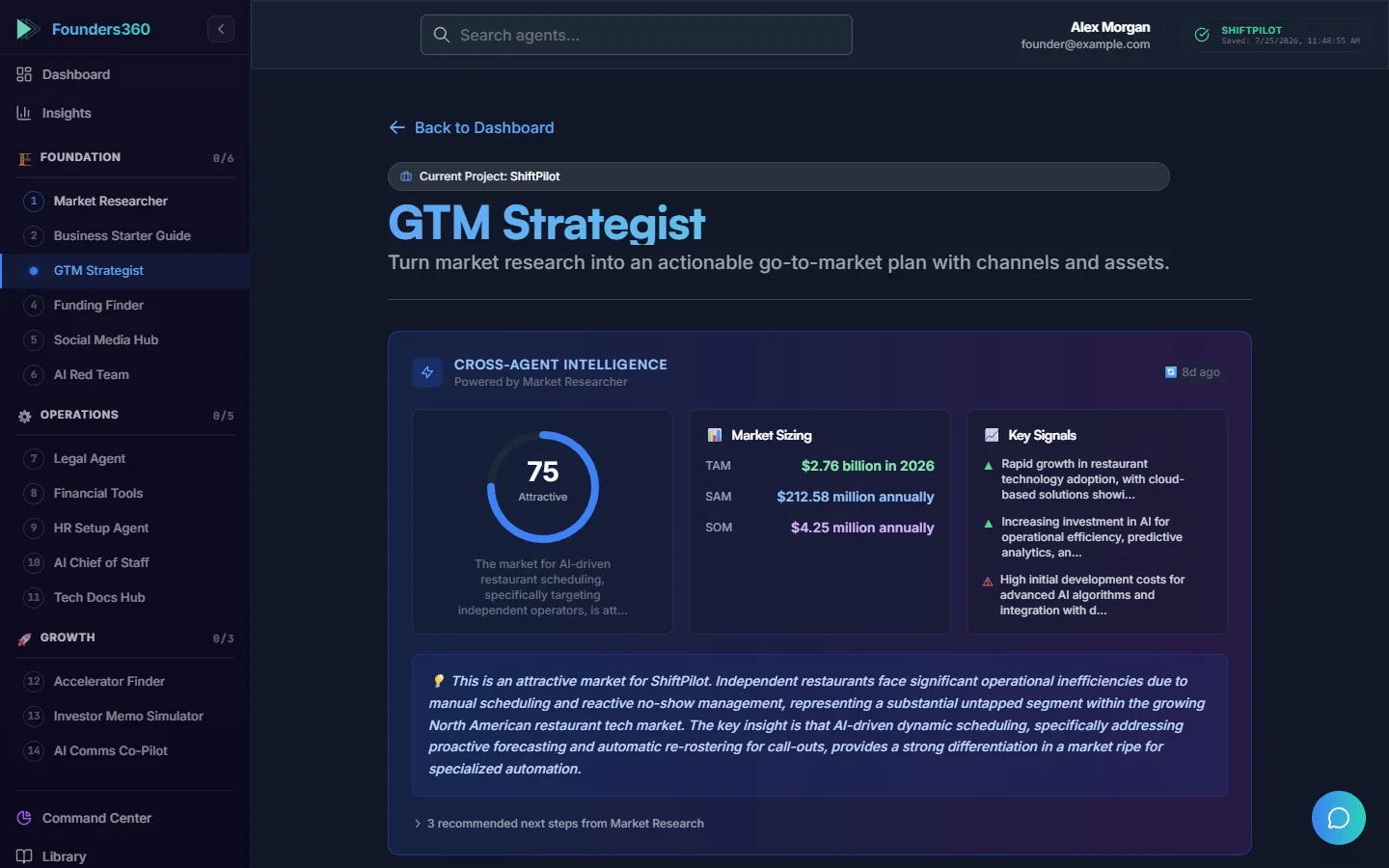
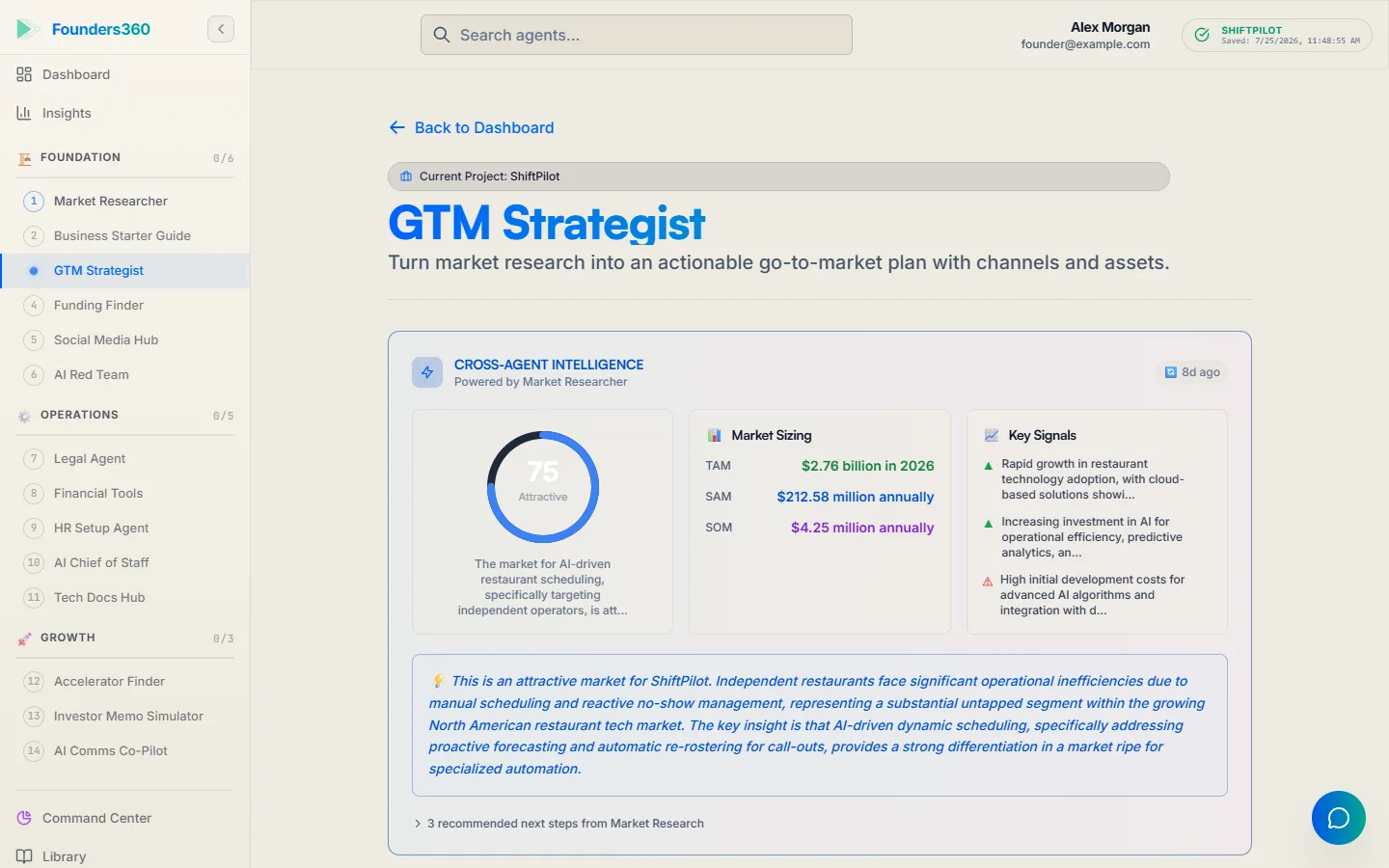
The incumbent feature is the dangerous one, and it is the one most first drafts ignore. On our fictional test company, ShiftPilot (an AI scheduling idea for restaurants; it does not exist), the AI Red Team's first question named a real incumbent and asked what stops customers clicking that incumbent's auto-fill button. That is what a prospect asks too, in gentler words: "our point-of-sale system has something like this, why would we add another tool?" A positioning statement that cannot answer it in one sentence is not finished. We wrote about why an argumentative reviewer is worth having in why your AI co-founder should argue with you.
The honest answer is usually a constraint on the alternative: the point-of-sale feature does not know about staff availability, the agency takes a week, the spreadsheet breaks when a second manager edits it. Name the constraint, and the differentiator slot writes itself.
Pick a category the buyer already budgets for, or create one on purpose
Choose a category the buyer already has a budget line for, unless you have decided deliberately to create a new one and can afford the education cost. A category is a shelf in the buyer's head. If they have a shelf marked "scheduling software", placing yourself on it means they know roughly what you cost, who else is on it and who approves the purchase. Inventing a category means you carry all three explanations yourself, on every call, for years.
There is a case for creating one. We chose to position Founders360 as an AI co-pilot for founders rather than as another business-plan tool, because on the existing shelf we would have been compared feature by feature with point solutions, and the thing that matters most about the product, one memory shared across fifteen agents, does not show up in a feature grid. That choice cost us a longer explanation on every first call, and we made it knowing that. If you make the same choice, make it for a reason you can say out loud, not because "AI-powered platform" sounded bigger. A quick test: say the category to someone outside the company and ask what they think you cost. If they cannot guess within an order of magnitude, the category is not doing its job.
The differentiator must be something a prospect can check
Write a differentiator the prospect can verify in the call or in a trial, not one they have to take on faith. "Faster", "smarter" and "AI-powered" are claims every competitor also makes and no prospect can check. "Reads the availability your staff already entered and builds the rota from it" is a claim the prospect can test in a fifteen-minute trial.
The claim we lead with is Shared Context, and we lead with it because it is checkable. A founder runs the Market Researcher, it sizes the market and writes the total addressable, serviceable and obtainable figures into the company's shared memory. They then run the Funding Finder, and the market slide of the deck carries those exact numbers without anyone re-entering them. That is a fact a reader can verify in their first session, which is why we describe what an agent writes into Shared Context rather than adjectives about the agents. Roughly two thirds of all Shared Context facts in production were written by the Market Researcher.
Apply the same standard to your own slot: if the differentiator cannot be demonstrated in the first session, either find one that can or change what the first session shows.
Test the positioning statement in a real sales call
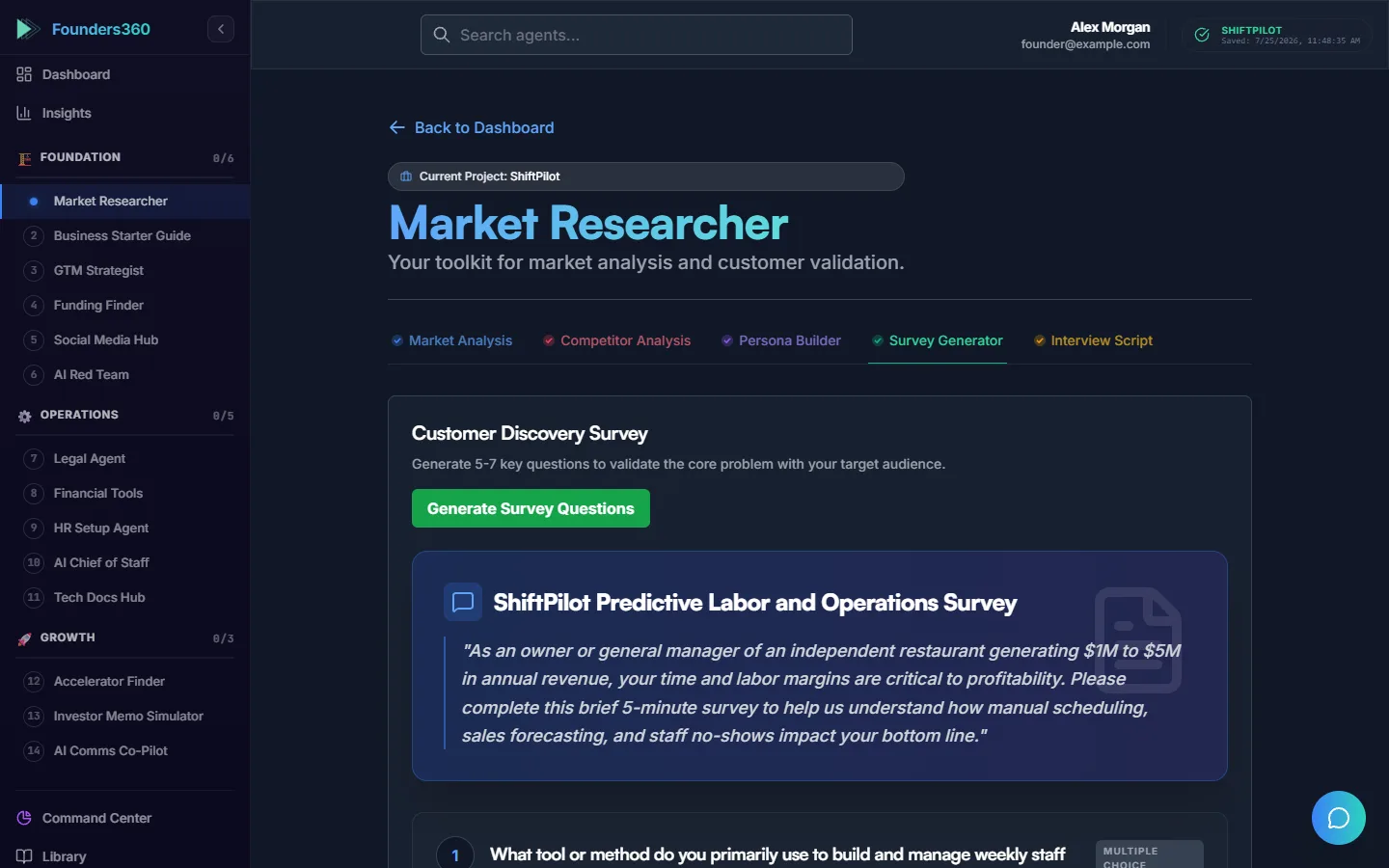
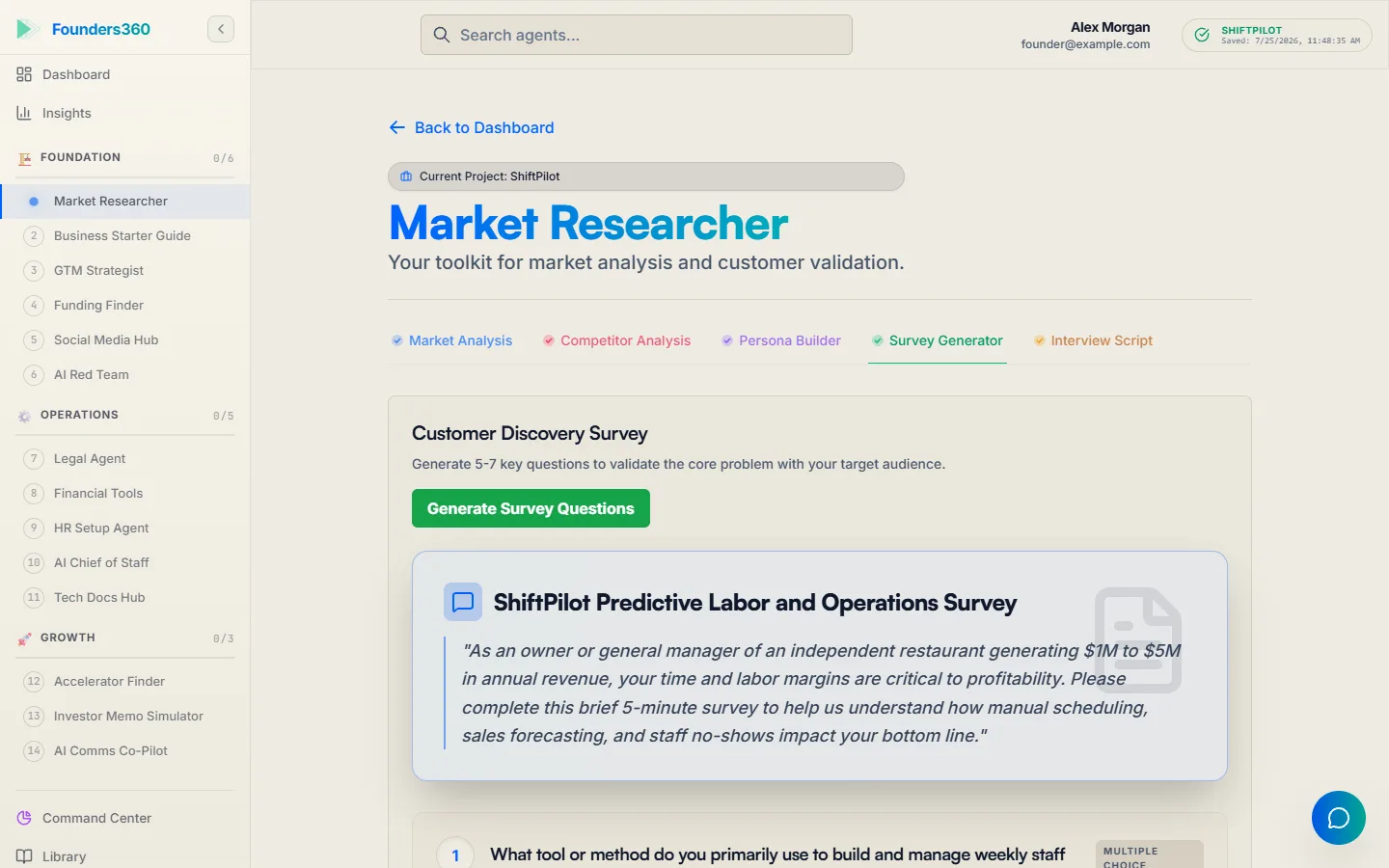
Test the statement by opening three real calls with it, word for word, and watching for three signals. The first is the paraphrase: ask the prospect to say back what you do, and if their version drops the differentiator, the differentiator is not landing. The second is the comparison: if they name an alternative you did not, your alternative slot is wrong. The third is the price reaction: if their guess at your price is far from yours, the category slot is placing you on the wrong shelf.
In Founders360, the GTM Strategist agent drafts the positioning statement from the customer segments, the problem quotes and the competitive facts already in Shared Context, and writes the chosen positioning back into that memory. That matters because positioning has to stay consistent everywhere it appears. The Comms Co-Pilot reads the same stored positioning when it drafts outreach, so a cold email and the homepage describe the company in the same nouns rather than drifting apart as each is edited separately. Our guide to a go-to-market strategy generator covers what else the GTM Strategist builds on top of the statement, and how to find your first ten customers for a B2B startup covers the calls themselves.
Expect to rewrite the statement after the third call. That is the process working, not failing. A positioning statement that has never changed has never been tested.
Common positioning statement mistakes at pre-launch
Each of these shows up in most first drafts, and each is cheap to fix once named.
- A customer slot that is a market, not a person. "Restaurants" is a market. "The manager who writes the rota" is a person who will take your call.
- A problem the customer has never mentioned. If nobody said it in discovery, it is your problem, not theirs.
- Positioning against a startup instead of the status quo. The prospect has never heard of your competitor. They have heard of their spreadsheet.
- A differentiator made of adjectives. Replace every "smarter" with the specific thing the product does that the alternative cannot.
- Three statements for three audiences before you have one that works for one. Get one customer segment to paraphrase it correctly, then expand.
What to do this week
Write the statement using the template, fill the customer and problem slots only from interview notes, and name the real alternative even if it is a spreadsheet. Then open three calls with it this week and record the paraphrase, the comparison and the price guess from each. Rewrite the slot that failed most often and use the new version on next week's calls. If you have not run discovery yet, our guide to validating a startup idea with AI covers the interviews the statement needs first.
Frequently Asked Questions
What is a startup positioning statement?
A one- or two-sentence internal statement that names the customer, their problem, your product category, the benefit and the alternative you replace. It is not a tagline and not marketing copy; it is the source every piece of copy is written from, so the homepage, the deck and the cold email describe the company the same way.
How long should a positioning statement be?
One or two sentences, under fifty words. If it runs longer, a slot is carrying two ideas, and the fix is to narrow the customer or the benefit rather than to add words.
What is the difference between a positioning statement and a value proposition?
The positioning statement is internal and includes the alternative you replace; the value proposition is the customer-facing promise derived from it. Write the positioning statement first, because the value proposition is the benefit slot rewritten for a headline.
How do I know if my positioning statement is working?
Prospects paraphrase it back correctly, name the same alternative you named, and guess a price close to yours. If any of those three fail in a real call, the corresponding slot needs rewriting.
Should I have different positioning for different customer segments?
Not until one segment paraphrases the statement correctly and buys. A second statement for a second segment is earned by the first one working, and writing three at once usually means none of them has been tested.
Tags
Related Articles
Co-Founder Agreement and Vesting: What First-Time Founders Must Put in Writing
A co-founder agreement with a vesting schedule is the document that decides who owns what when a founder leaves. Sign it before the first line of code, the first customer, or the first cheque, because every one of those makes the conversation harder.
8 min readGuidesUnit Economics for Early-Stage Startups: CAC, LTV and Payback Before You Have Revenue
Unit economics for an early-stage startup are three numbers per customer: what one costs to acquire, what one is worth over their life, and how many months until the first pays back the second. Before revenue you build them from stated assumptions, label them as such, and replace each one with a measurement as soon as you have it.
9 min readGuidesTechnical Documentation for Startups: What to Write Before You Hire Your First Engineer
Technical documentation for startups is five documents written before the first engineer starts: a product requirements document, a data model, an architecture decision log, an API contract and a runbook. Everything else can wait.
8 min readReady to Build Smarter?
Join thousands of solopreneurs using AI agents to scale their businesses.
Get Started Free