
How to Find Your First 10 Customers for a B2B Startup
The first 10 customers of a B2B startup come from one narrow segment, a named list of about 50 accounts, and founder-led selling that treats every call as research. This playbook covers the list, the message, the first deals and the instrumentation.
By Founders360 Team
The first 10 customers for a B2B startup come from one narrow segment, a named list of roughly 50 accounts, and the founder selling by hand. Nothing scalable is needed yet, and building anything scalable before the tenth customer is usually a way to avoid the calls. This playbook covers the segment, the list, the outreach, the first deals and the funnel numbers.
Start with one segment and a named list of 50 accounts
Pick one segment narrow enough that you can list the companies in it by name. "Mid-market logistics" is a market. "Third-party logistics firms in Ontario with 20 to 200 staff that still dispatch drivers by phone" is a segment, and you can find 50 of them in an afternoon. The first 10 customers are almost always alike: same size, same job title, same trigger event, same reason the current tool fails.
The list is a spreadsheet with one row per account: company, the person who feels the problem, the person who signs, the trigger event you can observe (a job posting, a funding round, a tool migration, a regulatory deadline), and a column for what happened. Fifty rows is enough to find 10 customers if the segment is right.
Two tests tell you the segment is wrong before you send anything. If you cannot name the job title of the buyer, you have not found the segment. If the trigger column is empty for most rows, you have a category, not a moment, and cold outreach into a category is where B2B founders burn the first three months.
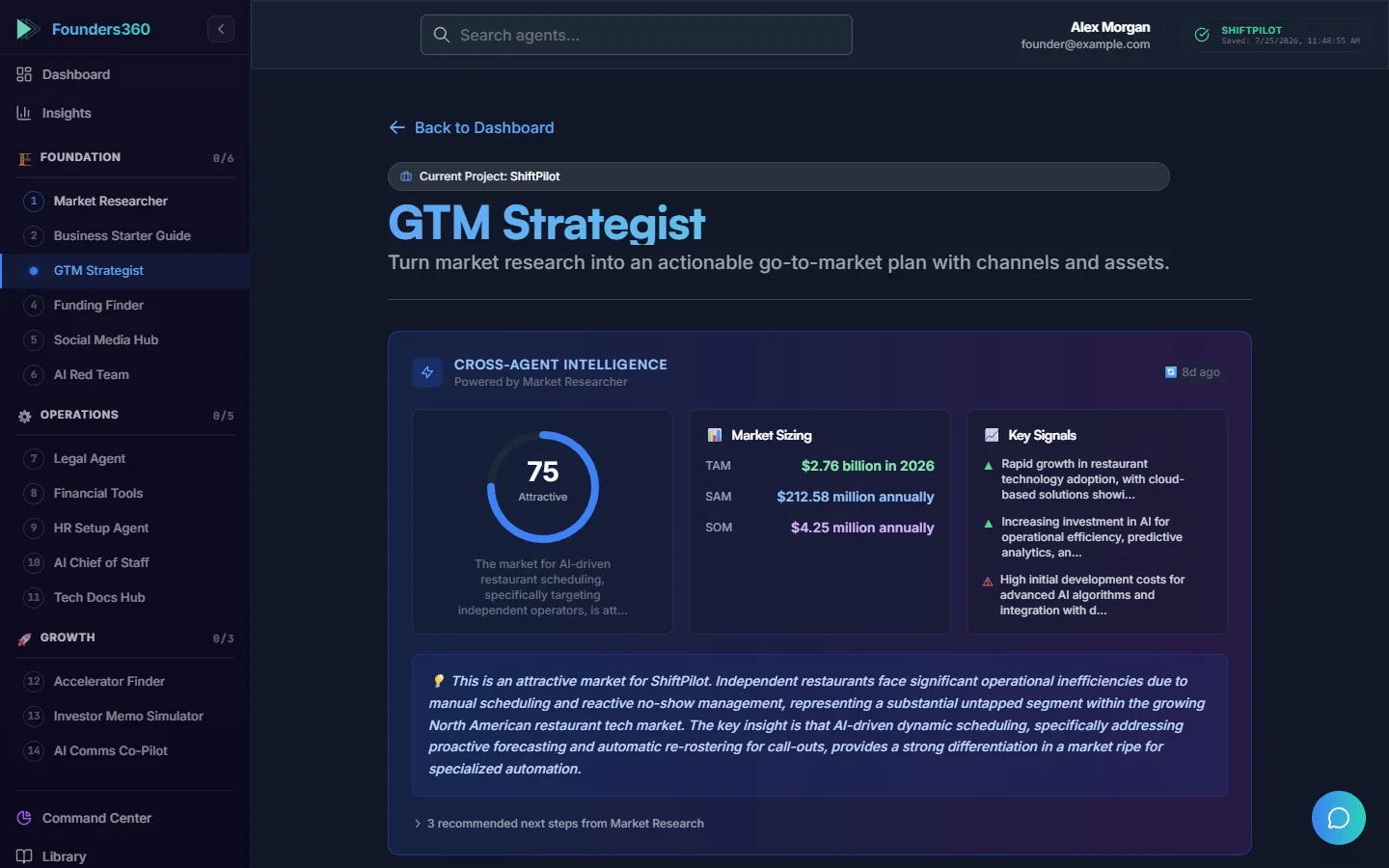
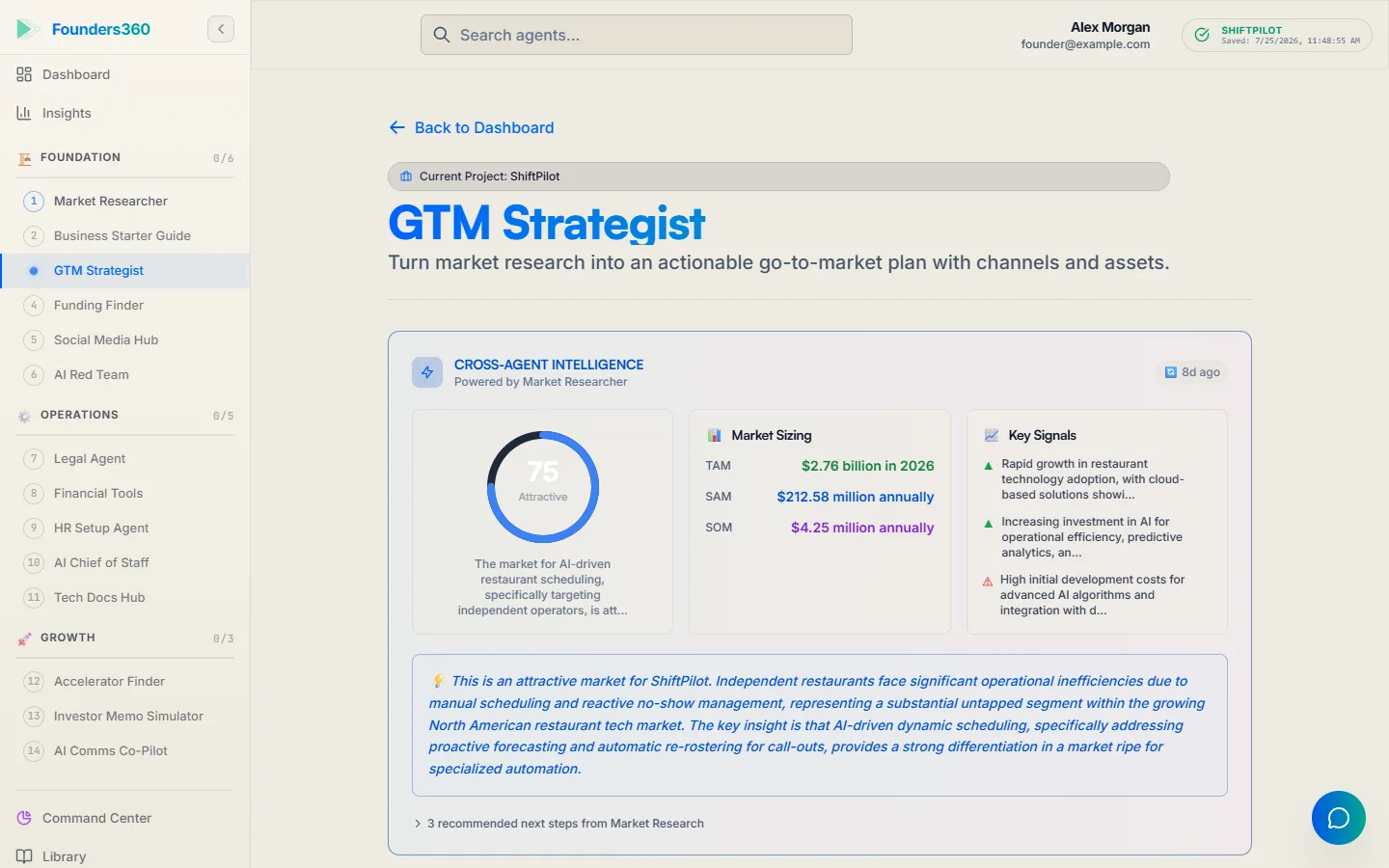
The Founders360 GTM Strategist starts from this framing. It reads the customer profile the Market Researcher already wrote into Shared Context, proposes a beachhead segment with the buyer title and trigger, and writes the ideal customer profile back so the Comms Co-Pilot drafts outreach against the same definition. For the interviews behind the segment choice, our guide to repeatable customer discovery for technical founders covers the script.
Where the first 10 B2B customers actually come from
The first 10 come from three sources, in this order: people who already know you, people the first customers introduce, and cold outreach to the named list. The warm conversations close faster, teach you more per hour, and give you the reference that makes cold outreach land.
Source one is your own network, widened one step. List every former colleague, classmate and community you belong to, and ask one question: who do you know who has this exact problem? You are asking for a name, not a purchase.
Source two is the customers themselves. Every closed deal should end with the same request: which two peers should hear about this? Peers in a narrow segment know each other, so an introduction from customer three is how you reach customers five and six.
Source three is the named list, worked by hand. Cold outreach to 50 accounts is a reasonable way to find the last four or five of the first 10. It is a poor way to find the first two, because you have no proof, no reference and no language yet.
Write the outreach message around the problem, not the product
A first-customer outreach message names the trigger, states the problem in the buyer's words, and asks for 20 minutes. It does not describe the product, list features or mention AI. Four or five sentences is the ceiling.
A workable structure, illustrative rather than a template to copy:
- The trigger you observed ("You posted for a second dispatcher last month").
- The problem as a peer would say it ("Most 3PLs at that size still confirm loads by phone and lose two hours a day to it").
- What you have seen work, in one sentence, with a number only if you have one.
- The ask: 20 minutes, and you will show what you have and ask what they would change.
The language for step two comes from customer discovery. If you do not yet have the phrase a buyer uses for the problem, you are not ready to send outreach. The positioning statement guide covers how to compress that language into one sentence that survives a sales call. Follow up three times over two weeks, each message adding one new piece of information rather than repeating the ask, and log every send.
Sell the first 10 by hand and treat every call as research
Every one of the first 10 deals should be closed by a founder, on a call, with no self-serve path in the way. A pricing page, a free trial and an automated onboarding flow all remove the founder from the conversation, and the conversation is the product at this stage.
Run each call the same way. Ten minutes on their current process, in their words, before you show anything. Five minutes on what it costs them. Then the demo, scoped to the one thing they described. End with a direct question: if this worked as shown, what would stop you buying it this month? The answers are your objection list, and the objection list is the roadmap. Write the notes into one shared place the same day; Founders360 users keep this in Shared Context, where the Chief of Staff and the GTM Strategist read the same objection log.
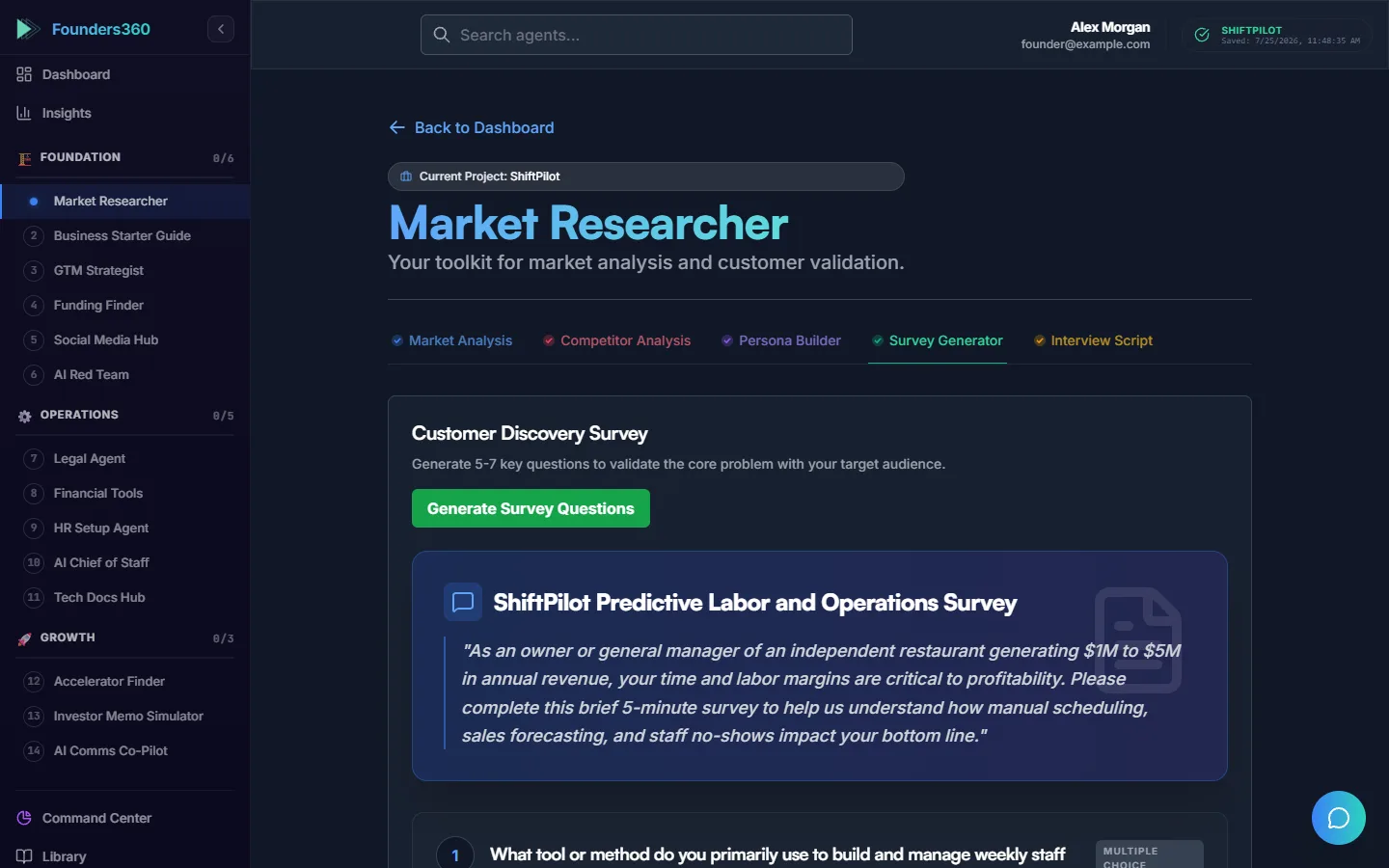
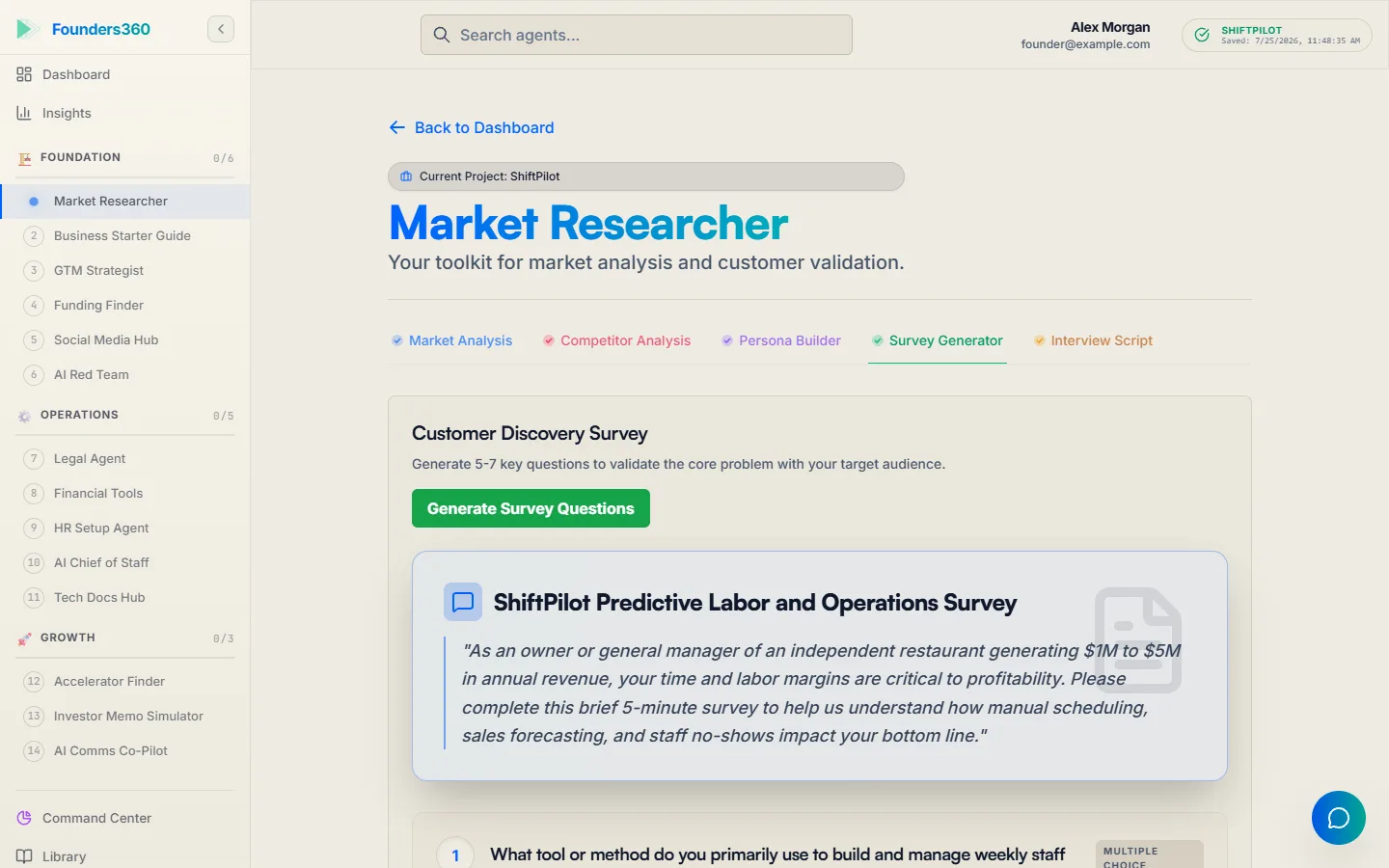
The Market Researcher shortens the preparation. Given a segment, it writes the competitive landscape and buyer profile into Shared Context before call one. On a fictional test company we use internally (ShiftPilot, an AI scheduling idea for restaurants), the AI Red Team's first question named a real incumbent and asked what stops customers clicking that incumbent's auto-fill button. That is the question a buyer will ask on call one, and it is better to hear it from software first.
Price the first deals so a yes is easy and a renewal is honest
Charge from the first customer, keep the number small enough that the buyer can approve it alone, and put a date on it. A paid pilot under the buyer's personal sign-off limit removes procurement from the first deal and still produces a real signal.
Three structures work for the first 10: a monthly subscription at a founder price with the right to raise it at renewal written into the order form; a fixed-price 90-day pilot with a stated success metric and a pre-agreed annual price if the metric is met; or a discounted annual deal for a customer who will act as a reference.
Do not sell lifetime deals, and do not accept "we will pay when it works" without a definition of works and a date. Our guide to pricing a first SaaS product with no customers walks through setting the list price before the first call. The Financial Tools agent then writes the price and deal structure into the model, so the runway figure the Chief of Staff reports each week reflects what customers actually pay.
Instrument the funnel before you trust any number from it
Count every stage by hand from day one: messages sent, replies, calls booked, calls held, proposals, closed. Six numbers, updated weekly, are the whole reporting system for the first 10 customers. Without them, a quiet fortnight is indistinguishable from a broken channel.
We learned this on our own funnel. Our public lead chatbot captured zero leads for seven weeks after launch. The cause was not disinterest. Every conversation that called a tool failed on the very next turn, because we sent the tool result back to the model on a role its API does not accept, and pricing questions always called a tool. Two lessons: test the second step of any flow, not just the first, and re-baseline before drawing a conclusion from a number, because those seven weeks were measuring the bug, not the funnel.
When the six numbers exist, the diagnosis is mechanical. Low reply rate with decent volume means the message or the list. Replies but no calls means the ask. Calls but no proposals means the demo or the segment. Proposals but no closes means the price or the buyer's authority.
What to do this week
Build the list of 50 and send the first 10 messages before Friday. Pick the segment by the two tests above (can you name the buyer's title, can you see a trigger). Fill 50 rows. Write one outreach message using the four-sentence structure and send it to the 10 accounts with the freshest trigger. Set up the six-number sheet. Book two warm conversations from your own network for next week and ask each for one name.
If you want the segment, buyer profile and first outreach drafted from a single description of your company, the four free-forever Founders360 agents cover that step at no cost, and the pricing page lists what the paid tiers add. For the 90-day version of this plan, read our go-to-market plan for a pre-seed startup.
Frequently Asked Questions
How long should it take a B2B startup to get its first 10 customers?
Between two and six months is typical for a founder selling by hand into a well-chosen segment, and it depends more on deal size and buyer availability than on the product.
Should the first 10 customers be free pilots?
No. Charge from the first customer, even if the amount is small. A paying customer complains, renews and refers; a free one does none of those, so a free pilot produces no signal about whether the product is worth money.
Is cold email a good way to find the first customers for a B2B startup?
It works for the later customers among the first 10, once you have a reference, the buyer's own language for the problem and a message that names a trigger. It is a poor way to find the first two. Start with warm introductions, then customer referrals, then the cold list.
What if the first customers are all different from each other?
That usually means the segment is too broad. Ten customers with different titles, sizes and reasons for buying give you 10 anecdotes and no pattern to repeat. Narrow the segment until the buyers look alike.
When should a founder stop selling by hand and hire a salesperson?
After the founder has personally closed enough deals to write down the segment, the objections and the answers that work, which is usually past 10 customers and often past 20.
Tags
Related Articles
The Weekly Operating Cadence for Early-Stage Founders
The weekly operating cadence for early-stage founders is a Monday plan with one metric and three outcomes, protected build and customer blocks from Tuesday to Thursday, a written Friday review, and a monthly layer that checks runway and runs a pre-mortem.
9 min readPlaybooksHow to Run a Startup Pre-Mortem Before You Build
A startup pre-mortem is a 90-minute session that assumes the company has already failed eighteen months from now and asks everyone to write down why. Ranked by likelihood, cost and how late you would notice, the causes become the tests you run before writing code.
9 min readPlaybooksRejected by Y Combinator? What to Do in the Next 90 Days
A Y Combinator rejection is a data point about fit on one day, not a verdict on the company. This 90-day playbook covers what the rejection does and does not tell you, how to stress-test the pitch against an adversary, how to build the traction the application lacked, and how to line up other funding.
8 min readReady to Build Smarter?
Join thousands of solopreneurs using AI agents to scale their businesses.
Get Started Free