
What a SAFE Valuation Cap Actually Costs You in Dilution
Most founders negotiate the valuation cap and ignore the discount, the option pool, and how much they raise. Here is what each one is actually worth, worked through with exact numbers from a real conversion.
By Founders360 Team
A valuation cap is the ceiling price at which a SAFE converts into equity at your next priced round. Founders spend most of their negotiating energy on that one number, and in a lot of realistic scenarios it is worth less than a single percentage point of ownership. The things that move ownership more, the discount, the option pool, and how much you raise in total, usually get argued about for a fraction of the time.
This guide works the conversion through with concrete numbers so you can see where the dilution actually comes from.
A note before the arithmetic: this is an explanation of mechanics, not legal or tax advice, and the outputs of any modelling tool including ours are drafts. Have your actual documents reviewed by a qualified lawyer before you sign.
Why founders negotiate the wrong number
The valuation cap is the most legible term in the document. It is a single large number, it feels like a verdict on the company, and it is the thing other founders ask about. So it becomes the thing people fight for.
The problem is that a cap does not set your ownership. It sets a ceiling on a conversion price, which then interacts with the discount, the size of the priced round, and the option pool. Ownership falls out of all of those together. Optimising one input in isolation and assuming the output follows is how founders end up pleased with a headline number and surprised by a cap table.
The second problem is that a high cap is not free. It sets an expectation the next round has to clear. A cap well above what your traction supports raises the bar for the priced round that follows, and a flat or down round costs far more than the ownership you saved.
How a pre-money SAFE actually converts
Strip the paperwork away and a standard pre-money SAFE converts like this.
The cap gives you a price per share: the valuation cap divided by the fully diluted share count before conversion. The discount gives you a second price: the priced round's share price, less the discount. The SAFE converts at whichever of those two prices is lower, because the investor gets the better of the two.
That single sentence is the part most founders have not internalised, and it is why the cap can turn out to be irrelevant. If the discount produces a lower price than the cap does, the cap never binds. You negotiated a ceiling that the deal never reached.
A worked example: the same round at two different caps
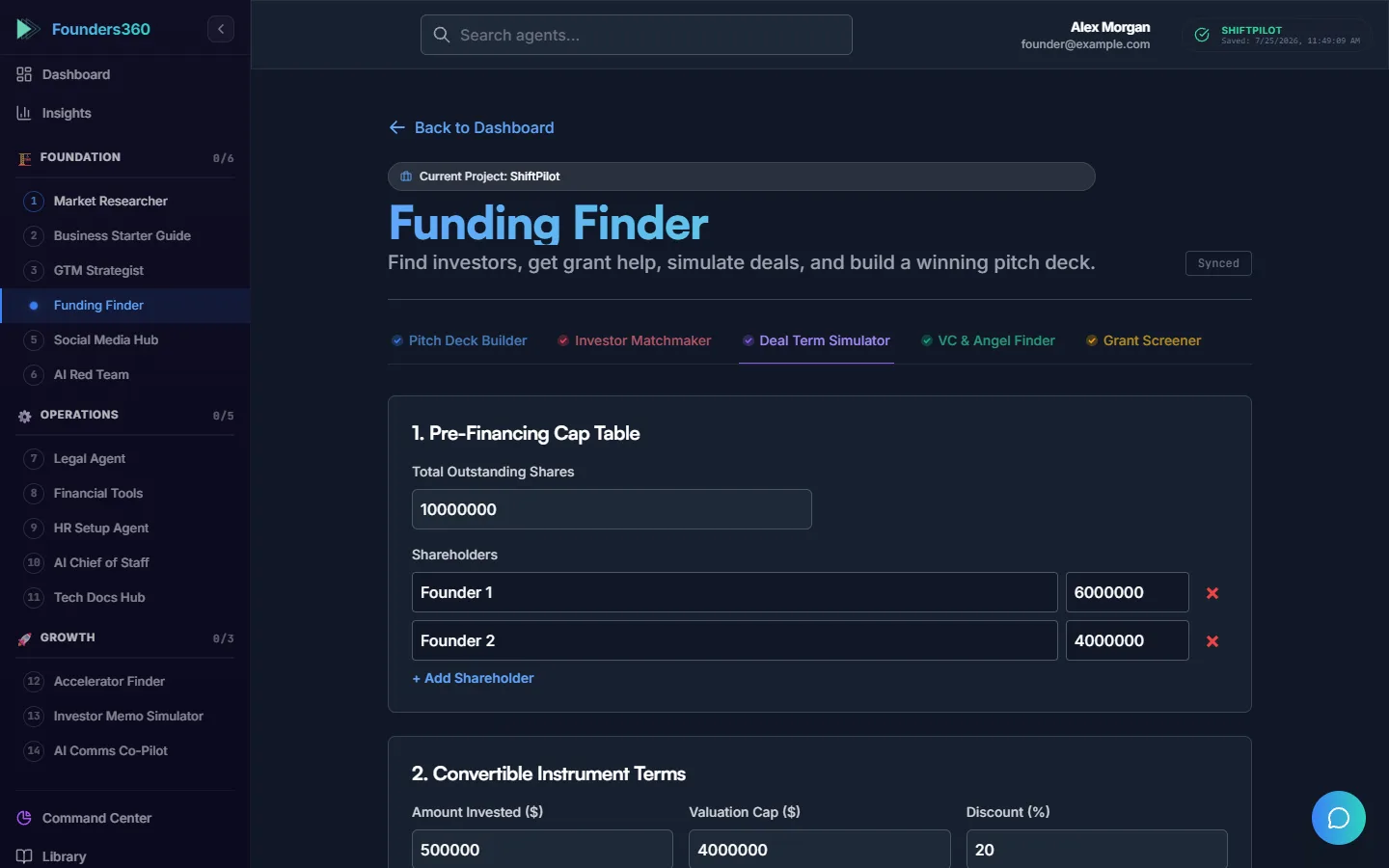
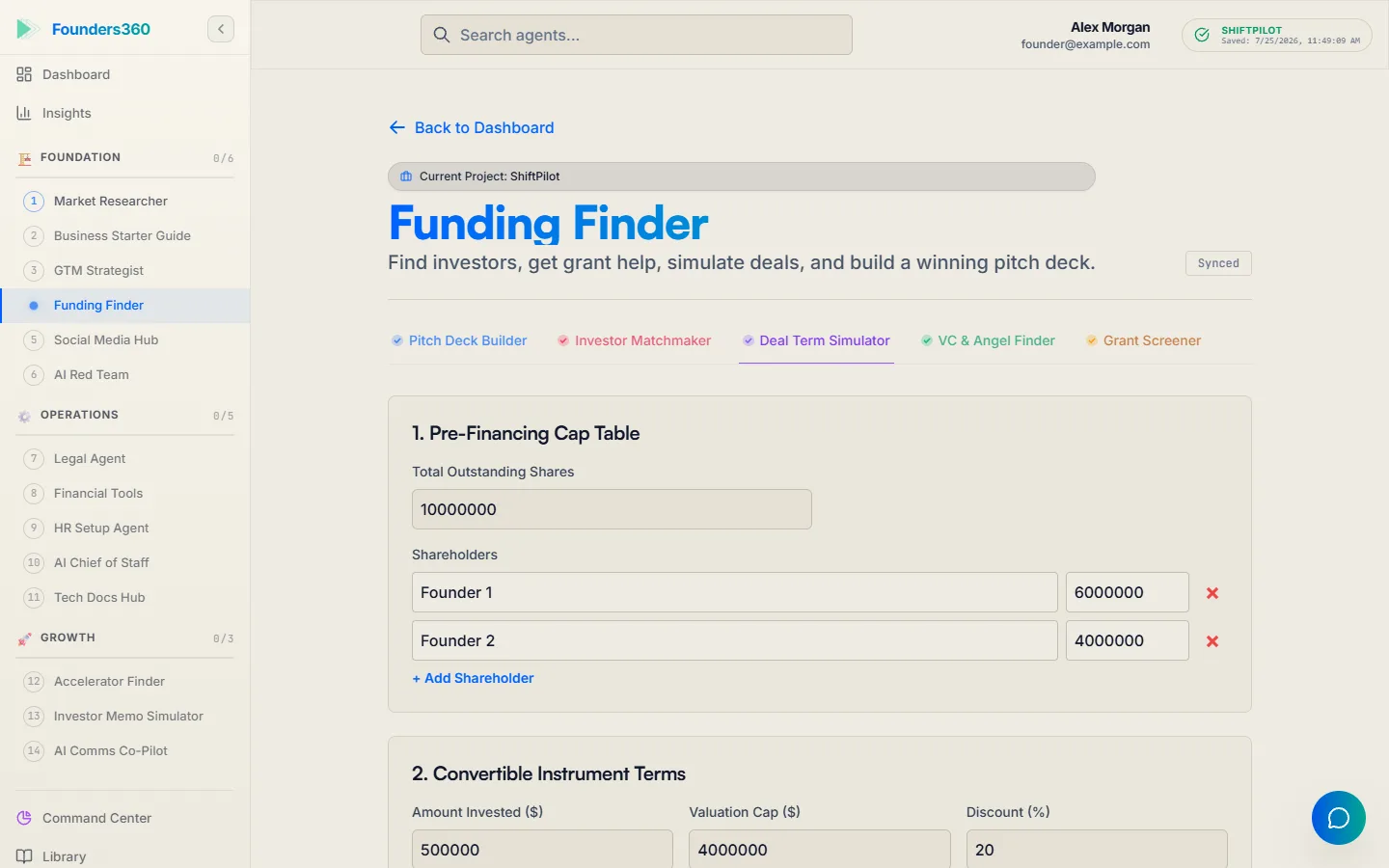
Take a company with 10,000,000 fully diluted shares before any conversion. It raises $500,000 on a SAFE with a 20% discount. Later it raises a Series A of $3,000,000 at a $12,000,000 pre-money valuation.
Run that with an $8,000,000 cap:
| Holder | Shares | Ownership | |---|---|---| | Founders | 10,000,000 | 75.29% | | SAFE investor | 625,000 | 4.71% | | Series A investor | 2,656,250 | 20.00% |
The cap price is $0.80 per share. The discount price works out to about $0.9035. The cap is lower, so the conversion price is $0.80 and the cap governs.
Now run the identical round with a $12,000,000 cap, a 50% improvement on the term the founder fought for:
| Holder | Shares | Ownership | |---|---|---| | Founders | 10,000,000 | 75.88% | | SAFE investor | 542,535 | 4.12% | | Series A investor | 2,635,634 | 20.00% |
Founder ownership moved from 75.29% to 75.88%. Raising the cap by half bought 0.59 percentage points.
Look at why. At the higher cap the cap price is $1.20, but the discount price is about $0.9216. The discount is now the lower of the two, so the SAFE converts at $0.9216 and the cap does not govern at all. Past a certain point, pushing the cap higher changes nothing, because the discount has taken over as the binding term.
Why the discount often governs, not the cap
The crossover is not exotic. It happens whenever your next round prices high enough relative to the cap, which is exactly what happens when the company does well.
This produces an outcome worth sitting with. If the company underperforms, the priced round comes in low, the discount price stays above the cap price, and the cap governs. If the company does well, the round prices high and the discount governs instead. The term you negotiated hardest matters most in the scenario where things went badly.
The practical instruction is to stop treating the cap and the discount as independent wins. Model them together against two or three realistic Series A prices, one weak, one expected, one strong. A 20% discount on a strong round can be worth more to the investor than several million dollars of cap.
The option pool is where the real dilution hides
Here is the term that moves more ownership than the cap and gets a fraction of the attention.
Investors in a priced round typically require an employee option pool, often ten to twenty percent of the post-round company, and they typically require it to be created before the round closes, out of the pre-money. That means the pool comes entirely out of existing shareholders, which is to say out of you, and it is baked into the price per share you agreed.
A pool created pre-money at ten percent dilutes founders by roughly the same order of magnitude as the entire cap negotiation in the example above, and often considerably more. It is negotiable: the size can be justified against an actual hiring plan for the next eighteen months rather than a round number, and where the pool sits relative to the money is itself a term.
If you take one thing from this article, take this: ask what the pool is, how big it is, and whether it goes in pre-money or post-money, before you spend another hour on the cap.
How much to raise: pick the number from milestones
The largest determinant of your final ownership is not any single term. It is how many times you raise and how much you raise each time.
Most pre-seed founders pick a number by copying peers. The number should instead come from a specific question: what has to be demonstrably true before the next investor will price a round, and what does it cost to get there, plus a margin for the raise itself taking longer than planned.
Two failure modes sit either side of that. Raise too little and you run out before the milestone lands, which forces a bridge on worse terms or a flat round. Raise too much against thin traction and you set an expectation the next round has to clear, which is the same trap as an inflated cap.
Working backwards from the milestone also gives you the story for the raise, because you can say what the money buys in terms an investor can check. Our guide to building financial projections with no revenue covers how to construct the underlying model, and the pre-seed data room guide covers what investors will ask to see once you are in conversation.
Check the arithmetic with something deterministic
One practical warning about modelling any of this with a general AI assistant.
Cap table conversion is exact arithmetic with a branch in the middle, and language models are unreliable at it. When we first built the deal-term simulator inside Founders360 and asked the model to compute the post-round cap table, it routinely got it wrong in ways that looked plausible: it rewrote founder share counts, dropped the Series A entirely, ignored the discount, and mixed the pre-money and post-money cap conventions. Those errors are dangerous precisely because the output reads like a confident answer.
We moved all of the cap table math into code, where it runs in exact rational arithmetic and rounds to whole shares only at the final output. The model is now only asked to narrate numbers that have already been computed. Every figure in this article was produced by that code, including the discount crossover in the second scenario, which is the kind of branch a model glosses over.
The general lesson applies whatever tool you use. If a number is going to end up in a document you sign, it should come from something deterministic and auditable, and you should be able to see the intermediate prices, not just the final table. Ask any tool to show you the cap price, the discount price, and which one governed. If it cannot, do not trust the ownership percentages it gives you.
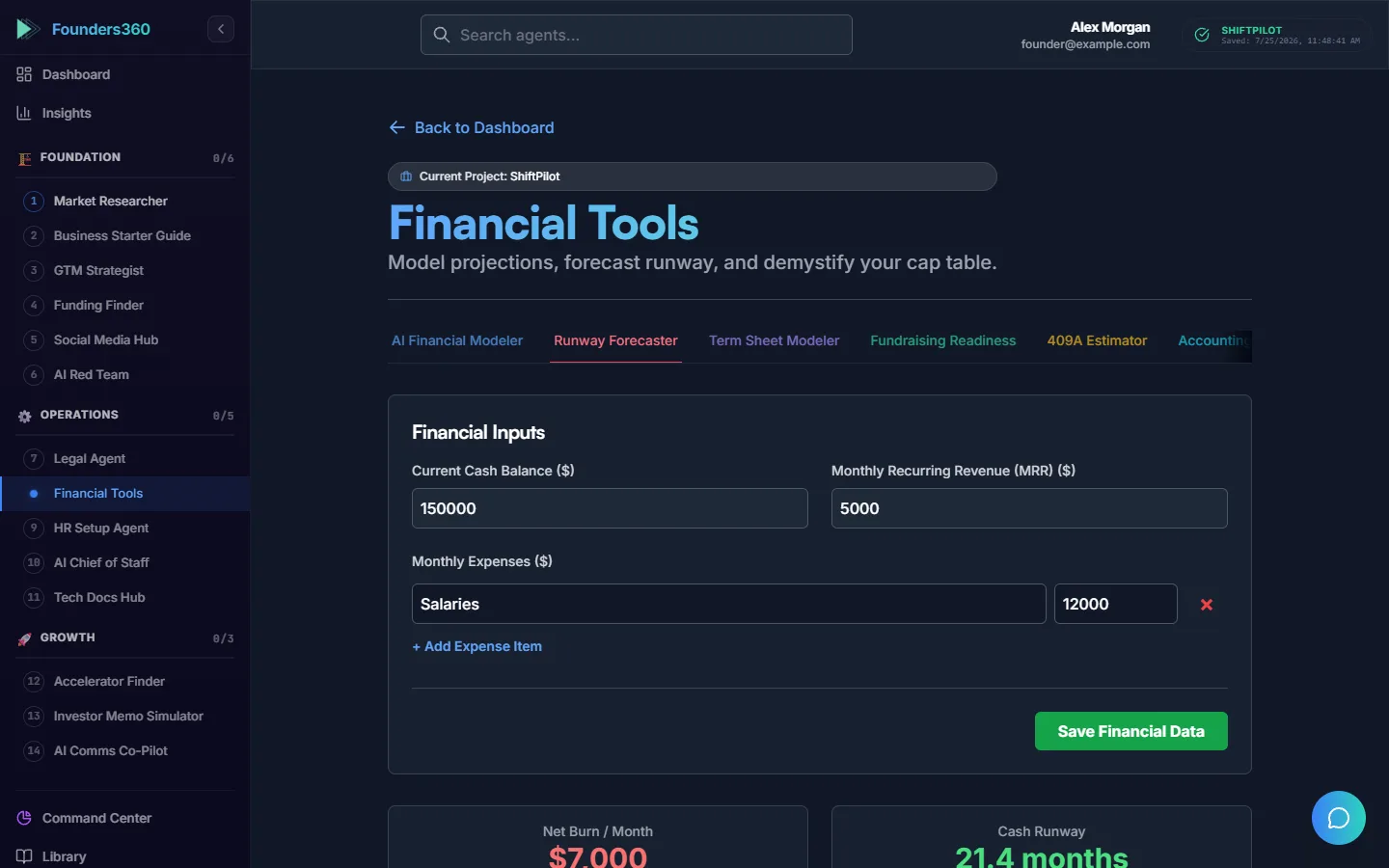
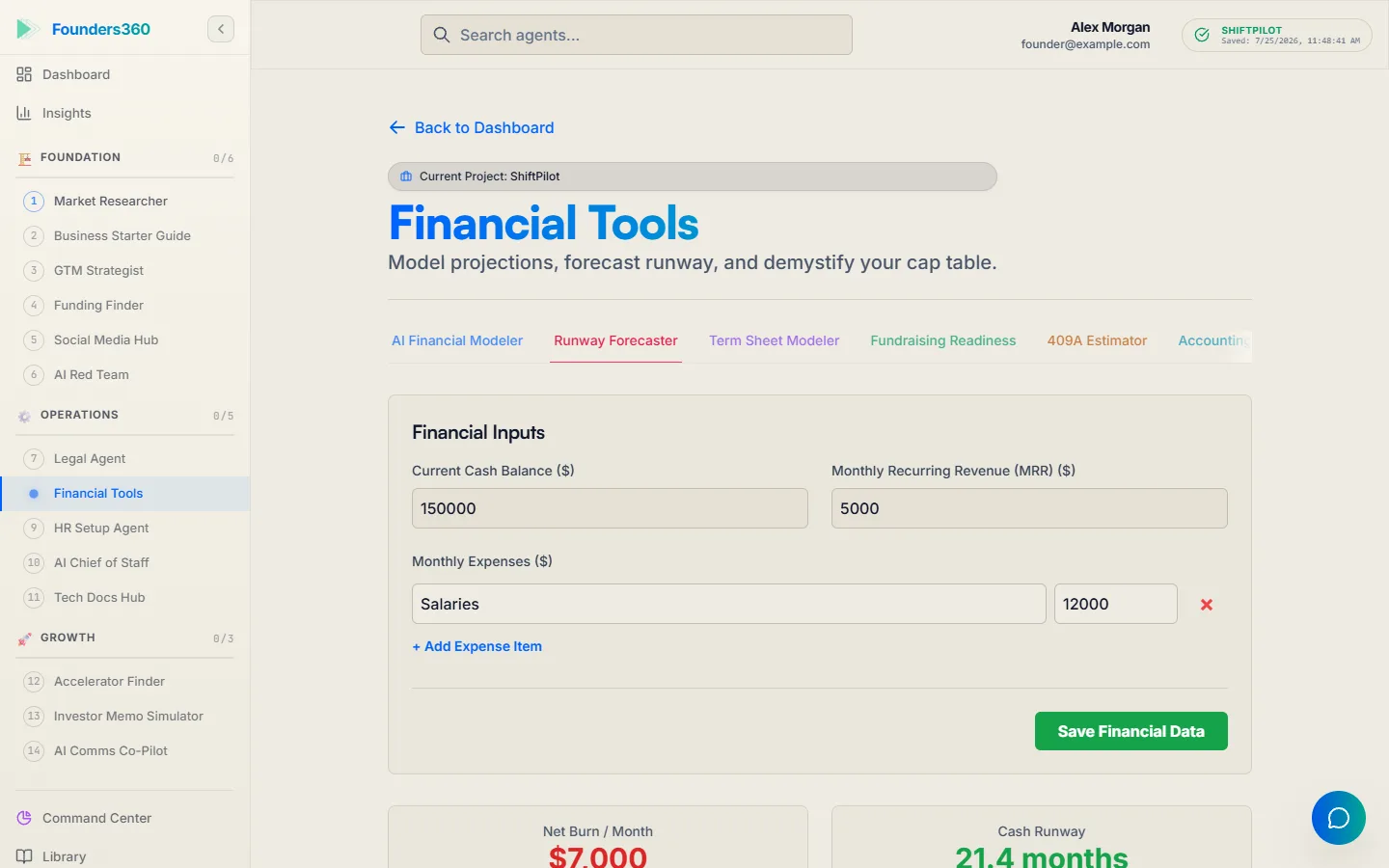
You can see the full set of tools on the agents page, and it is worth pressure-testing the story around your numbers before you are in the room, which our guide to stress-testing your pitch covers in more detail.
What to do before your next conversation
Model your SAFE against three Series A prices rather than one, and note which term governs in each. Ask about the option pool, its size and whether it is pre-money or post-money, before negotiating the cap. Set the raise amount from the milestone that unlocks the next round, not from what a peer raised. Then have the actual documents reviewed by a lawyer, because none of this arithmetic protects you from a term you did not read.
Frequently Asked Questions
What is a SAFE valuation cap?
A valuation cap is the maximum company valuation used to price a SAFE investor's shares when the SAFE converts at a later priced round. It sets a ceiling on their conversion price, which protects the investor if the company's valuation rises sharply before the next round.
Does a higher valuation cap always mean less dilution?
No. A higher cap reduces dilution only while the cap is the binding term. Once the discount produces a lower conversion price than the cap does, the discount governs and further increases to the cap change nothing. In the worked example above, raising the cap from $8,000,000 to $12,000,000 improved founder ownership by only 0.59 percentage points, and at the higher cap the discount governed instead.
What is the difference between a pre-money and post-money SAFE?
Under a pre-money SAFE, the conversion is calculated before the new round's money is counted, so the SAFE investor's final percentage depends on how much is raised later. Under a post-money SAFE, the investor's percentage of the company is fixed at the point of investment, and subsequent dilution falls on the founders instead. Post-money SAFEs are more common in recent years and are more dilutive to founders.
How does the option pool affect founder dilution?
If the option pool is created before the round closes, it comes out of the pre-money valuation and therefore out of existing shareholders rather than the new investor. A pool of ten to twenty percent created this way frequently costs founders more ownership than the entire valuation cap negotiation. Whether the pool sits pre-money or post-money is negotiable.
How much should I raise at pre-seed?
Work backwards from the milestone that will let the next investor price a round, cost out what reaching it requires, and add margin because raising takes longer than planned. Raising too little forces a bridge on poor terms; raising far above what your traction supports sets a bar the next round has to clear.
Tags
Related Articles
How to Set Up a Business in Dubai in 2026: Free Zone vs Mainland
To set up a business in Dubai, you choose an activity, pick a free zone or mainland route, register a trade name, win initial approval, get the licence, then handle visas and a bank account. This guide compares the two routes and covers corporate tax and timelines.
7 min readGuidesHow to Write a Business Plan for a Startup (2026 Template)
To write a business plan for a startup, pick a format that fits your audience, fill in eight core sections, and keep the whole thing short enough to update. This guide gives a section-by-section template, shows what investors and banks each look for, and explains how to keep the plan alive.
7 min readGuidesCap Table Template for Startups: How to Build and Read One
A cap table template is a spreadsheet that lists every holder of your company, what they own and how much that is after dilution. This guide gives you the columns, a worked example with checked arithmetic, and the point at which a spreadsheet stops being enough.
6 min readReady to Build Smarter?
Join thousands of solopreneurs using AI agents to scale their businesses.
Get Started Free