
How to Choose a Startup Accelerator That Fits Your Stage
Choose a startup accelerator by matching its stage, terms and network to what your company needs in the next six months, not by its brand. This guide covers how to read the deal, how to check the network, what to ask alumni, and when to skip accelerators altogether.
By Founders360 Team
How to choose a startup accelerator comes down to one question: what does your company need in the next six months, and is this program the cheapest way to get it? An accelerator sells four things (money, a network, a forcing function and a brand), and each program weights them differently. Pick by the thing you are short of, then check the terms, the alumni and the stage fit before you apply. Brand is the last filter, not the first.
What a startup accelerator sells and what it costs you
An accelerator trades a fixed check and a fixed program for a fixed slice of equity and roughly three months of your calendar. The money is usually the least valuable part of the deal; the network, the investor access on demo day, and the discipline of a weekly cadence are what founders pay for. The price is equity at terms you cannot negotiate, plus the opportunity cost of building your company around someone else's schedule.
The equity is the part to understand precisely. Most top programs use a standard deal: a small check for a fixed percentage, sometimes paired with a larger uncapped note that converts on your next round. As of September 2026, Y Combinator publishes its standard deal on its own site (a fixed check for a fixed percentage plus a larger SAFE), and the figures change between batches, so read the current terms page rather than a forum post. The percentage matters more than the check: a program taking six or seven percent at a fixed price is setting your valuation for you, and that implied valuation is usually well below what a decent pre-seed round would price.
Rule one: if you would not sell that percentage to an angel for that check, the program has to earn the gap with everything else it offers.
Match the accelerator to your stage, not its brand
The right accelerator is the one built for the stage you are at today. Programs cluster into three stages. Pre-idea and idea-stage programs (often university-affiliated or public) want a team and a problem; they teach customer discovery and expect nothing built. Pre-seed programs want a working prototype and early evidence of demand; they exist to get you to a seed round. Seed-plus programs want revenue and a hiring plan; they are closer to a small fund with a curriculum attached.
Applying above your stage wastes a cycle. A company with a landing page and a waitlist applying to a revenue-stage program is competing against companies with paying customers, and the rejection tells you nothing about the idea. Applying below your stage costs equity for content you already know.
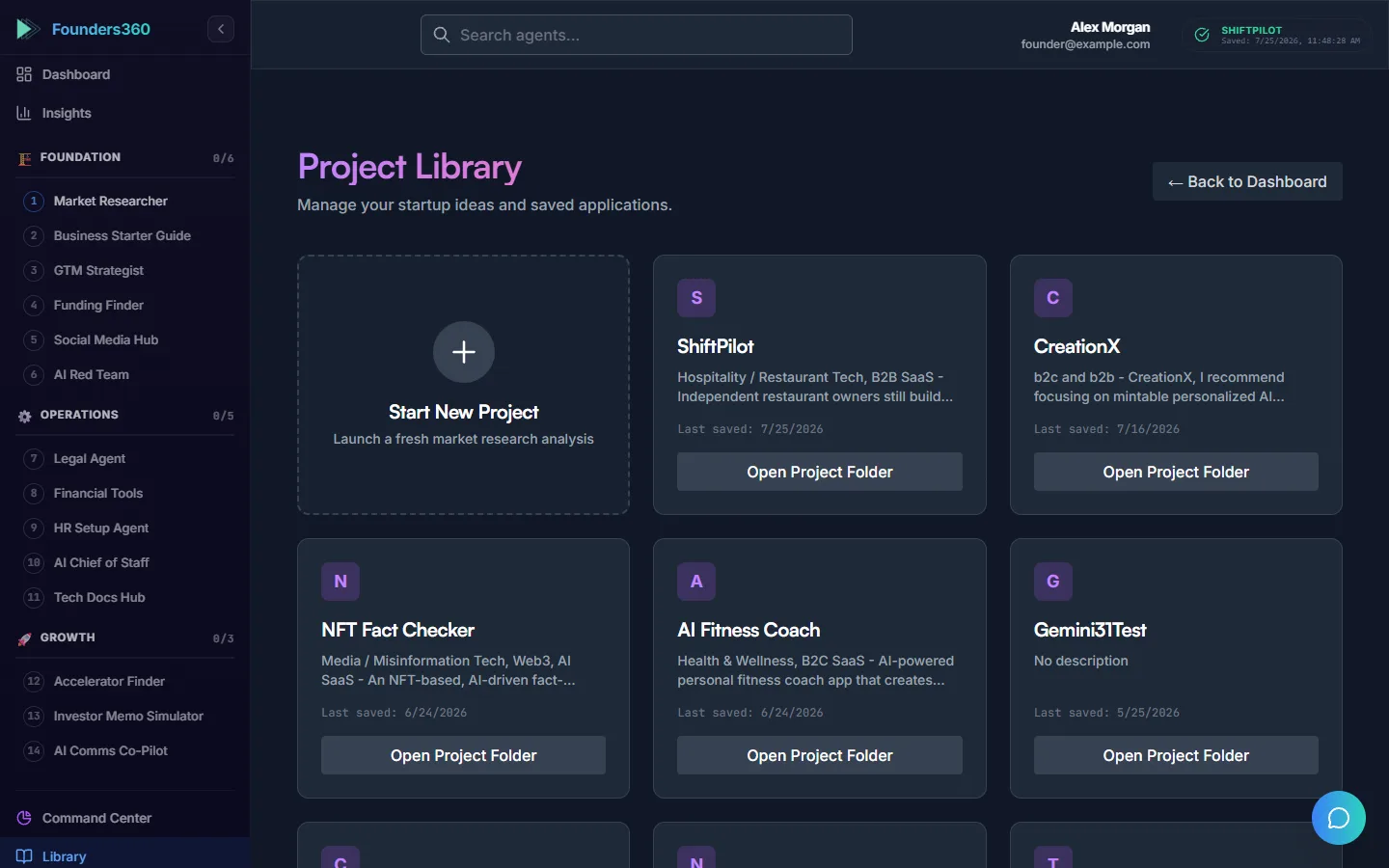
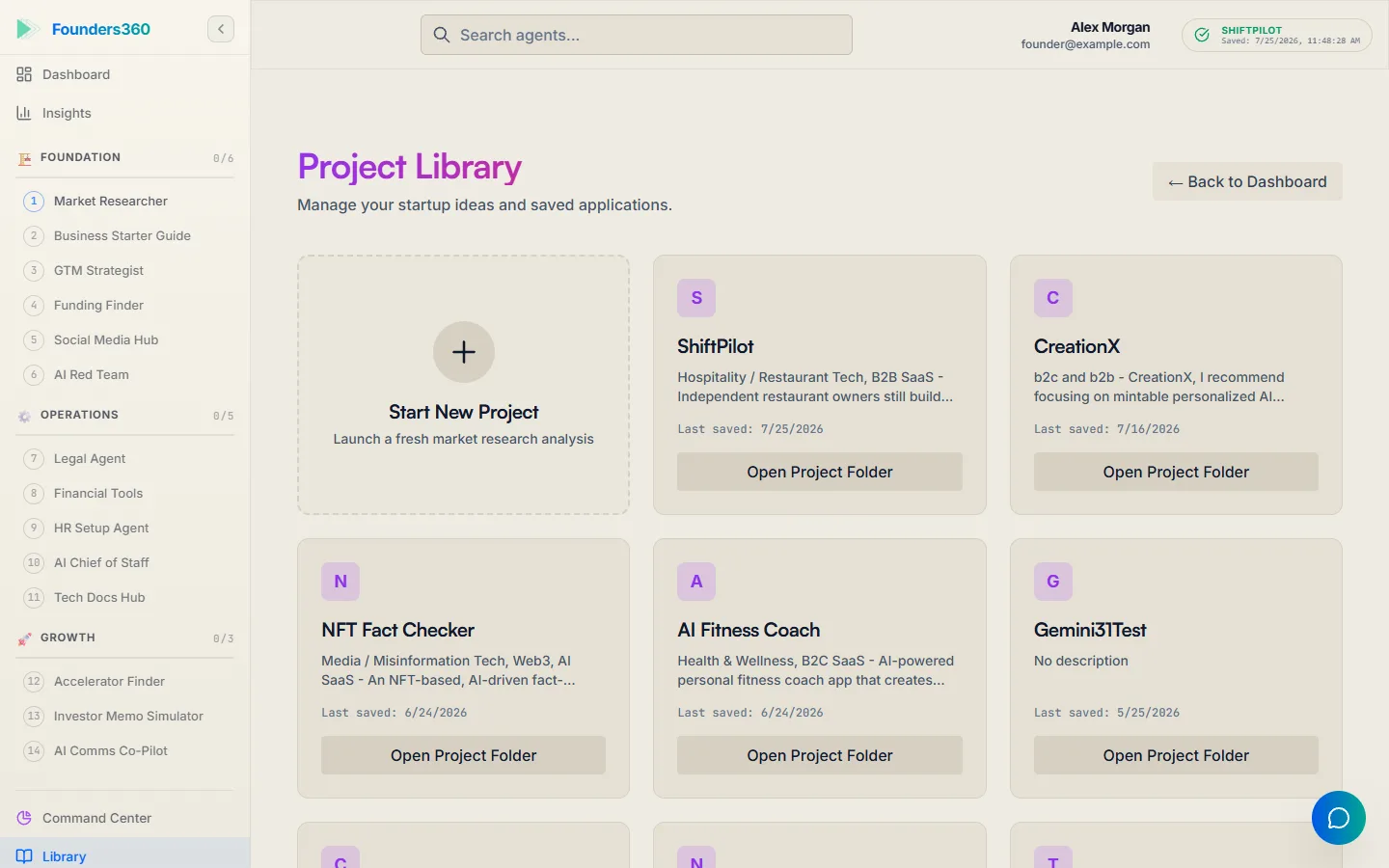
Our Accelerator Finder does this matching mechanically: it reads the stage, sector, geography and traction the other agents have already written into Shared Context and returns programs whose published criteria fit, with the reason each one matched. A founder who has run the Market Researcher first gets programs filtered on the market they actually serve, not on a keyword. Where you are before any of that, our pre-seed fundraising guide defines the stages in investor terms.
How to read accelerator terms: equity, check size and the standard deal
Read the term sheet for four things: the percentage taken, the instrument (priced equity, a SAFE, or both), any pro-rata or most-favoured-nation rights the program keeps, and whether the check arrives as cash or as credits and services. A program that takes seven percent in exchange for a mix of cloud credits and office space is an expensive deal in disguise.
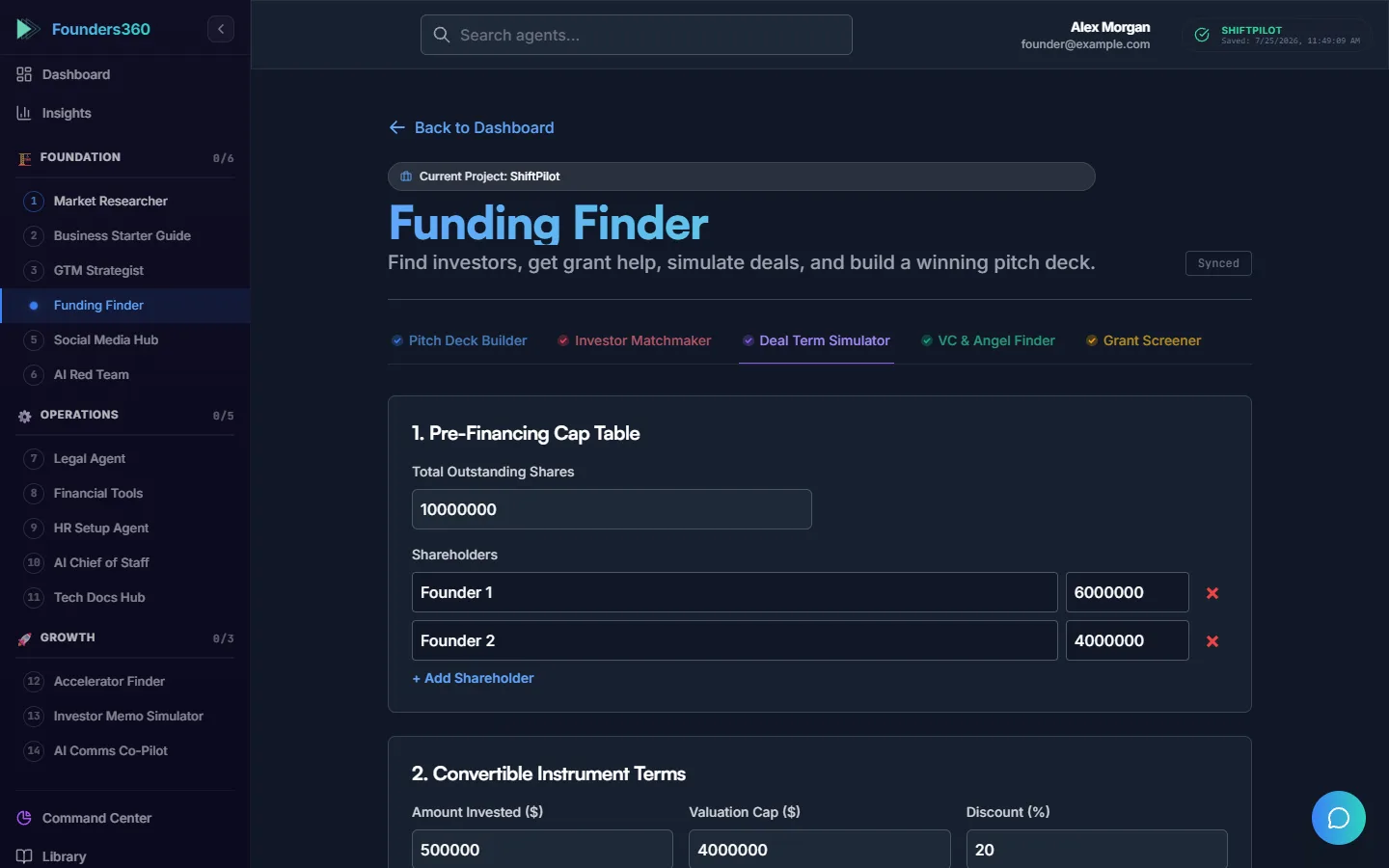
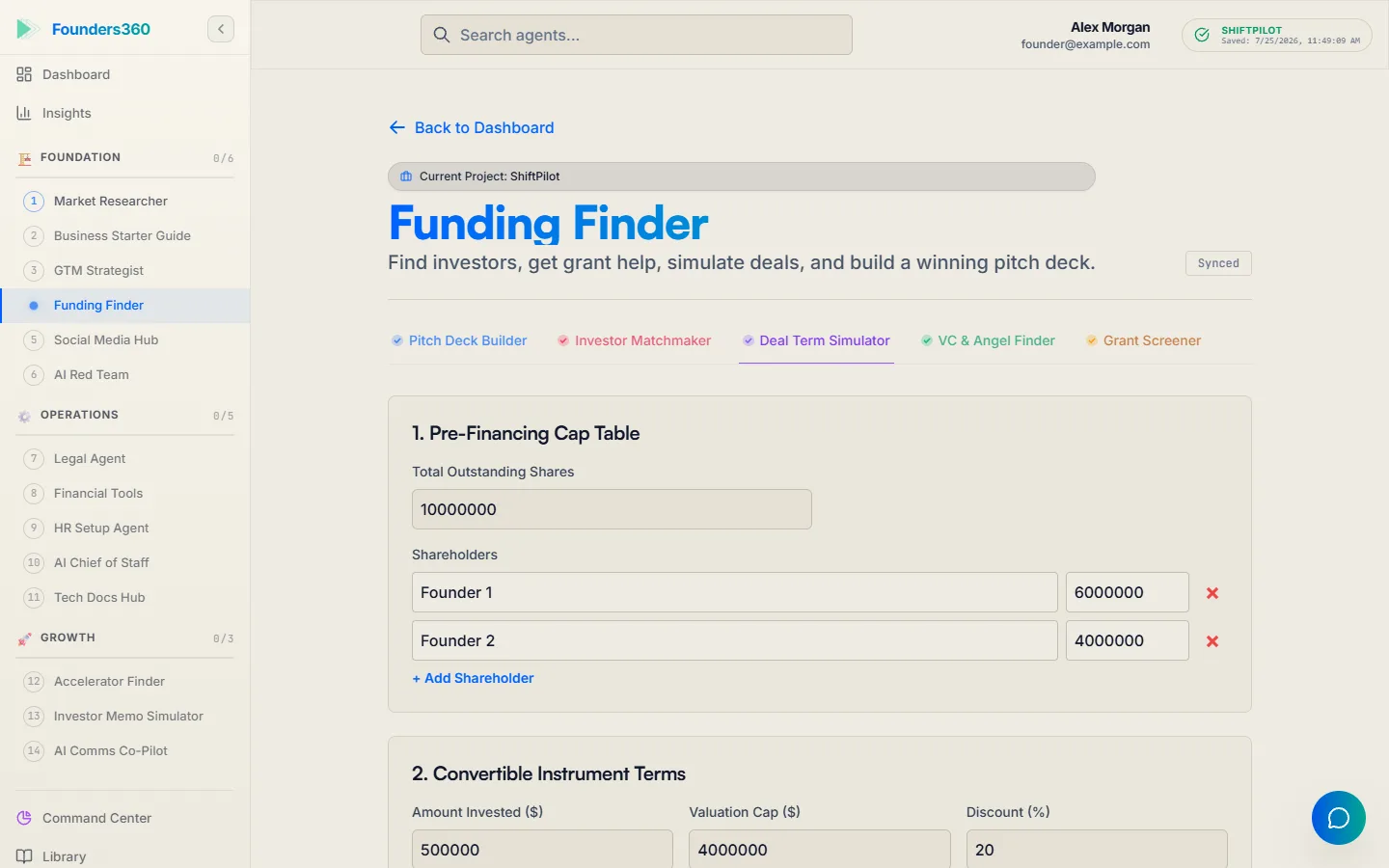
Then run the dilution arithmetic on your next round, not on this one. An accelerator's equity sits on the cap table before your seed lead prices the company, so it compounds with the option pool and the SAFE conversions. Our piece on what a SAFE cap actually costs in dilution walks through the mechanics; the short version is that the cap you fight over moves ownership by half a point in most scenarios, while the pool size and the round size move it by several. Put the accelerator's percentage into the same model before you accept.
| Term | What to check | Why it matters | |---|---|---| | Percentage | Fixed or negotiable | Sets your implied valuation | | Instrument | Priced, SAFE, or both | Determines when it converts | | Rights retained | Pro-rata, MFN, information | Follows you into the seed round | | Check form | Cash versus credits | Credits expire, cash does not |
Program terms drift year to year. Treat any figure you read, including in this article, as approximate and dated September 2026, and confirm on the program's terms page before you sign.
How to evaluate an accelerator network before you commit
The network is real only if you can name the people in it. Ask for the mentor list and check how many are still active operators in your sector rather than names collected a decade ago. Ask which investors attended the last two demo days and how many companies from those batches closed a round within six months. A program that cannot answer the second question is selling a brand, not a network.
Alumni outcomes are the honest metric, and they are public. Count how many companies from the last three cohorts are still operating, how many raised a priced round, and how many were acquired. Compare that against the program's own marketing. The gap between the two is the number you are actually being sold.
Check the mentor pool for gaps too. If the program has strong go-to-market mentors and no legal or financial support, you will still be buying that elsewhere. Some programs now license a white-label version of our suite to close exactly that gap for their cohorts (see how we work with accelerators and incubators); ask whether the program provides tooling for the foundation work or leaves it to you.
Questions to ask accelerator alumni before you apply
Ask alumni three questions and weight their answers above anything the program tells you. First: what did the program change about your company that you would not have done alone? A vague answer ("the network was great") means the program did not change much. Second: who from the program are you still in contact with, and did any of them lead to a customer, a hire or a check? Third: knowing the terms, would you take the deal again at the same stage?
Ask founders who dropped out or were not funded on demo day as well as the successes. The program will introduce you to its winners; you have to find the median company yourself, and the median is the outcome you should expect.
Three signals worth trusting over any marketing page: alumni who volunteer criticism and still recommend the program, a mentor who is reachable without an introduction, and a program director who tells you plainly that you are too early.
When you should skip accelerators entirely
Skip the accelerator if you already have the thing it sells. A second-time founder with investor relationships does not need demo day. A company with revenue and a clear seed lead does not need a forcing function it pays seven percent for. A deep-tech company with an eighteen-month build does not fit a twelve-week program built around weekly growth.
Skip it too if the only reason is the brand. A strong program's name opens doors for about one round; after that, the company is judged on the company. If you are applying because a rejection would feel like a verdict, read our playbook on what to do after a Y Combinator rejection first, because most of the value you are chasing can be assembled without the program.
Non-dilutive alternatives exist for the money component. Our list of grants for early-stage startups covers programs that cost reporting rather than equity, and a small angel round on a standard SAFE buys the same runway without the fixed valuation.
How to run the accelerator application process without losing a quarter
Apply to three to five programs in one window, ranked by fit, and treat the applications as one piece of writing reused four times. The core of every application is the same: the problem, the customer, what you have built, what you have learned from users, why this team, and what the money buys. Write it once, well, and adapt the emphasis to each program's stated thesis.
Have something argue with the application before a reader does. Our Accelerator Finder reviews a draft application against the program's published criteria and names the weak answers; the Skeptical VC on our site does the same for the pitch itself with no login, and ends with a verdict naming the weakness. Both write their findings into Shared Context, so the AI Red Team and the Funding Finder pick up the same objections when you build the deck for the interview.
Set a deadline for the whole process. Applications, interviews and decisions for one cycle should fit inside six weeks; if they do not, keep building and reapply next cycle with the progress.
Frequently Asked Questions
What acceptance rate should I expect from a top accelerator?
Low, and the exact figure moves. The best-known programs have publicly described their acceptance rates as in the low single digits of percent; as of September 2026 treat any specific number as approximate and check the program's own published statistics or its most recent batch announcement. Regional and university programs accept a much larger share of applicants.
Is an accelerator worth seven percent of my company?
Only if the network and investor access would cost you more than seven percent of a future round to assemble alone. For first-time founders with no investor relationships, the answer is often yes at the right stage. For second-time founders or companies with revenue, it is usually no.
Should I apply to more than one accelerator at once?
Yes, to three to five programs ranked by stage fit, in a single window. Reusing one strong application across programs costs little, and the comparison between offers is the only leverage you have on terms you otherwise cannot negotiate.
How do I know if I am too early for an accelerator?
If the program's recent cohorts had working products and early users and you have neither, you are too early for that program, not for accelerators in general. Look for idea-stage or university-affiliated programs, or spend the cycle building the prototype and reapply.
What can I do this week?
List the four things an accelerator sells (money, network, forcing function, brand) and write one sentence on how much of each you have today. The one you are shortest of is your selection criterion. Then run your current pitch through our free Skeptical VC and fix the weakest answer before you open a single application form.
Tags
Related Articles
Co-Founder Agreement and Vesting: What First-Time Founders Must Put in Writing
A co-founder agreement with a vesting schedule is the document that decides who owns what when a founder leaves. Sign it before the first line of code, the first customer, or the first cheque, because every one of those makes the conversation harder.
8 min readGuidesUnit Economics for Early-Stage Startups: CAC, LTV and Payback Before You Have Revenue
Unit economics for an early-stage startup are three numbers per customer: what one costs to acquire, what one is worth over their life, and how many months until the first pays back the second. Before revenue you build them from stated assumptions, label them as such, and replace each one with a measurement as soon as you have it.
9 min readGuidesTechnical Documentation for Startups: What to Write Before You Hire Your First Engineer
Technical documentation for startups is five documents written before the first engineer starts: a product requirements document, a data model, an architecture decision log, an API contract and a runbook. Everything else can wait.
8 min readReady to Build Smarter?
Join thousands of solopreneurs using AI agents to scale their businesses.
Get Started Free