
Pre-Seed Fundraising Guide 2026: Who Funds You Before You Have Traction
Pre-seed money in 2026 comes from angels, micro funds, accelerators, grants and the founders themselves, and each source buys a different thing. This guide explains what every source expects, how the round is structured, and how to run the raise in a fixed window.
By Founders360 Team
A pre-seed fundraising guide for 2026 starts with one fact: before you have traction, investors are buying the founders, the problem and the plan, in that order. Money at this stage comes from five sources (angels, micro venture funds, accelerators, non-dilutive grants and your own savings), and each one weighs those three things differently. The round is usually small, usually raised on a SAFE, and usually closes in weeks rather than months if it closes at all.
What pre-seed means in 2026 and why the label matters
Pre-seed is the round that funds the work of earning a seed round. An investor is underwriting not revenue but the probability that you will reach the milestones a seed investor demands: in 2026, usually a working product, a handful of paying or committed customers, and evidence that you can acquire customers at a sensible cost.
The label sets expectations on both sides. Call a round "seed" and show pre-seed traction, and the meeting goes badly. Call it pre-seed, and the investor evaluates you on team and plan, with traction as a bonus. Round sizes and valuations drift within months, so look up current medians from a source that dates them (Carta and PitchBook both publish quarterly data).
One test of whether you are at pre-seed: if a seed investor would say "come back when you have customers", you are raising pre-seed, whatever you call it.
Who funds a startup before it has traction
Five sources fund pre-seed companies, and the mistake most first-time founders make is to pitch all of them the same way.
| Source | What they are buying | What they need to see | Typical cost to you | |---|---|---|---| | Angels | The founder, often a domain they know | A plan they can check against their own experience | Equity via SAFE, plus time | | Micro VC funds | Early access to a company they can follow on | A believable path to seed metrics | Equity, sometimes a board observer | | Accelerators | A cohort slot and standardized terms | Fit with their thesis and stage | Equity at fixed terms, three months of your calendar | | Grants and programs | Alignment with a public or research mandate | Eligibility, a budget, a written application | Reporting, no equity | | Founders and friends | Belief | Nothing formal, which is the danger | Relationships if it goes wrong |
Angels are the most common first check, and the introductions that come with a good angel are often worth more than the money. Micro funds behave like professional investors: they run a process, ask for a data room, and care whether their follow-on rights survive. Accelerators trade a fixed amount of money and a program for a fixed slice of equity; we cover picking one in our guide on how to choose a startup accelerator. Grants are the only source that costs no equity, and our grants for early-stage startups piece lists where to look.
What each investor type expects to see before traction
Angels expect a clear problem, evidence you understand the customer better than they do, and a plan with a first milestone they can picture. "Eighteen months of runway to reach X" is the answer they want. Micro funds expect the same story plus a market-size argument that holds up, a competitive map that names the incumbents, and a deck they can forward to a partner without you in the room.
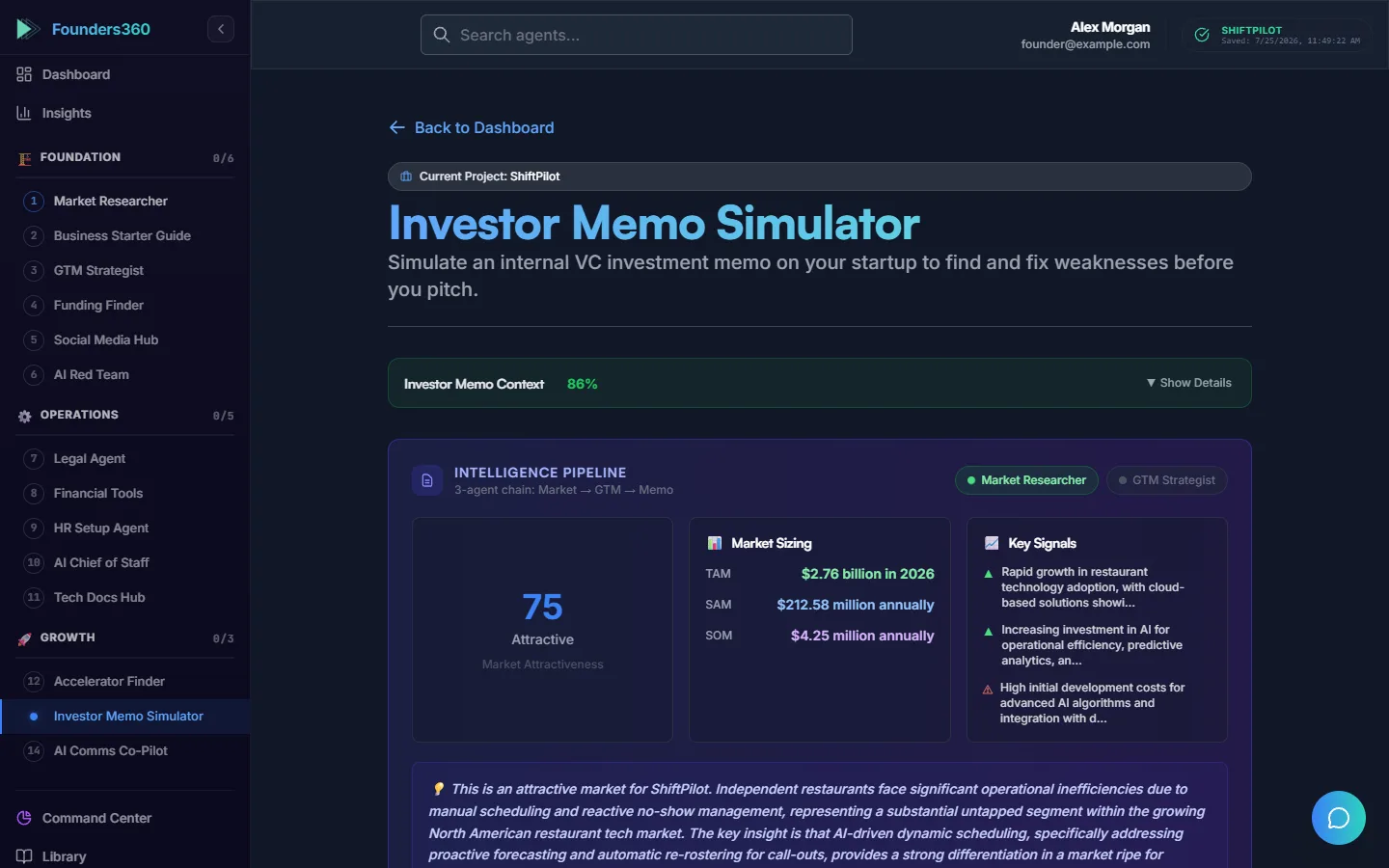
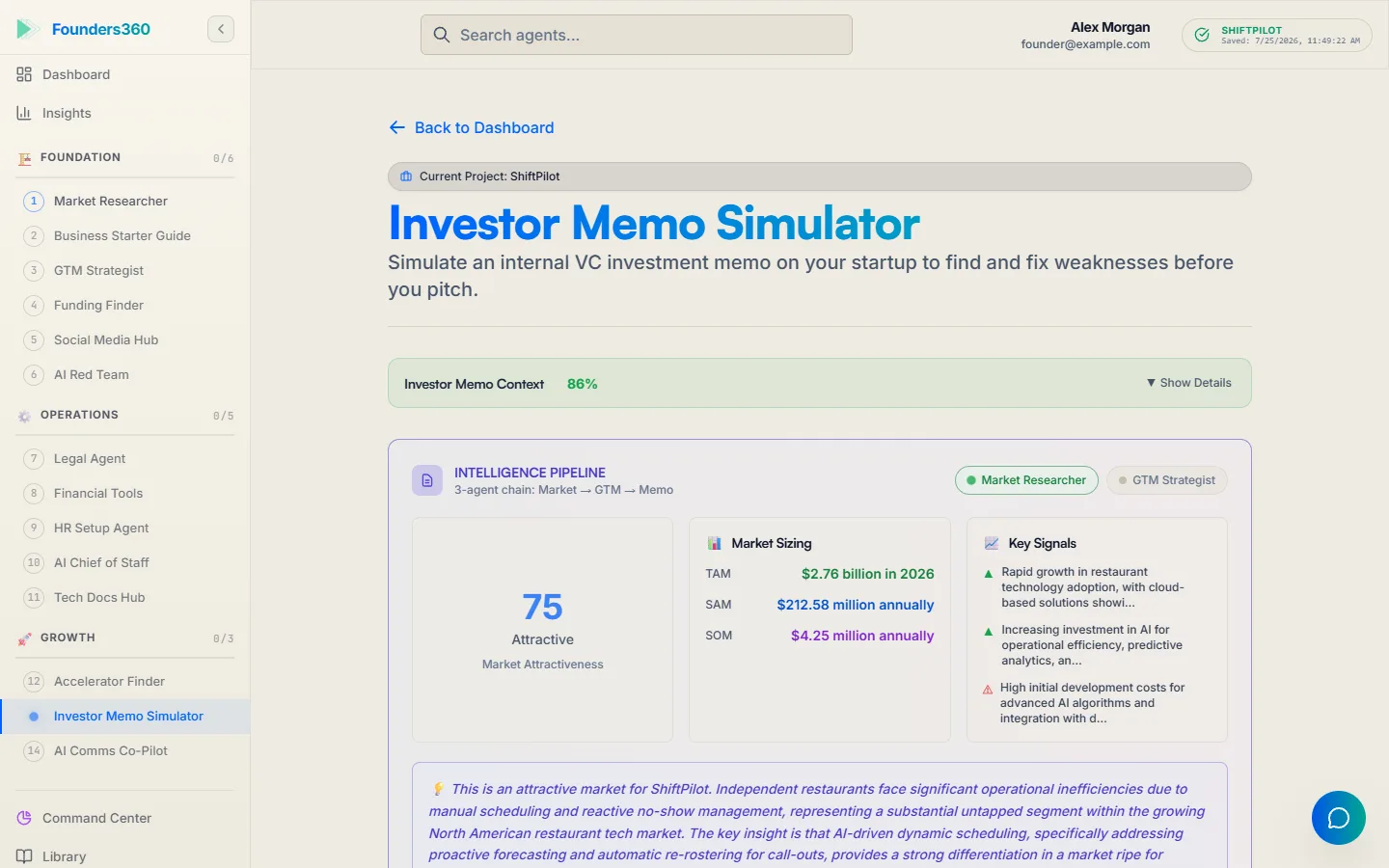
The market slide is where most pre-seed decks fail: founders quote a top-down number from a report and cannot defend how much of it is reachable. Our Market Researcher writes a TAM, SAM and obtainable estimate into Shared Context with the assumptions listed, and the Funding Finder pulls that figure onto the market-size slide of the deck it drafts, so the number on the slide and the number in your notes are the same number with the same reasoning. On a fictional test company (ShiftPilot, an AI scheduling idea for restaurants) the Market Researcher walked a $2.8 billion TAM down to a $212.6 million SAM and a $4.3 million obtainable slice, and that is the shape of argument a micro fund partner expects.
Grant reviewers expect eligibility met to the letter and a narrative that answers the program's stated objective rather than your pitch.
How pre-seed rounds are priced and structured
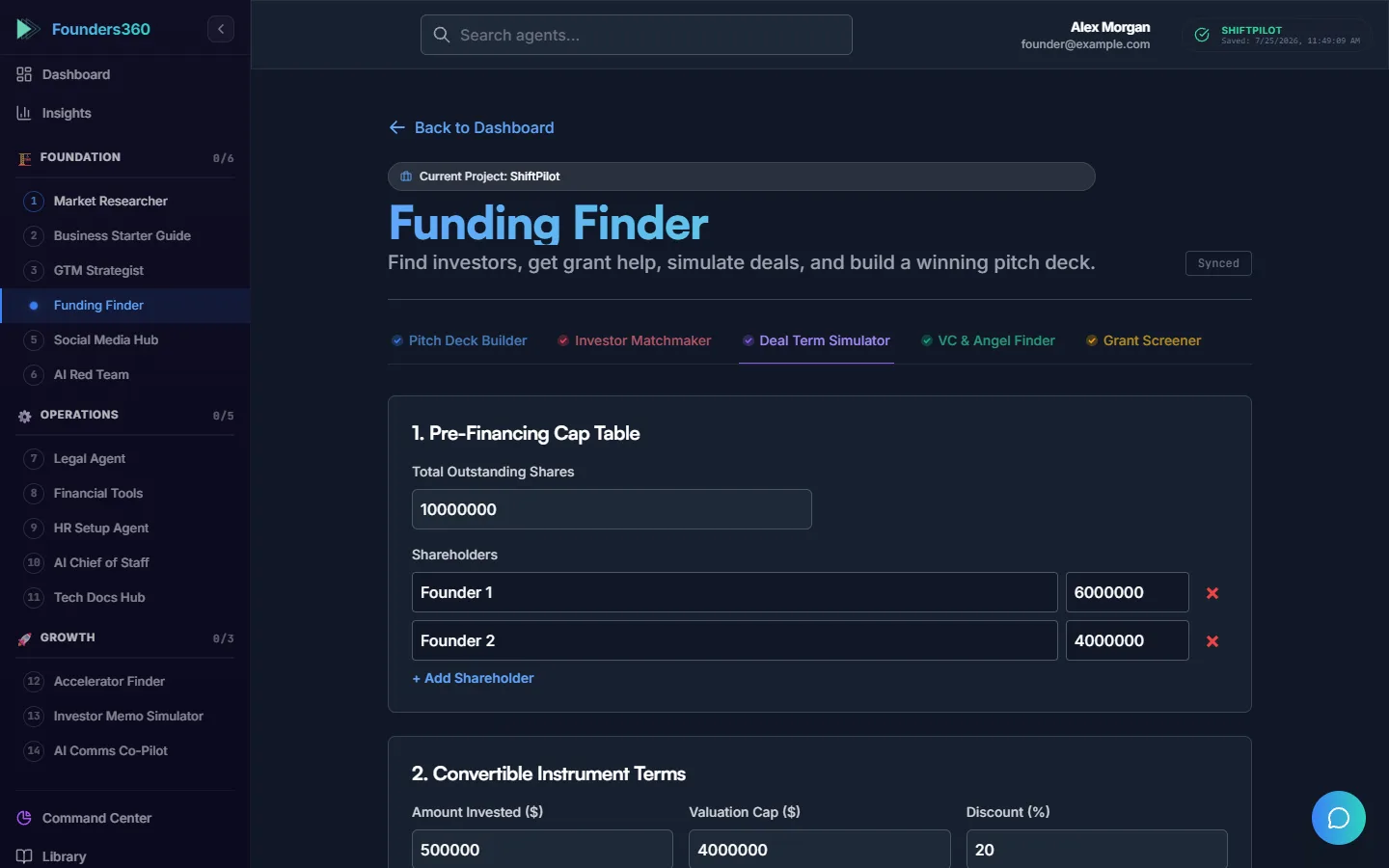
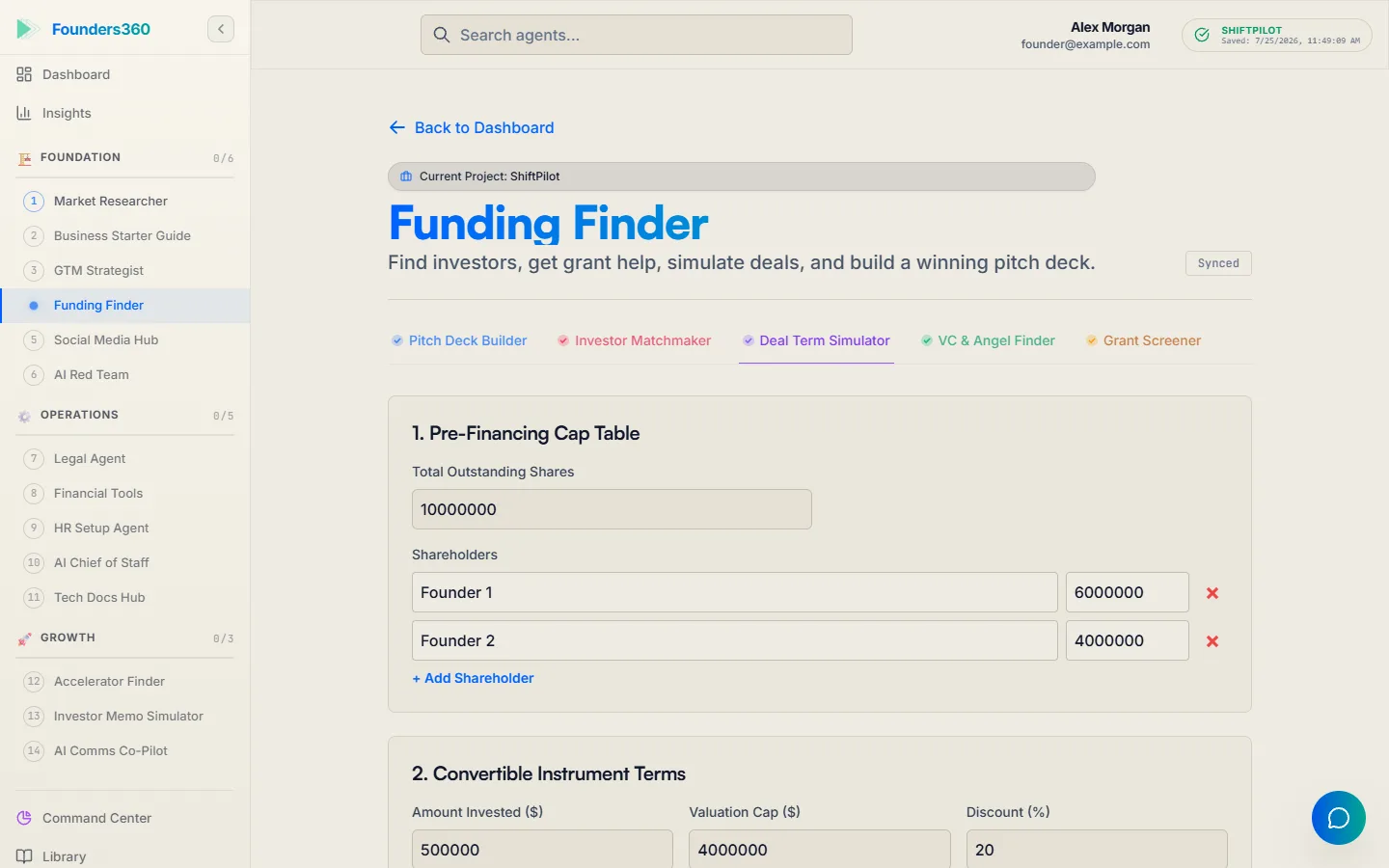
Most pre-seed rounds in 2026 are raised on a SAFE (a Simple Agreement for Future Equity) rather than a priced equity round, because a SAFE defers the valuation argument to the next round and costs almost nothing in legal fees. The three terms that matter are the valuation cap, the discount, and whether the SAFE is pre-money or post-money (a post-money SAFE tells each investor exactly what they own after the round).
Founders spend most of their negotiating energy on the cap, and it is often the term that matters least. When we ran our deal-term simulator on the same round with the cap moved from $8 million to $12 million, founder ownership moved from 75.29 percent to 75.88 percent. Half a point. At the higher cap the 20 percent discount governed the conversion price instead, so the term founders fight hardest over matters most in the scenario where the company did badly. Option pool size and total raise moved ownership more. The full arithmetic is in our piece on what a SAFE cap actually costs in dilution.
Two structural rules that save pain later. Decide the total round size before the first check and hold it, because a SAFE round that keeps growing dilutes everyone. And use a standard instrument with standard side letters: a bespoke term added in 2026 is a problem a seed lead has to unwind in 2027, and some will decline rather than unwind it.
How to build the case investors will check
A pre-seed case has four parts, each a fact you can defend rather than a claim you hope nobody tests: the problem and who has it, the market and how much is reachable, the plan and what the money buys, and the team and why it is the team for this problem.
The most useful preparation is to have someone argue against the case before an investor does. We built the Investor Memo Simulator for that purpose: it drafts the internal memo an investor would write about your company, including the risks section, so you read the objections before the meeting rather than during it. The Skeptical VC on our site does a shorter version with no login and ends with a verdict naming what is weak. Our guide to stress-testing a pitch before investor meetings covers the method.
Do the same for the numbers. Nobody expects a five-year model, but the next eighteen months must add up: if the deck says eighteen months and the spreadsheet says fourteen, the meeting is over.
How to run the pre-seed process in a fixed window
Run the raise as a process with a start date and an end date. A pre-seed round drags when founders take meetings as they come, because every investor waits for the others to move; a compressed window signals a round that is happening with or without them.
A workable plan looks like this. Week one: finish the deck, the one-page summary and a light data room, and build a list of forty to sixty investors sorted by fit, with the source of each introduction noted. Weeks two and three: send every intro request in the same seven days, take first meetings in the following ten, and log every question asked so the deck improves between meetings. Week four: gather soft commitments, name a lead or an anchor angel, and set a closing date. Weeks five and six: close on a single SAFE with one set of terms, chase signatures, and stop.
The Funding Finder drafts the deck and the one-page summary from what the other agents have already written into Shared Context, and the Comms Co-Pilot drafts the intro requests and investor updates in your voice. What no tool does for you is the follow-up: investors who said "keep me posted" fund the round when the third update shows the milestone you promised in the first.
Mistakes that end pre-seed raises early
Raising too little is the most common one: a round sized for "some progress" rather than the seed milestones leaves you raising again in nine months with the same story. Raising on a cap your traction cannot support is the second; it feels like a win and sets a bar the seed round has to clear. Pitching angels with a deck built for funds, and funds with a deck built for angels, is the third, and it is the reason the table above exists.
Two quieter mistakes: taking money from friends and family with nothing in writing (use the same SAFE for everyone), and treating a rejection as a verdict on the company rather than on the fit. The investors who give a real reason are handing you the next edit of your deck.
Frequently Asked Questions
How much should a pre-seed round be in 2026?
Enough to reach the milestones a seed investor will ask for, plus three to six months of buffer. Work backwards from those milestones to the hires and spend they require. Published medians move every quarter and vary by region, so look up a dated figure from Carta or PitchBook rather than anchoring on one you read in a forum.
Do I need revenue to raise pre-seed?
No. Pre-seed is by definition the round raised before meaningful traction. You do need evidence that the problem is real and that you are the team to solve it: signed letters of intent, a waitlist with conversion data, or a pilot in progress all count.
Should I raise on a SAFE or a priced round?
A SAFE in almost every pre-seed case. It is faster, cheaper in legal fees, and standard enough that investors do not need to negotiate the document. A priced round makes sense only when a lead investor insists on it and the check is large enough to justify the cost.
How many investors should I contact?
If one in ten first meetings turns into a commitment, and you need five or six checks, you need fifty to sixty conversations. Build the list before you send the first email, and send the requests in one burst so the process has a shape.
What should be in a pre-seed data room?
The deck, a one-page summary, a light financial model showing eighteen months of spend and runway, the cap table, incorporation documents, and any customer evidence you have. Our guide to building an investor-ready pre-seed data room lists the full set. Keep it small.
What can I do this week?
Write the eighteen-month plan on one page: the seed milestones, the hires and spend needed to reach them, and the round size that implies. Then run your pitch through the Skeptical VC at our free AI investor grill, or through the Investor Memo Simulator if you already have an account, and rewrite the two weakest slides before you send a single intro request.
Tags
Related Articles
Co-Founder Agreement and Vesting: What First-Time Founders Must Put in Writing
A co-founder agreement with a vesting schedule is the document that decides who owns what when a founder leaves. Sign it before the first line of code, the first customer, or the first cheque, because every one of those makes the conversation harder.
8 min readGuidesUnit Economics for Early-Stage Startups: CAC, LTV and Payback Before You Have Revenue
Unit economics for an early-stage startup are three numbers per customer: what one costs to acquire, what one is worth over their life, and how many months until the first pays back the second. Before revenue you build them from stated assumptions, label them as such, and replace each one with a measurement as soon as you have it.
9 min readGuidesTechnical Documentation for Startups: What to Write Before You Hire Your First Engineer
Technical documentation for startups is five documents written before the first engineer starts: a product requirements document, a data model, an architecture decision log, an API contract and a runbook. Everything else can wait.
8 min readReady to Build Smarter?
Join thousands of solopreneurs using AI agents to scale their businesses.
Get Started Free