
Unit Economics for Early-Stage Startups: CAC, LTV and Payback Before You Have Revenue
Unit economics for an early-stage startup are three numbers per customer: what one costs to acquire, what one is worth over their life, and how many months until the first pays back the second. Before revenue you build them from stated assumptions, label them as such, and replace each one with a measurement as soon as you have it.
By Founders360 Team
Unit economics for an early-stage startup come down to three numbers per customer: customer acquisition cost (CAC), lifetime value (LTV), and the payback period between them. Before you have revenue, you cannot measure any of the three, so you build each one from an explicit assumption, write the assumption next to the number, and replace it with a measurement the moment a real customer produces one.
That is the whole method. The rest of this guide covers how to make each estimate defensible, how to check whether the three numbers hold together, and how to keep the same set of numbers in your model, your deck and your investor conversations. Every worked figure below is illustrative.
What unit economics means before you have revenue
Unit economics is the profit or loss on one customer, isolated from everything the company spends regardless of customer count. Rent, founder salaries and the cost of building the product are not unit costs. The cost of a sales call, a paid click, an onboarding hour and the servers one account consumes are.
The point of doing this pre-revenue is not precision. It is to find out whether the business can work at all before you spend a year discovering it cannot. If your best-case CAC is $900 and your honest LTV is $600, no amount of growth fixes that; it makes it worse. A founder who knows this in month two changes the pricing, the channel or the customer. A founder who learns it in month fourteen has spent the runway.
Investors at pre-seed do not expect measured unit economics. They expect you to know which assumptions the business depends on and to have a plan for testing each one.
How to estimate customer acquisition cost with no marketing history
Estimate CAC per channel, not as one blended figure, because every channel has a different cost and a different ceiling.
For a paid channel: the cost per click you can observe in the ad platform's planning tool, divided by an assumed click-to-signup rate, divided by an assumed signup-to-paid rate. For an outbound channel: the hours a founder spends per week on prospecting and calls, priced at a realistic salary, divided by the closes per week you assume. For a content or referral channel: the cost of producing the asset spread over the customers you expect it to bring in during its useful life.
Two rules keep this honest. First, use conversion rates from the pessimistic end of whatever public benchmark you can find and name the source, or use your own early signup data even if the sample is tiny. Second, include the founder's time.
The GTM Strategist in Founders360 drafts the channel plan with these per-channel cost assumptions and writes them into Shared Context, so the Financial Tools agent's model starts from the same CAC the go-to-market plan was built on. Our guide to building a repeatable customer discovery process covers where the early conversion evidence comes from.
How to estimate lifetime value without churn data
LTV is average revenue per account per month, multiplied by gross margin, multiplied by the average customer lifetime in months. Lifetime is one divided by monthly churn, and churn is the number you have no data for, so it gets the most conservative assumption in the model.
An illustrative example. A product priced at $60 per month with 80% gross margin contributes $48 per month. At 5% monthly churn the average lifetime is 20 months, so LTV is $960. At 8% churn it is 12.5 months and $600. The same product with the same price is worth 60% more per customer on one churn assumption than the other, and nothing in your control has changed. That sensitivity is why the churn assumption belongs in the deck, stated, rather than buried inside a single LTV figure.
Three things founders get wrong here. They use revenue instead of gross margin, which inflates LTV by whatever the hosting, support and payment costs are. And they project lifetimes of five or more years for a product that has existed for three months, which no investor will accept and no benchmark supports.
If you have not set a price yet, do that first; our guide on pricing a first SaaS product with no customers shows how to pick a starting point you can test.
CAC payback period: the number investors actually ask about
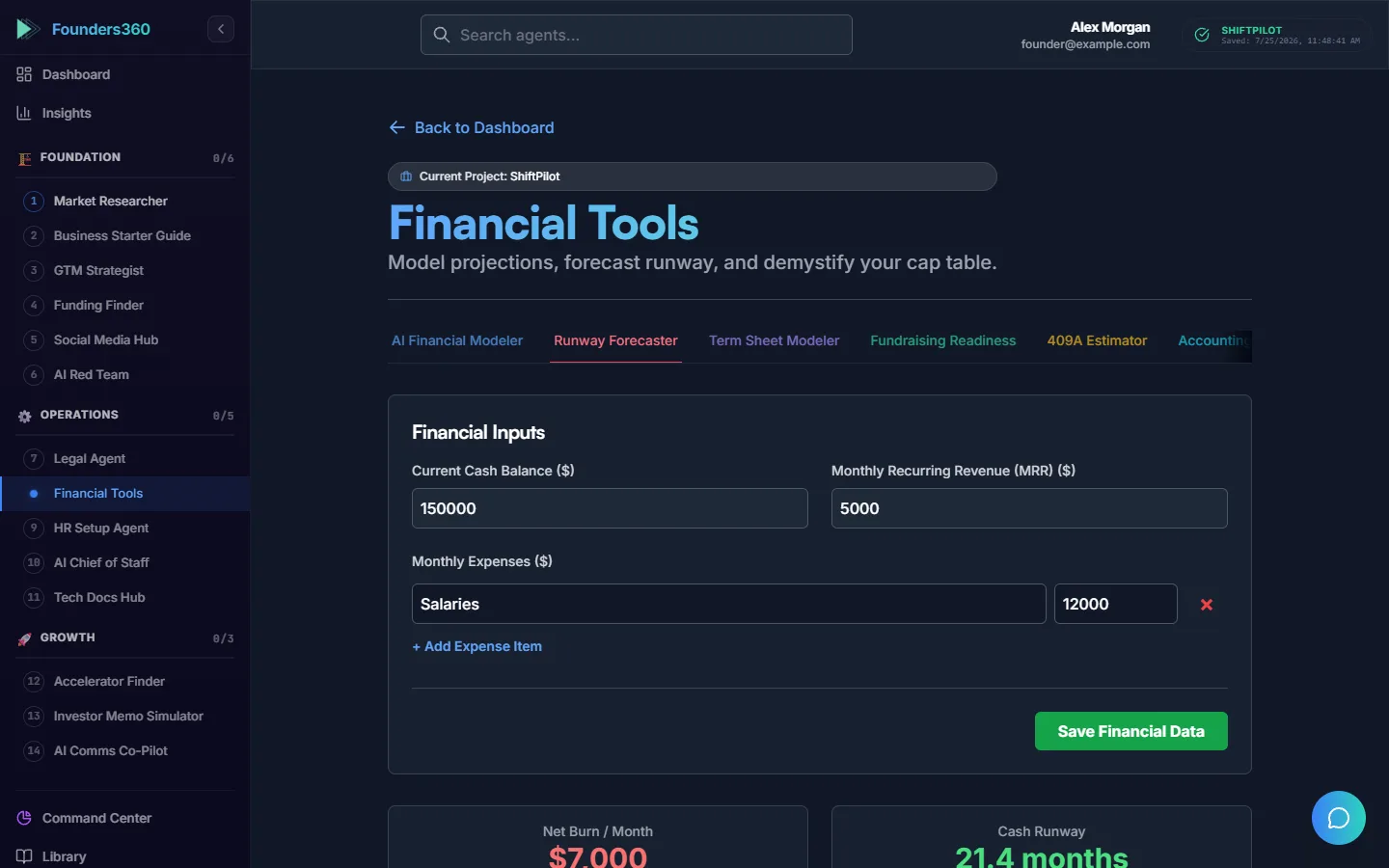
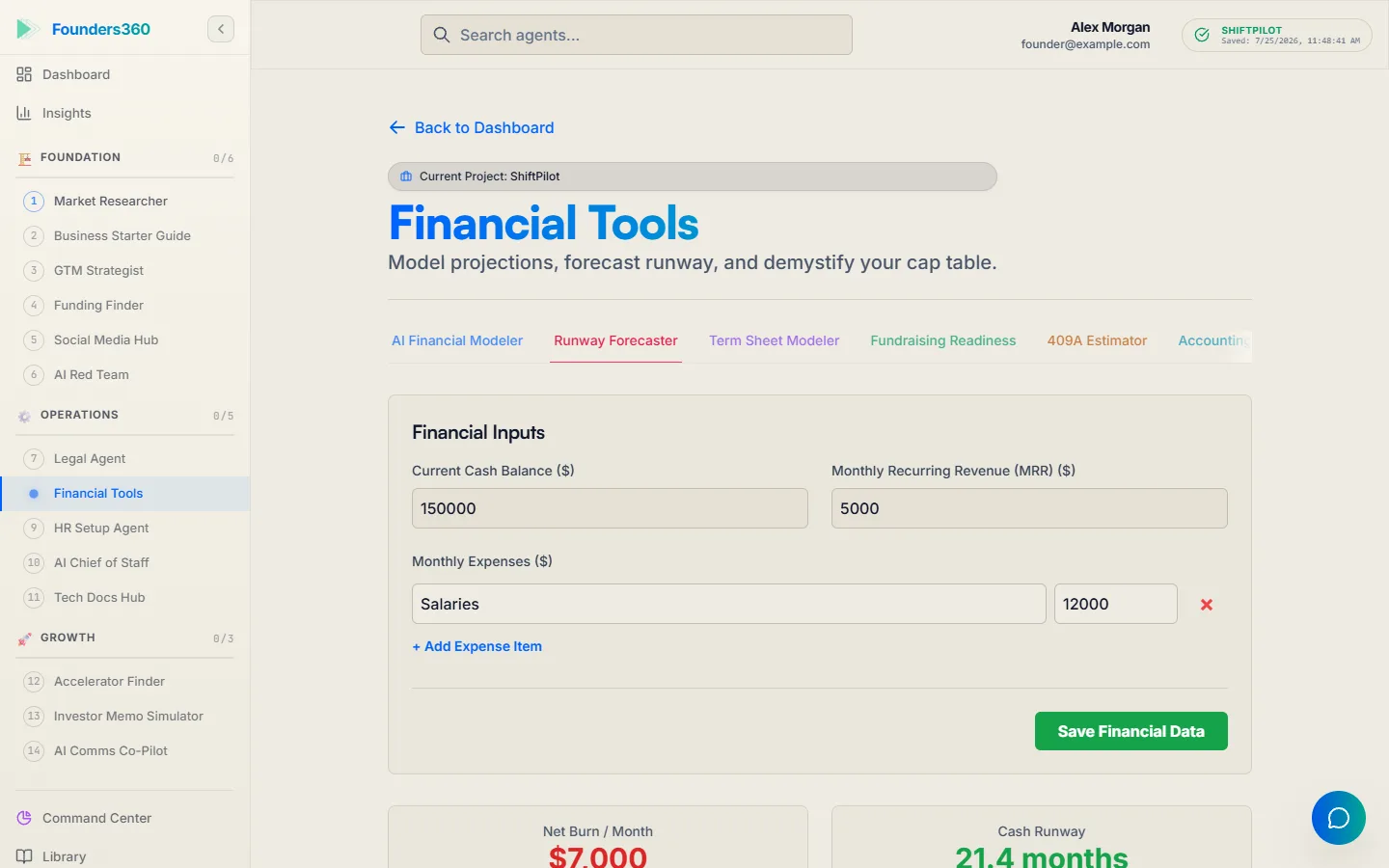
CAC payback is the number of months a customer takes to return what you spent acquiring them, calculated as CAC divided by monthly gross margin per account. It matters more than the LTV to CAC ratio at early stage because it is the number that decides whether you can afford to grow.
A 3:1 LTV to CAC ratio sounds healthy, but if the LTV arrives over 36 months and the CAC is paid on day one, every new customer costs cash now and returns it slowly. A company with 12 months of runway cannot fund an 18-month payback at any growth rate; the faster it grows, the faster it runs out of money. This is the mechanism behind the phrase "growing yourself to death".
The illustrative table below shows the same $48 monthly contribution against three CAC levels.
| CAC | Monthly contribution | Payback (months) | LTV at 5% churn | LTV to CAC | |---|---|---|---|---| | $150 | $48 | 3.1 | $960 | 6.4 | | $400 | $48 | 8.3 | $960 | 2.4 | | $900 | $48 | 18.8 | $960 | 1.1 |
The third row is a business that makes money on paper and fails in practice. The first row is one that can fund its own growth from month four. Most pre-seed companies live in the middle row, and the job of the first year is to move up the table by lowering CAC or raising contribution per account.
The assumptions that break most first models
The assumption most likely to be wrong is the conversion rate, and it is usually wrong in the same direction: too optimistic by two to five times. Whatever signup-to-paid rate you assumed, model the case where it is a third of that and check whether the business survives. Stress the churn assumption the same way.
Pre-revenue models also tend to assume the first channel scales without its cost rising. It does not. Model CAC rising by 20 to 30 percent as volume doubles, and see what that does to payback.
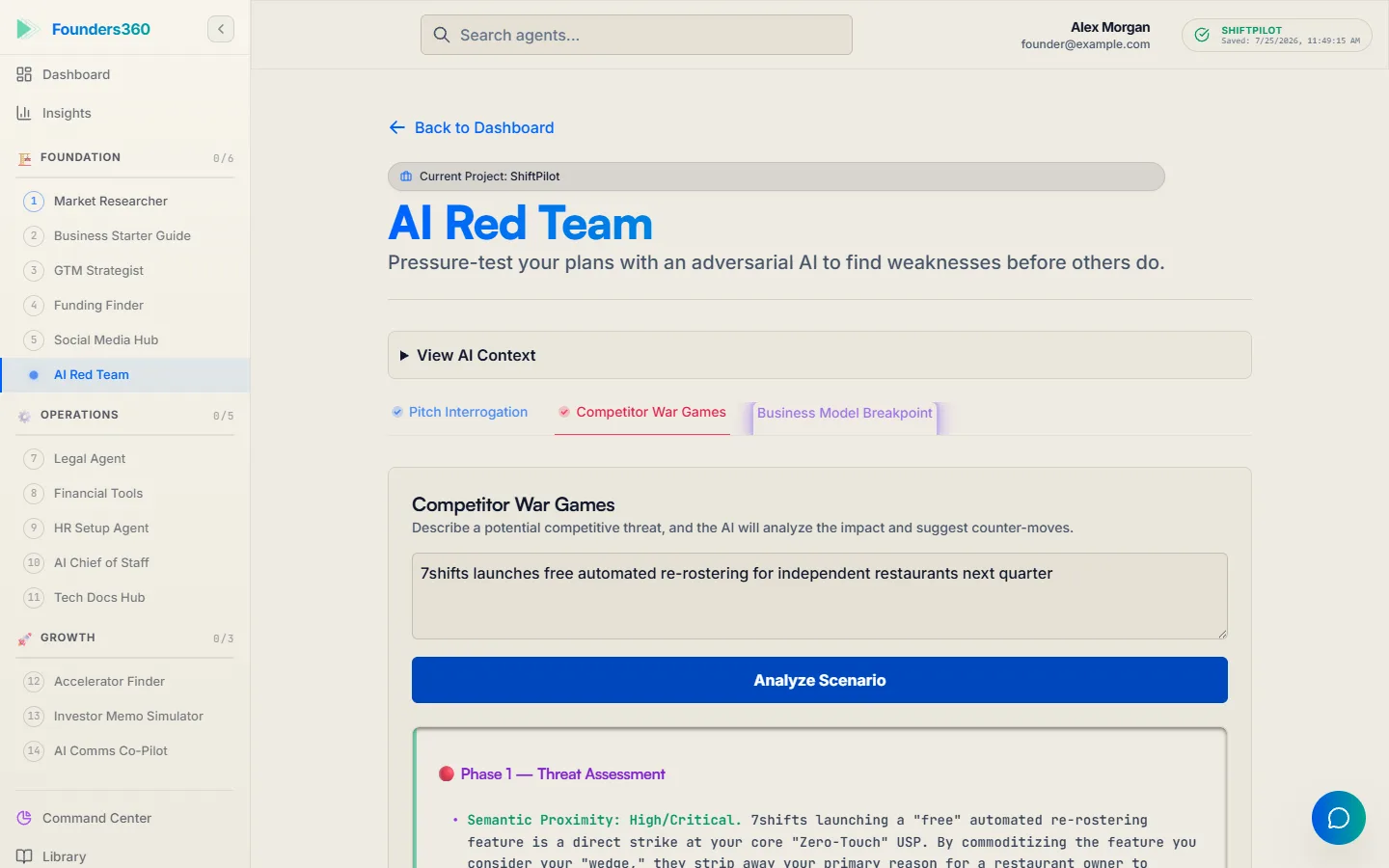
We built the AI Red Team in Founders360 to attack exactly these numbers. On a fictional test company we use internally (ShiftPilot, an AI scheduling idea for restaurants), its first question was not about the model at all. It named a real incumbent and asked what would stop a restaurant from clicking that incumbent's auto-fill scheduling button, which is a question about whether the assumed conversion rate can exist at all. A model that has not survived that kind of question is a spreadsheet, not a plan. If you want the same treatment from an investor persona, the Skeptical VC will ask for your CAC and your churn assumption without being prompted, and the guide to stress-testing a pitch before investor meetings covers how to prepare.

One set of numbers across the model, the deck and the conversation
The most common unit economics failure in a pre-seed pitch is not a bad number; it is two numbers that disagree. The deck says a $200 CAC, the model says $350 because it was updated after the deck, and the founder quotes $250 from memory in the meeting.
This is why the Financial Tools agent writes its assumptions (CAC per channel, ARPU, gross margin, churn, payback) into Shared Context rather than only into a spreadsheet. The Funding Finder reads those facts when it drafts the deck, so the unit economics slide carries the same figures the model was built on, and when you revise churn in the model the slide follows.
We learned the cost of a number that is measured on a broken path from our own product. Our public lead chatbot captured zero leads for seven weeks, and we nearly concluded nobody wanted to talk to it. The real cause was a bug: every conversation that called a tool failed on the next turn, and pricing questions always called a tool, so the highest-intent visitors were the ones hitting the broken path. The metric was measuring the bug, not the funnel. Apply the same suspicion to an early conversion rate: before you accept it as a fact about customers, confirm the path they took actually worked. Our overview of financial modeling for pre-revenue startups covers the wider model these three numbers sit inside.
Frequently Asked Questions
What is a good LTV to CAC ratio for an early-stage startup?
A ratio of 3:1 or better is the figure most investors use as a threshold, but at pre-revenue the ratio is built entirely from assumptions, so the more useful question is whether it survives pessimistic inputs. A model that shows 3:1 on your best-case churn and 1:1 on a realistic one has not answered the question. State both cases.
How do I calculate CAC with no marketing spend?
Build it bottom-up per channel from the inputs you can observe: platform cost per click, the hours a founder spends selling priced at a realistic salary, and the cost of producing content spread over the customers it brings in. Divide by an assumed conversion rate from the pessimistic end of a named benchmark. Founder time counts; leaving it out produces a CAC that vanishes at the first hire.
What CAC payback period is acceptable at pre-seed?
Under 12 months is the working threshold for a company that needs to fund growth from its own cash, and shorter is better. Longer paybacks are workable only when the company has enough capital to carry the gap and the churn assumption is low enough to justify it. A payback longer than your remaining runway in months is a business that cannot afford to grow yet.
Should I use gross margin or revenue when calculating LTV?
Gross margin. LTV built on revenue ignores hosting, payment processing, support and any per-account delivery cost, and it overstates the value of every customer by that margin. For software the difference is often 15 to 30 percent; for anything with a service or hardware component it can be most of the number.
How often should I update unit economics assumptions?
Every time a real measurement replaces an assumption, and at least monthly once customers exist. The first ten paying customers give you a measured conversion rate and an early churn signal; both are small samples, but they are evidence where before there was none. Record what changed and why, so the deck and the model change together.
What to do this week
Write your three numbers on one page: CAC per channel with the conversion rate and source beside each, LTV with the churn and gross margin assumptions stated, and the payback in months. Then run the pessimistic case (conversion at a third, churn at double) and write down whether the business still works. If you want the model built and the assumptions stored where your deck can read them, the Financial Tools agent in the Founders360 agent library produces the first version from your company profile, and the AI Red Team will tell you which assumption it does not believe.
Tags
Related Articles
Co-Founder Agreement and Vesting: What First-Time Founders Must Put in Writing
A co-founder agreement with a vesting schedule is the document that decides who owns what when a founder leaves. Sign it before the first line of code, the first customer, or the first cheque, because every one of those makes the conversation harder.
8 min readGuidesTechnical Documentation for Startups: What to Write Before You Hire Your First Engineer
Technical documentation for startups is five documents written before the first engineer starts: a product requirements document, a data model, an architecture decision log, an API contract and a runbook. Everything else can wait.
8 min readGuidesStartup Runway and Burn Rate: How to Calculate It and How to Extend It
Startup runway is the cash in the bank divided by net monthly burn, and it is the number that decides when you must raise, cut or start earning. Most founders overstate it by counting receivables as cash and ignoring one-off costs. This guide shows how to calculate it correctly and six ways to extend it.
9 min readReady to Build Smarter?
Join thousands of solopreneurs using AI agents to scale their businesses.
Get Started Free