
Investor Update Email Template and the Cadence That Keeps Investors Warm
An investor update email is a short monthly note with the same five numbers every time, one clear ask, and an honest lowlights section. The template below is copyable; the cadence is what makes it work.
By Founders360 Team
An investor update email template is the fastest way to keep investors warm between rounds, and the best one is short: the same five numbers every month, one specific ask, honest lowlights, and a thank-you for help received. The template in this article is copyable as written. The rest of the article is about the cadence, because a great update sent twice a year does less than an ordinary update sent every month.
We write this as a team that builds tools for founders who are raising. Funding Finder is our most-used agent, roughly 36 percent of all runs by external founders, and most of the founders who reach it do not yet have a habit of writing to the people who could fund them. That habit is the cheapest fundraising asset a founder can build.
Why a monthly investor update is the cheapest fundraising you will do
An investor who has read twelve of your updates already has the diligence file. When you open a round, the people who have watched your numbers move month by month commit first and ask the fewest questions. An investor who last heard from you fourteen months ago has to rebuild the whole picture from a deck, and that rebuild is where deals stall.
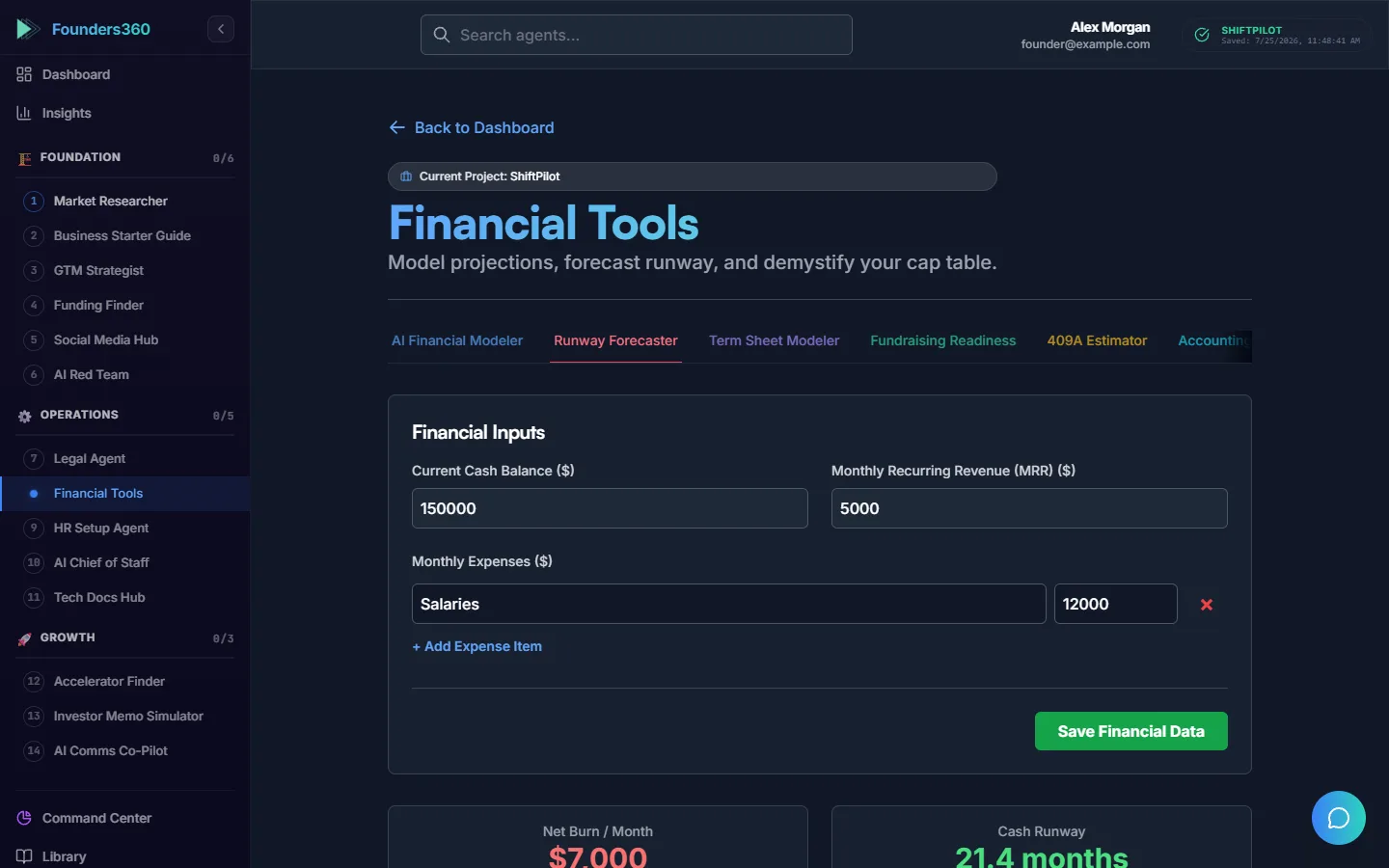
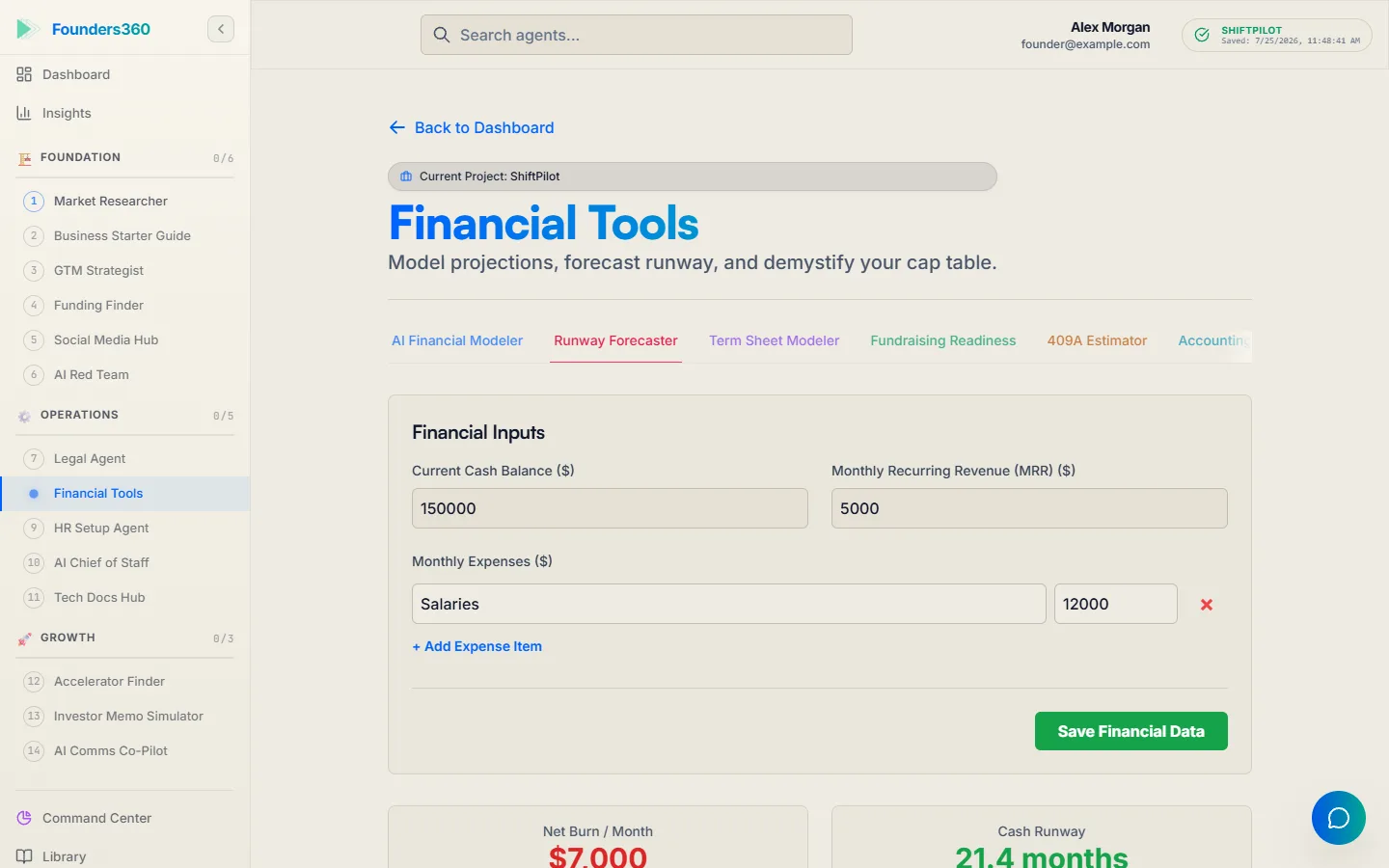
The second effect is on you. Writing the same five numbers every month forces you to know them. Our Financial Tools agent exists partly for this reason: once monthly burn, runway and revenue live in Shared Context, every later agent reads them, and the update writes itself from numbers that are already true.
What goes in every investor update email
Five fixed numbers, in the same order every time. Investors read updates by scanning for the metrics they remember from last month. If the metrics move around, or change definition, the scan fails and the email is skimmed instead of read. Pick the five that describe your business and never reorder them.
For most pre-seed and seed companies the five are:
| Metric | Why it stays in the update | |---|---| | Cash in bank and monthly net burn | The two numbers every investor checks first | | Runway in months | Burn and cash combined; the number that sets the fundraising clock | | Revenue or the pre-revenue proxy (paying pilots, signed LOIs, weekly active users) | The traction line; use the same proxy until it becomes revenue | | Customers or users, with the month-over-month change | Growth, stated as a delta, not a total | | One pipeline or product milestone | The thing that changes next month |
After the numbers, three short sections: highlights, lowlights, asks. Asks are one to three specific requests, each with a name or a category attached so a reader knows whether it is for them. Then a thank-you that names the investors who helped last month, because that is what makes asks get answered. Keep the whole email under 500 words.
The copyable investor update email template
Use the template as written the first time, then delete whatever you did not fill in. Every placeholder is in square brackets. Where we suggest a number, it is illustrative, not a benchmark.
Subject: [Company] investor update: [Month Year]

Hi all,

[One sentence on the single most important thing that happened this month.]

KEY NUMBERS (vs last month)
- Cash in bank: $[X]  |  Net burn: $[X]/mo  |  Runway: [N] months
- Revenue (MRR): $[X] ([+/-]% MoM)
- Customers: [N] ([+N] new, [N] churned)
- [Your fifth metric, e.g. weekly active users]: [X] ([+/-]% MoM)
- Milestone: [What shipped or closed, one line]

HIGHLIGHTS
- [Win 1, one line, with the number that proves it]
- [Win 2]
- [Win 3]

LOWLIGHTS
- [What missed, by how much, and the fix in progress]
- [Second miss, if any]

ASKS
1. [Specific request]: e.g. an intro to a [role] at [type of company]. Best fit: [investor name or category].
2. [Specific request]: e.g. a reference customer conversation in [industry].
3. [Hiring ask]: we are hiring a [role]; a forward of [link] to one person would help.

THANK YOU
- [Investor name] for [specific help], which led to [outcome].
- [Investor name] for [specific help].

NEXT MONTH
- [The one thing that will be true by the next update]
- [Fundraising status if relevant: e.g. opening a $[X] round in [month]]

Reply to this email with anything; I read every response.

[Name]
[Title], [Company]
[Phone]  |  [Link to the metrics dashboard or data room]
Two notes. The subject line carries the company name and the month, nothing clever, because investors search their inbox for it later. And the "Next month" section is a commitment: next month's highlights have to report against it. That loop is what makes updates trustworthy.
The cadence that keeps investors warm
Monthly, on the same day, without exception. The specific day matters less than its fixed position. The first business day after your books close is the natural choice because the numbers are fresh, and an update sent on the fifth of every month becomes something investors notice when it is late.
Weekly is too often for anyone off the board; quarterly lets a company drift out of an investor's working memory. There are two exceptions. During an active raise, a short fortnightly note to the people you are actively pitching is normal, and it should be a different, shorter email that reports only the round status. And when something material happens (a key hire leaves, a large customer churns, a term sheet arrives) send a three-line note the same week. Investors forgive bad news delivered early and resent bad news discovered late.
Who receives the update and who does not
Everyone who has written a cheque, everyone who has explicitly asked to follow the company, and nobody else without their consent. The second group is more valuable than most founders realise: an investor who passed on your pre-seed but said "keep me posted" has given you permission to run a twelve-month diligence process on them at zero cost.
Do not add investors you cold-emailed who never replied. That is a list, not a relationship, and in several jurisdictions it is also a compliance problem. To build the second group, ask at the end of every investor conversation whether they would like the monthly update. Most say yes.
Send it BCC or through a tool that hides the list, because investors do not want their portfolio visible to other investors. If you keep a fuller board version, the wider version still carries the same five numbers and the lowlights; an update that only ever has highlights is read as marketing and discounted accordingly.
How the lowlights section builds trust
A lowlights section with something in it is more credible than a highlights section with everything in it. Every experienced investor knows that an early-stage company misses something every month. If the update never mentions a miss, the reader concludes either that the founder is not measuring or that the founder is hiding. Both cost you the next round.
The format for a lowlight is three parts: what missed, by how much, and what changes. "Sales cycle came in at 61 days against a 45-day target; we are moving the demo earlier in the sequence and will report the new average next month" makes a reader more confident, not less.
We learned a version of this ourselves. Our public lead chatbot captured zero leads for its first seven weeks and we nearly wrote it off as disinterest. The real cause was a bug: every conversation that called a tool failed on the next turn, and pricing questions always called a tool. Report the miss before you understand it, and re-baseline before you draw a conclusion from a number.
Using Shared Context to write the update in ten minutes
The slow part of an investor update is assembling the numbers, not writing the prose. If the numbers already live in one place, the writing is a ten-minute task.
On Founders360 the Financial Tools agent writes burn, runway and revenue assumptions into Shared Context when a founder builds or updates a model, and the Comms Co-Pilot reads those facts when it drafts the monthly update, so the numbers in the email match the numbers in the model without anyone retyping them. The GTM Strategist's pipeline facts and the Chief of Staff's milestone list feed the same draft, which is the whole point of the way the suite is built.
The founder still edits the lowlights, which need a human voice, and adds the thank-yous, because the agent does not know who took the call.
If you are pre-revenue, the same logic applies to your proxy metric. The financial modeling approach for pre-revenue startups we recommend keeps one traction proxy stable for at least six months, which is also what makes it useful in a monthly update.
Investor update mistakes that cost founders the next round
The most expensive mistake is silence between rounds. A founder who goes quiet for eight months and then reappears with a deck has told every investor on the list that they only write when they need money. The second most expensive is redefining a metric without saying so; a revenue line that quietly switches from MRR to bookings destroys the trend the reader was following. A generic ask ("any intros appreciated") gets no intros; a specific one does.
The Skeptical VC, our free, no-login AI investor, is useful here in a way we did not design it for: founders paste last month's update into it and ask what a hostile reader would notice. It names the number that is missing and the claim that is unsupported. Our guide to stress-testing a pitch before investor meetings covers the same ground for the deck.
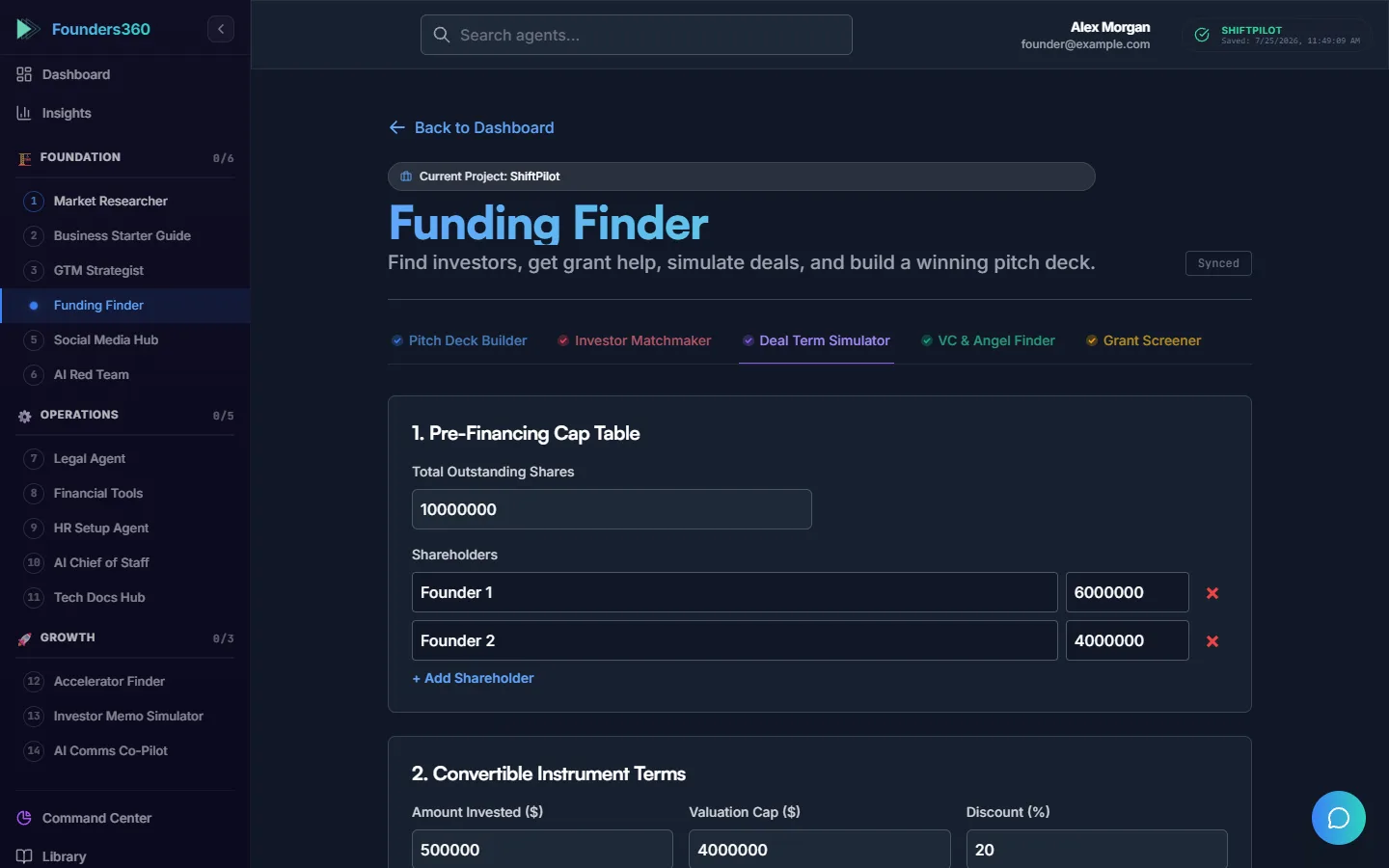
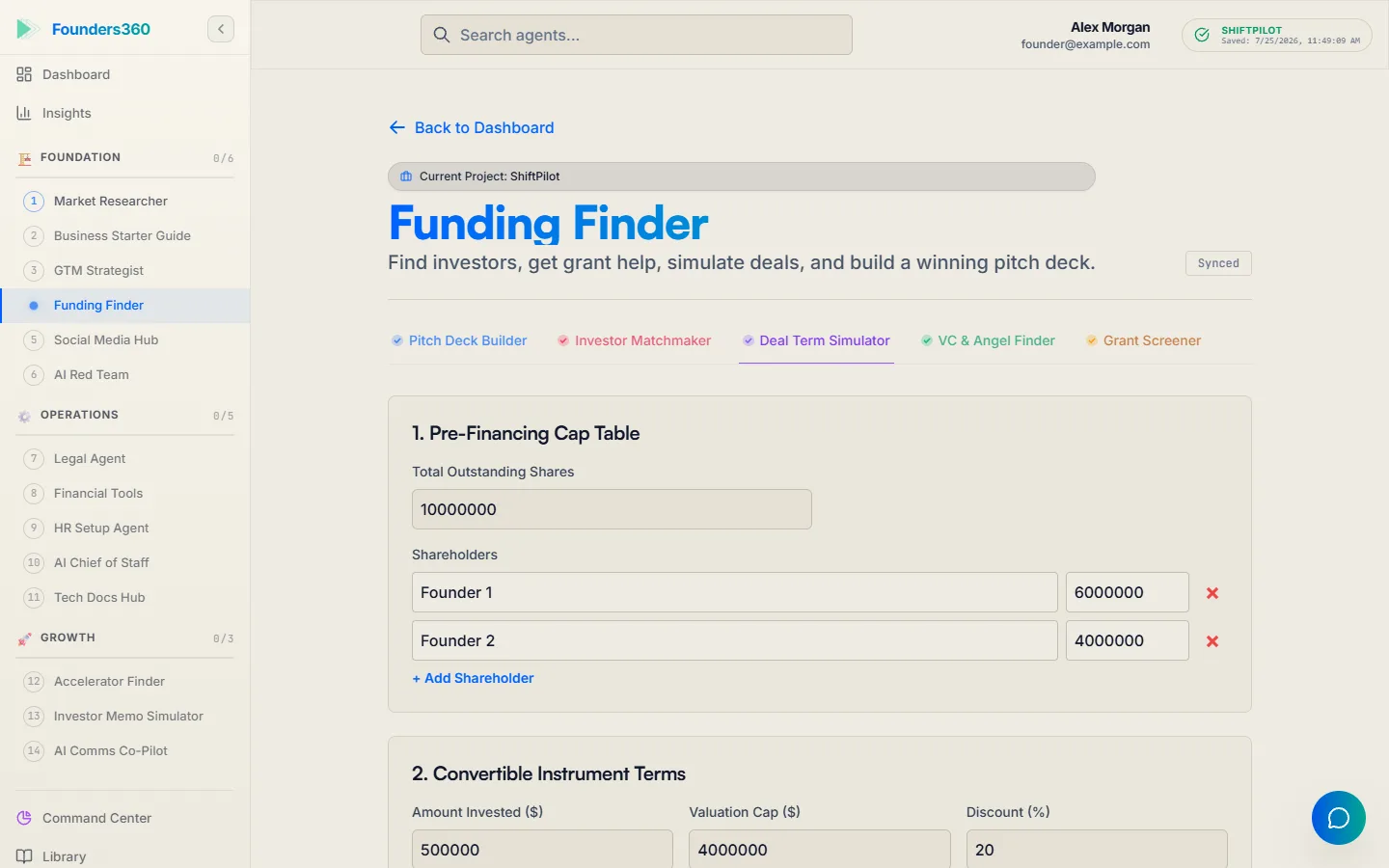
The founders who raise fastest are the ones whose investors were never surprised. Our pre-seed fundraising guide for 2026 covers who funds a company before it has traction; the cadence above is what makes those introductions warm.
Frequently Asked Questions
How long should an investor update email be?
Under 500 words. Five fixed numbers, three highlights, one to three lowlights, one to three asks, a thank-you list and one line on next month. Investors read updates on a phone between meetings.
How often should I send investor updates?
Monthly, on a fixed day, is the standard for pre-seed and seed companies. Weekly is too often for anyone off the board and quarterly leaves gaps long enough for investors to forget the story. During an active raise, add a short fortnightly note to the people you are pitching.
Should I send investor updates to investors who passed?
Yes, if they asked to be kept informed. An investor who passed but said "keep me posted" has given you permission to run a year-long diligence process at no cost, and those readers commit early in the next round. Do not add anyone who did not consent.
What if my numbers are bad this month?
Send the update on schedule and put the miss in the lowlights section with three parts: what missed, by how much, and what changes. The update that damages trust is the one that skips a month or omits the miss, not the one that reports it.
Do I need an investor update if I have not raised yet?
Yes, and it is more valuable before a raise than after. A monthly note to the investors and advisors who have said they want to follow the company builds the track record that makes the eventual raise fast.
Can an AI write my investor update?
An AI can assemble the draft from numbers it already holds and produce the template above in a minute. On Founders360 the Comms Co-Pilot does this by reading the Financial Tools agent's burn and runway facts from Shared Context. The lowlights and the thank-yous still need the founder, because those sections carry the voice and the relationships.
This week: open your last three months of bank statements, fill in the five numbers for each month into the template above, and send the first update to everyone who has asked to follow the company. The first one is the hardest; the twelfth one is the one that closes the round.
Tags
Related Articles
The Weekly Operating Cadence for Early-Stage Founders
The weekly operating cadence for early-stage founders is a Monday plan with one metric and three outcomes, protected build and customer blocks from Tuesday to Thursday, a written Friday review, and a monthly layer that checks runway and runs a pre-mortem.
9 min readPlaybooksHow to Run a Startup Pre-Mortem Before You Build
A startup pre-mortem is a 90-minute session that assumes the company has already failed eighteen months from now and asks everyone to write down why. Ranked by likelihood, cost and how late you would notice, the causes become the tests you run before writing code.
9 min readPlaybooksRejected by Y Combinator? What to Do in the Next 90 Days
A Y Combinator rejection is a data point about fit on one day, not a verdict on the company. This 90-day playbook covers what the rejection does and does not tell you, how to stress-test the pitch against an adversary, how to build the traction the application lacked, and how to line up other funding.
8 min readReady to Build Smarter?
Join thousands of solopreneurs using AI agents to scale their businesses.
Get Started Free