
Bootstrapping vs Venture Capital: A Decision Framework for First-Time Founders
Bootstrap when the business can reach profitability on capital you can access and you want to keep control; raise venture capital when the market rewards speed so heavily that being second is losing, and you accept an all-or-nothing outcome. This framework gives first-time founders five questions, a scoring matrix and a way to model both paths before deciding.
By Founders360 Team
Bootstrapping vs venture capital comes down to one test: bootstrap if the business can reach profitability on capital you can access without giving up equity, and raise venture capital only if the market rewards speed so heavily that arriving second means losing, and you are willing to trade a probable modest outcome for an improbable enormous one. Most first-time founders decide this by temperament or by what the founders they admire did. It should be decided by the shape of the business, and that shape can be measured before anyone signs anything.
Funding Finder is the most-used agent on our platform among external founders, about 36% of every run, so we see the question arrive before the answer is thought through. Founders come in wanting money. The framework below is the set of questions we would want them to answer first.
The five questions that decide bootstrapping vs venture capital
Five questions decide it, and you should write your answers down before reading further.
- Is the market winner-take-most? If network effects or switching costs mean the first company to scale takes most of the market, speed is worth paying for in equity. If ten profitable companies can coexist (most services, most vertical software, most agencies), speed is worth much less.
- How much capital is needed before the first dollar of revenue? Hardware, regulated products, marketplaces that need both sides seeded, and anything with a long enterprise sales cycle need money before they can earn it. A product a founder can sell in month three does not.
- What outcome do you actually want? A business paying you and a small team well for a decade is a success by any sane measure and a failure by venture math. Venture investors need a small number of enormous outcomes to return a fund, so they will push every company toward that, including yours.
- How fast does the cash need to move? Venture money buys the ability to hire ahead of revenue. If your plan does not require that, the money is expensive insurance.
- How much control do you need? A board, preferred stock and protective provisions change who decides what. Some founders work well with that; some do not.
If the answers to the first two are "yes" and "a lot", venture is probably right. If they are "no" and "not much", bootstrapping probably is. The mixed cases are where the rest of this guide earns its place.
What bootstrapping costs and what it protects
Bootstrapping protects ownership and control, and it costs speed and personal financial safety. Every dollar of growth has to come out of revenue or the founder's own pocket, which means the business grows at the pace customers pay, not at the pace the founder can hire.
The discipline that imposes is the underrated advantage. A bootstrapped company finds out in month two whether anyone will pay, because there is no alternative. A funded company can carry a product nobody wants for eighteen months before the same signal arrives, and by then the runway is gone with it. Bootstrapped founders also keep the option to raise later, from a position of revenue, on far better terms; a founder who raised early does not get the option to un-raise.
The real costs are personal. Salaries are late or absent in year one, the founder is doing sales, support and accounting, and a single slow quarter is a crisis rather than a line in a board deck. The hidden cost is the market you could not chase: if a competitor raises and hires twenty salespeople into the same customer base, a bootstrapped company can be right and still lose.
Grants, which cost no equity at all, are the bootstrapper's underused lever; our guide to grants for early-stage startups covers where they exist and what they take to win.
What venture capital buys and what it commits you to
Venture capital buys time and people ahead of revenue, and it commits you to a growth rate that most businesses cannot sustain and a definition of success that excludes most good outcomes. Both halves are true at once, and founders tend to hear only the first.
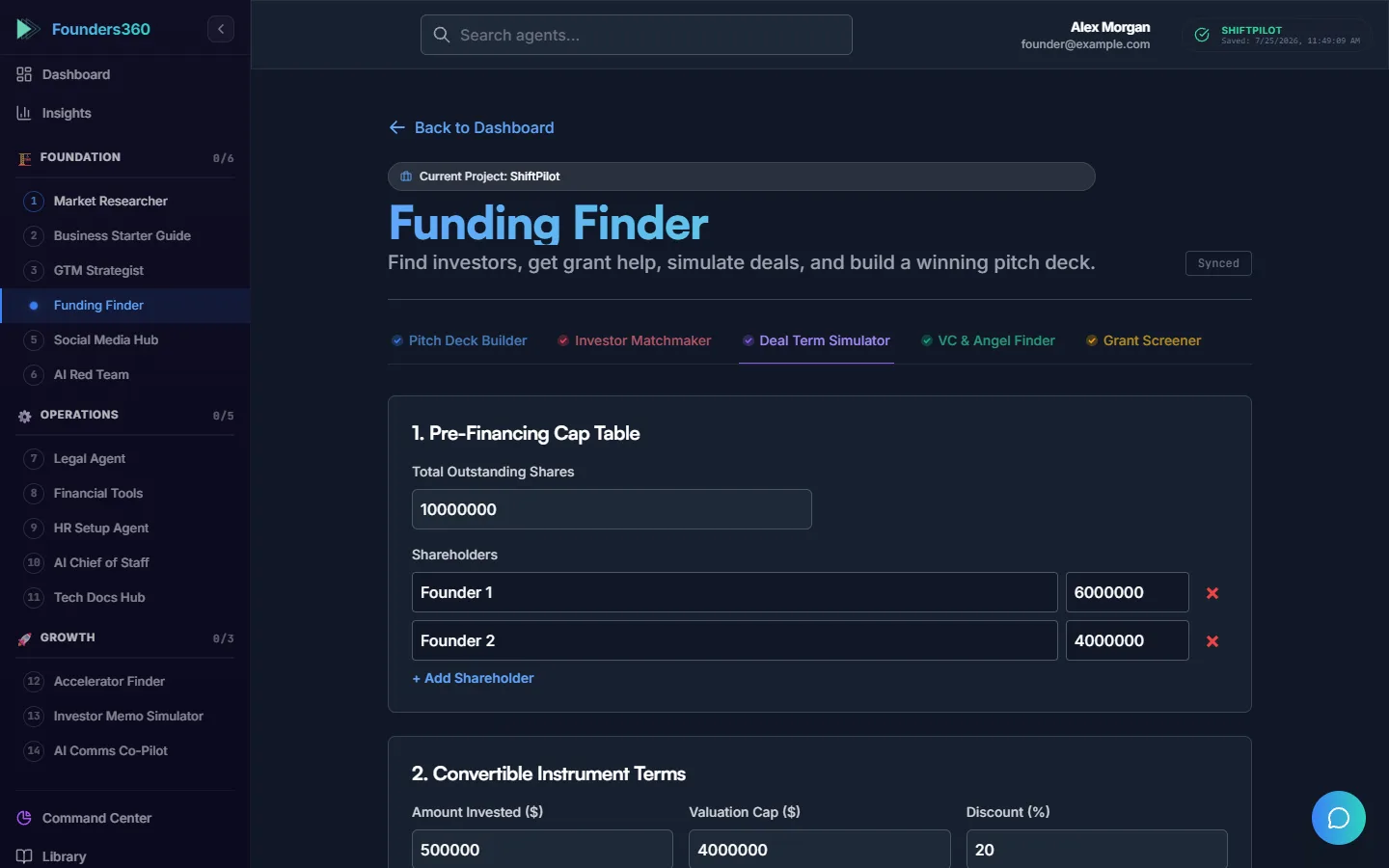
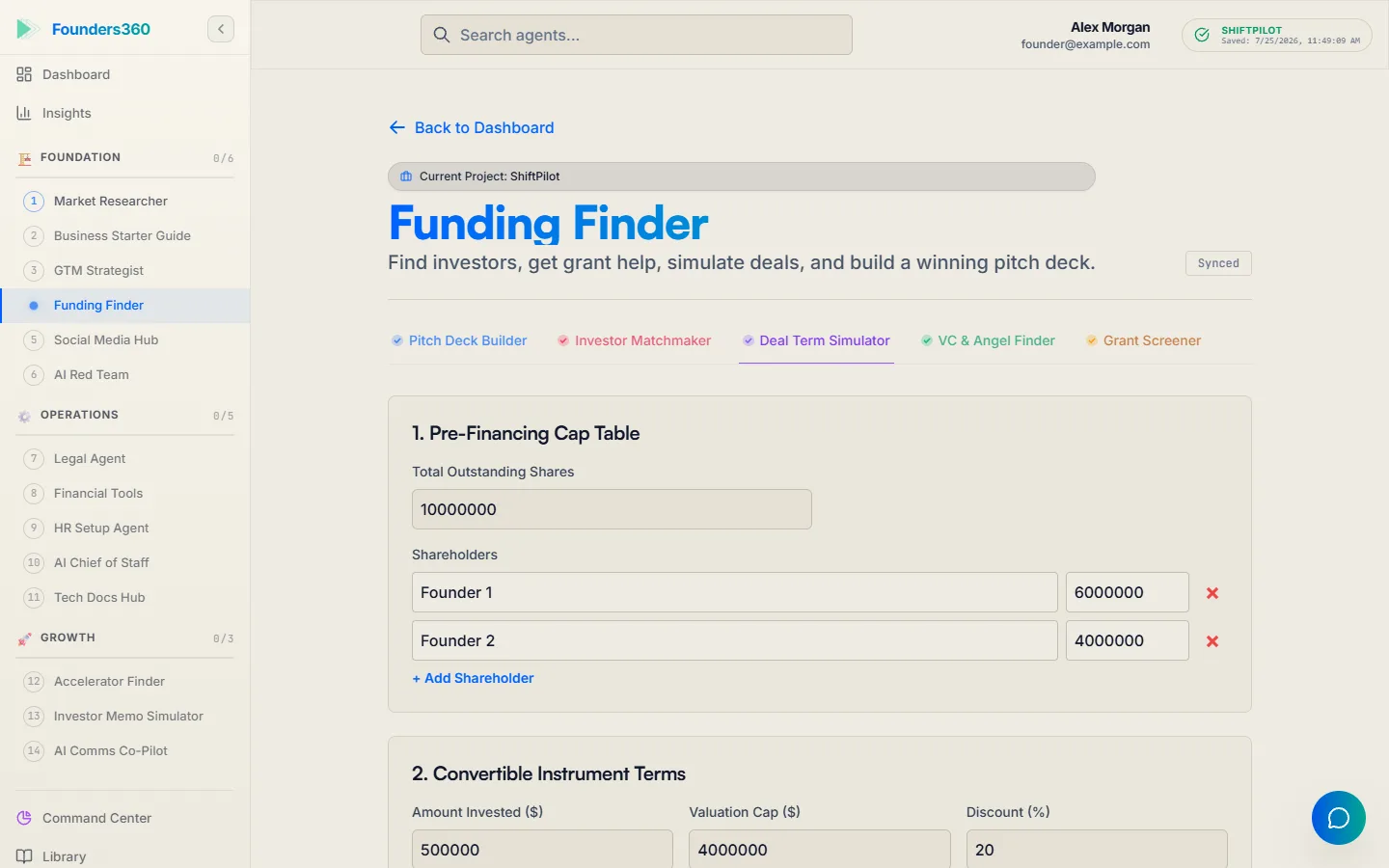
Dilution is the part founders argue about most and understand least. When we ran our own deal-term simulator on a typical pre-seed round, moving the valuation cap of a SAFE from $8 million to $12 million moved founder ownership from 75.29% to 75.88%. Half a point. At the higher cap the 20% discount governs the conversion instead, so the term founders fight hardest over matters most in the scenario where the company did badly. The option pool size and the amount raised moved ownership far more. The full worked example is in our piece on SAFE caps and dilution at pre-seed.
The commitments that matter more than dilution: a preference stack that pays investors before founders in a modest exit, a board that can replace you, and an expectation of a follow-on round in eighteen to twenty-four months that turns fundraising into a permanent second job. If the company reaches $3 million in revenue and stops growing, a bootstrapped founder owns a good business and a venture-backed founder owns a problem.
Our pre-seed fundraising guide is the practical companion if the answer turns out to be venture.
The middle paths between bootstrapping and venture capital
The choice is not binary, and the middle paths suit more first-time founders than either extreme. Angel money at a small round keeps growth expectations closer to earth than an institutional fund. Accelerators trade a fixed slice of equity for a small cheque, a network and a forcing function, and suit founders who need structure more than money. Revenue-based financing lends against recurring revenue and is repaid from it, which works once there is revenue to lend against and not before. Grants cost no equity and take patience.
The pattern that works for many software businesses is sequential: bootstrap to first revenue, take a small angel or accelerator round to prove the growth rate, then decide about institutional venture with real numbers in hand. Each step keeps the next option open, which raising a large round first does not.
Model both paths before you argue about them
Build a financial model for each path before deciding, because the argument changes when the numbers are on the table. The bootstrapped model asks: at what month does revenue cover costs, how much of the founder's own money is needed to get there, and what does the business look like in year three? The venture model asks: how much is needed to reach the milestone the next round will price, what growth rate does that imply, and what does the founder own at the end if it works?
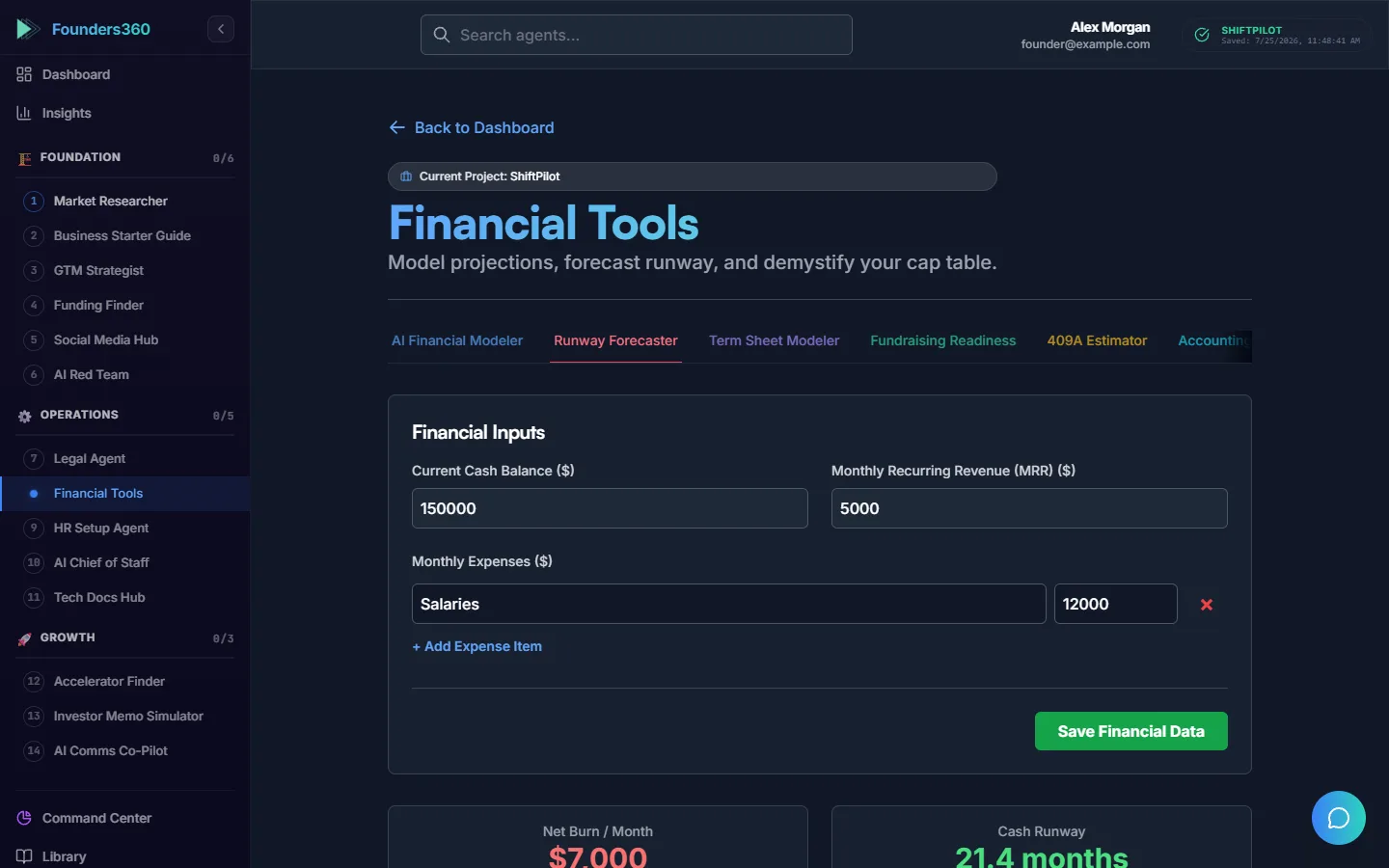
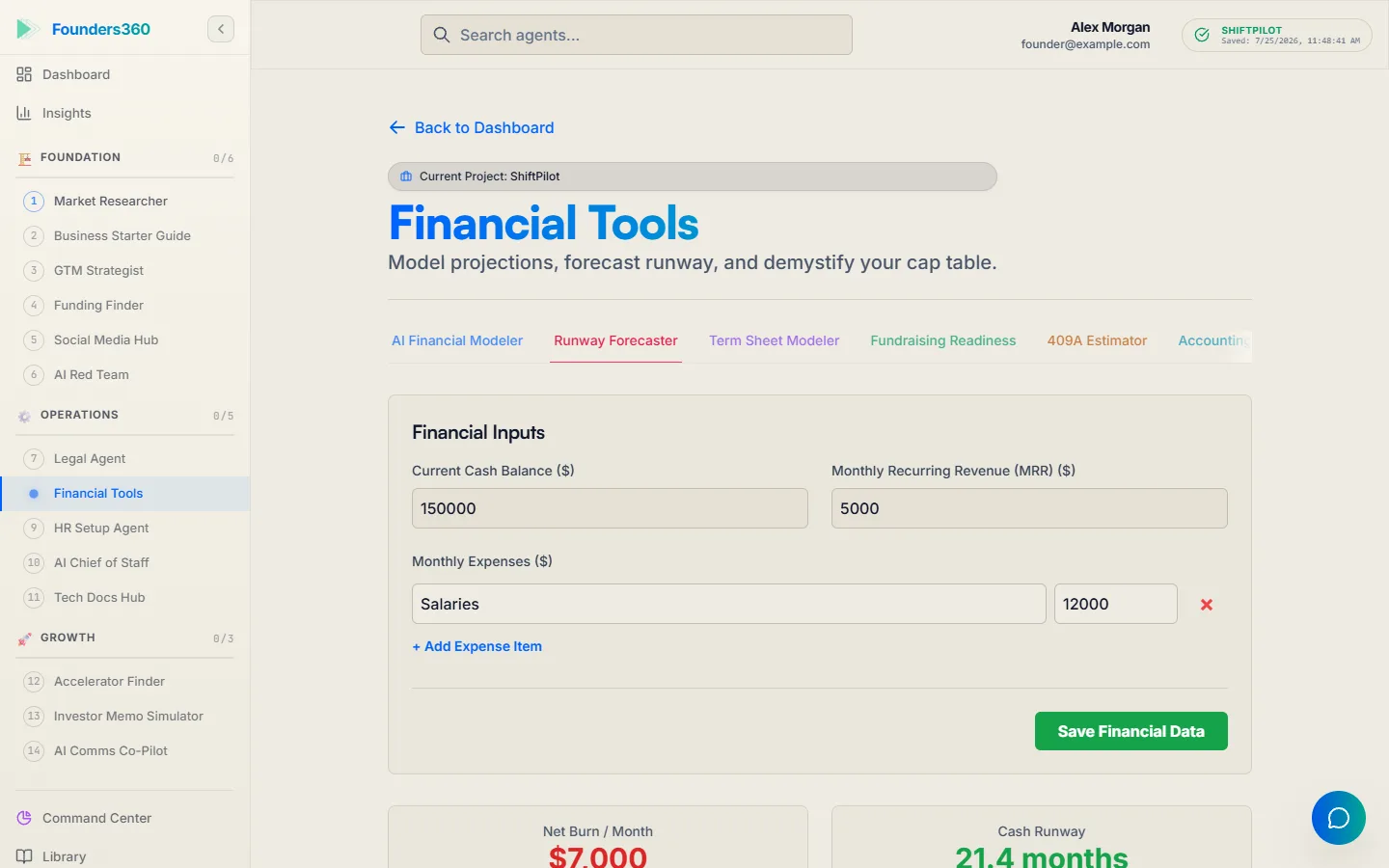
On our platform the Financial Tools agent builds that model and writes its assumptions into the company's Shared Context: revenue drivers, cost lines, runway, break-even month. Because those facts are shared, the Funding Finder later reads the same numbers when it drafts the financial slide of a deck, and the Chief of Staff sees the same runway when it plans the quarter. The model and the pitch cannot drift apart, which is the failure that gets founders caught in due diligence. If you have never built one, our guide to financial modelling for pre-revenue startups walks through the assumptions, and the companion piece on startup runway and burn rate covers the number both models turn on.
A scoring matrix for the bootstrapping vs venture capital decision
Score each row from 0 to 2 and add them up. The thresholds are illustrative, our own rule of thumb rather than a published benchmark, but the rows are the ones that decide real cases.
| Question | 0 points | 1 point | 2 points | |---|---|---|---| | Winner-take-most market? | No, many can coexist | Some concentration | Yes, first to scale wins | | Capital needed before revenue | Under six months of costs | Six to eighteen months | More than eighteen months | | Outcome you want | A profitable company you own | Open to either | A large exit or nothing | | Speed of hiring required | Hire from revenue | Some hiring ahead | Team of twenty before revenue | | Comfort with a board and preferred stock | Low | Moderate | High |
A total of 0 to 3 points says bootstrap. A total of 7 to 10 says raise. A total of 4 to 6 says take a middle path and revisit the score after first revenue, when three of the five answers will have changed from guesses to facts.
Stress-test the decision with a skeptical investor
Whichever way the score falls, put the plan in front of an adversary before you commit. Our Skeptical VC is a free, no-login AI investor that interrogates a pitch and ends with a blunt verdict; a founder who has decided to bootstrap should still run it, because the questions it asks about market size and capital needs are the same ones the framework above depends on. When our Funding Finder built a twelve-slide deck for a fictional test company (ShiftPilot, an AI scheduling idea for restaurants, and it is fictional), it scored its own work 72 out of 100 and called its own revenue slide weak. A plan that gets that verdict from its own author is not ready for either path.
This week, write your answers to the five questions, score the matrix, and build the bootstrapped model first, since it is the one that tells you whether you have a choice at all. If revenue can cover costs inside a year, you are deciding between two live options. If it cannot, the question was never bootstrapping vs venture capital; it was how much to raise and from whom.
Frequently Asked Questions
When should a first-time founder bootstrap instead of raising venture capital?
Bootstrap when the business can reach profitability on capital you can access, the market allows several profitable companies to coexist, and your preferred outcome is a company you own and control. Bootstrapping keeps the option to raise later on better terms; raising first does not keep the option to bootstrap.
When is venture capital the right choice for a startup?
Venture capital is right when the market is winner-take-most, the product needs significant capital before it can earn revenue, and the founder genuinely wants an enormous outcome and accepts that a modest one will count as failure. All three should be true, not one.
How much equity do founders give up at pre-seed?
It depends far more on the amount raised and the option pool than on the valuation cap. In our simulator, moving a SAFE cap from $8 million to $12 million changed founder ownership by about half a point, from 75.29% to 75.88%, while raise size and pool size moved it by several points.
Can you bootstrap first and raise venture capital later?
Yes, and it is often the strongest sequence. Revenue turns the next round's negotiation from a story into a set of facts, the valuation improves, and the founder has learned whether the growth rate justifies venture expectations before signing up to them.
What are the alternatives to both bootstrapping and venture capital?
Angel rounds, accelerators, grants and revenue-based financing. Angels bring smaller cheques with lower growth expectations, accelerators trade a fixed slice for structure and a network, grants cost no equity, and revenue-based financing lends against recurring revenue once it exists.
Tags
Related Articles
Co-Founder Agreement and Vesting: What First-Time Founders Must Put in Writing
A co-founder agreement with a vesting schedule is the document that decides who owns what when a founder leaves. Sign it before the first line of code, the first customer, or the first cheque, because every one of those makes the conversation harder.
8 min readGuidesUnit Economics for Early-Stage Startups: CAC, LTV and Payback Before You Have Revenue
Unit economics for an early-stage startup are three numbers per customer: what one costs to acquire, what one is worth over their life, and how many months until the first pays back the second. Before revenue you build them from stated assumptions, label them as such, and replace each one with a measurement as soon as you have it.
9 min readGuidesTechnical Documentation for Startups: What to Write Before You Hire Your First Engineer
Technical documentation for startups is five documents written before the first engineer starts: a product requirements document, a data model, an architecture decision log, an API contract and a runbook. Everything else can wait.
8 min readReady to Build Smarter?
Join thousands of solopreneurs using AI agents to scale their businesses.
Get Started Free