
How to Find Angel Investors for Your Startup (2026 Guide)
To find angel investors, start with second-degree introductions, then angel groups, syndicates, founder communities and accelerator alumni, and qualify each person before you pitch. This guide gives the order, the intro request template and the follow-up rhythm.
By Founders360 Team
To find angel investors, start with the people your network can introduce you to, then widen to angel groups, syndicate platforms, founder communities and accelerator alumni, and qualify every name against your stage, sector and typical check size before you send a single message. Most founders blast a long list of strangers and hope. Founders who close angel rounds build a short, ranked list and work it in order.
This is the ordered playbook for a pre-seed founder, from qualifying angels to following up without becoming a pest.
What do angel investors look for, and how are they different from VCs?
An angel invests their own money, usually at the earliest stage, and decides alone or with a small group, so they are betting on you as much as on the numbers. A venture fund invests other people's money under a mandate, needs partners to agree, and needs each deal to be able to return a large share of the fund. An angel has none of those constraints, so angels back companies funds pass on.
That freedom shows in what angels weigh. Expect them to care about four things:
- The founder. Why you, why now, and what you have already done.
- Evidence of pull. Revenue is rare at pre-seed, but proof of demand is not: interviews, a waitlist, pilots, letters of intent.
- A clear use of money. What the round buys, and what you will have shown by the end of it.
- Fit with their own experience. Many angels are former operators who back the industry they know.
Because angels use their own money, they move on relationships more than funds do, so warm introductions and steady updates matter more.
Where do you actually find angel investors?
Look in five places, in this order: your network, angel groups, syndicates and platforms, founder communities and accelerator alumni, then LinkedIn search. The order matters because the earlier sources convert better and cost less effort per meeting.
- Your own network and second-degree introductions. List every former manager, colleague, customer, advisor and classmate who has been successful, then ask whom they know who invests. A second-degree introduction from someone the angel trusts is the highest-converting route at this stage.
- Angel groups and networks. The Angel Capital Association publishes a directory of its member angel groups and accredited platforms that you can filter by area of focus. According to the Association, individual members are not listed, so you approach the group, and it advises checking what fees, if any, a group or platform charges entrepreneurs before you engage.
- Syndicates and platforms. Platforms such as AngelList let a lead investor pool the checks of many backers behind one deal. Read the terms and fees before you commit.
- Founder communities and accelerator alumni. Look at alumni and advisor lists of accelerators in your space, and at communities where operators in your industry gather.
- LinkedIn search and public writing. Search "angel investor" plus your sector, then read what they post. Anyone who writes publicly about your problem has told you their thesis.
How do you qualify an angel before you pitch?
Qualify on four facts: active or inactive, typical check size, stated thesis, and what they bring beyond money. A wasted pitch costs you the relationship.
- Active or inactive. Look for investments in the last 12 months on their profile, a portfolio page, or recent announcements. An angel who has not written a check in years is not a lead, whatever their bio says.
- Check size. Sizes vary widely and published medians differ by dataset, so look at the person's past deals. Someone who usually writes small checks can join your round but cannot lead it.
- Thesis and stage. Do they back pre-seed? Your sector? Your geography? A mismatch on any of these is a polite no, so drop the name.
- Value beyond money. At pre-seed, a customer introduction can matter more than a few extra thousand dollars.
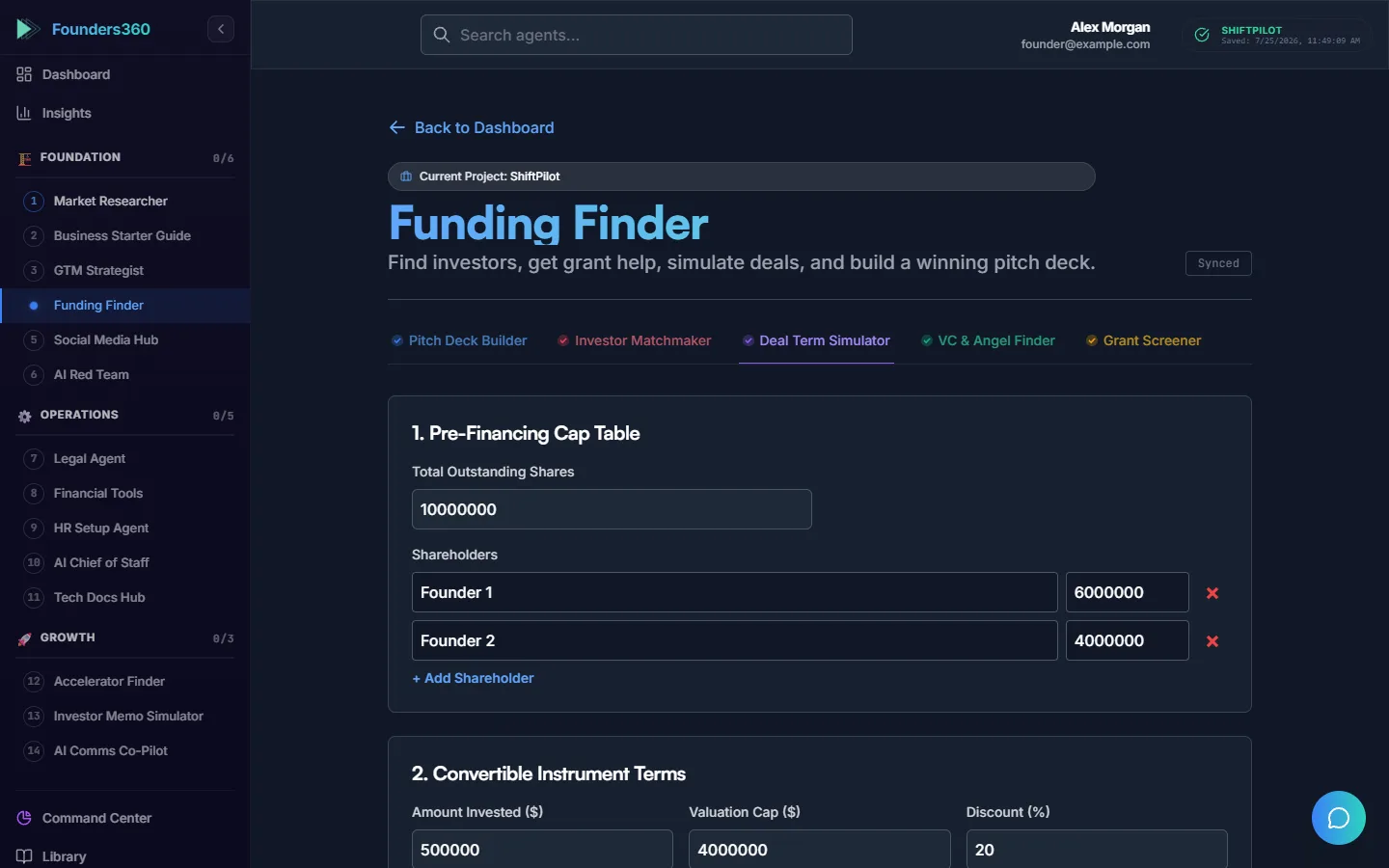
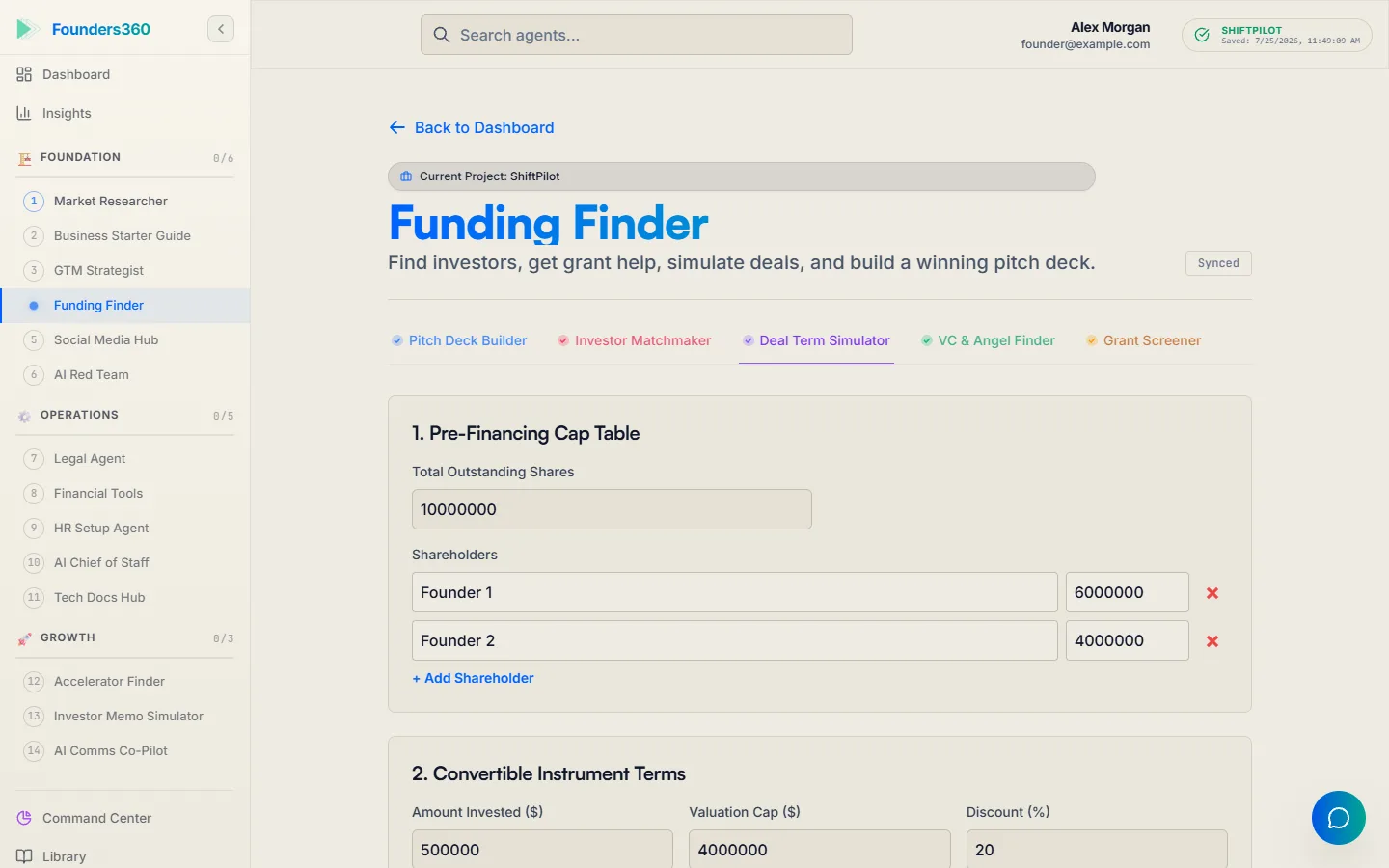
Write down a one-line reason each person fits. If you cannot write it, they do not belong on the list. If you want a clean way to do this across dozens of names, the Funding Finder agent builds a qualified investor list from your company context, including stage and sector, so the list starts matched instead of generic.
How do you build and prioritize a target list?
Build a list of 40 to 60 qualified names, rank them into three tiers, and approach the tiers in order. These numbers are a working guideline, not a rule: enough names to survive many no answers, few enough to personalize each message.
- Tier 1: warm and perfect fit. People you can reach through a trusted introduction who match your thesis. Start here and aim to lock a lead.
- Tier 2: warm and partial fit, or cold and perfect fit. Approach once tier 1 gives you momentum.
- Tier 3: everyone else who qualified. Use these to fill the round after a lead is in.
Track each name in a simple sheet: source, tier, intro path, status, last contact, next step. Compress meetings into two to three weeks so interest from one angel is visible to the next. Our pre-seed fundraising guide walks through the full timeline around this list.
How do you approach an angel: the warm intro and the short cold note?
Ask your mutual contact for a forwardable email, not a favor. Write the introduction for them, in two or three sentences they can paste:
Subject: Intro request: [Your Name] to [Angel Name]
Hi [Contact], I am raising a small pre-seed round for [Company], which helps [customer] do [outcome]. [One proof point, for example: 12 pilot customers or 300 on the waitlist.] I noticed [Angel Name] invested in [relevant company], and I would value a short conversation. Would you be comfortable introducing us? Here is a forwardable blurb you can use: [two sentences].
With no warm path, send a short cold note of five lines: who you are, what the company does, one proof point, why this angel specifically, and one clear ask for a 20 minute call. Do not attach a deck. Rules, a template and cadence are in our guide on how to cold email investors.
What do you send: the one-pager or the deck?
Send a one-page summary first and the deck only when asked. It is read in a minute and answers the first question: is this worth a call. It should hold the problem, the product, your proof, the market in one line, the team, the round size and what it funds.
Have a short deck ready for the follow-up; pitch deck structure covers it slide by slide. Also be ready to explain the instrument. Many angel rounds use a SAFE or convertible note, so know your cap and what it costs you before the first call. Our guide to SAFE cap and dilution at pre-seed shows the math.
What do the U.S. accredited-investor rules mean for you?
In the U.S., most angels who write checks into private startups are accredited investors, and you need to know the rule so your raise stays inside an exemption. Under 17 CFR 230.501(a), as published on Cornell Law School's Legal Information Institute and checked in October 2026, a natural person qualifies if their individual net worth, or joint net worth with a spouse or spousal equivalent, exceeds $1,000,000 (excluding the primary residence). A person also qualifies with individual income above $200,000 in each of the two most recent years, or joint income above $300,000, with a reasonable expectation of the same level in the current year. The rule also recognizes certain professional credentials held in good standing, as designated by the SEC.
What this means for you in practice:
- Rule 506(c) requires that every purchaser is accredited and that you take reasonable steps to verify it. Under the rule text, those steps can include reviewing tax forms, recent asset documents, or written confirmation from a registered broker-dealer, SEC-registered adviser, attorney or CPA.
- Rule 506(b) is the other common exemption, with different limits on who may invest and how you may offer. Your lawyer should choose.
- Do not assume an angel is accredited. Ask, and keep records.
This is general information, not legal advice, and thresholds can change. Confirm the current definition with the SEC and a securities lawyer. Rules outside the U.S. differ.
How should you follow up without being pushy?
Follow up on a fixed rhythm: reply within a day, update within a week, and nudge twice at most. Silence is not a no.
- After a first call: send a thank you within 24 hours with the one thing they asked for.
- If no reply: nudge after five to seven days with one new fact, such as a signed pilot or a milestone. A nudge with news beats a nudge with a question.
- Second nudge: one more after another week, then move on. Keep them on your update list.
- After a no: thank them and ask whom else they would suggest.
- Keep everyone warm. A short monthly note to interested angels turns a maybe into a yes.
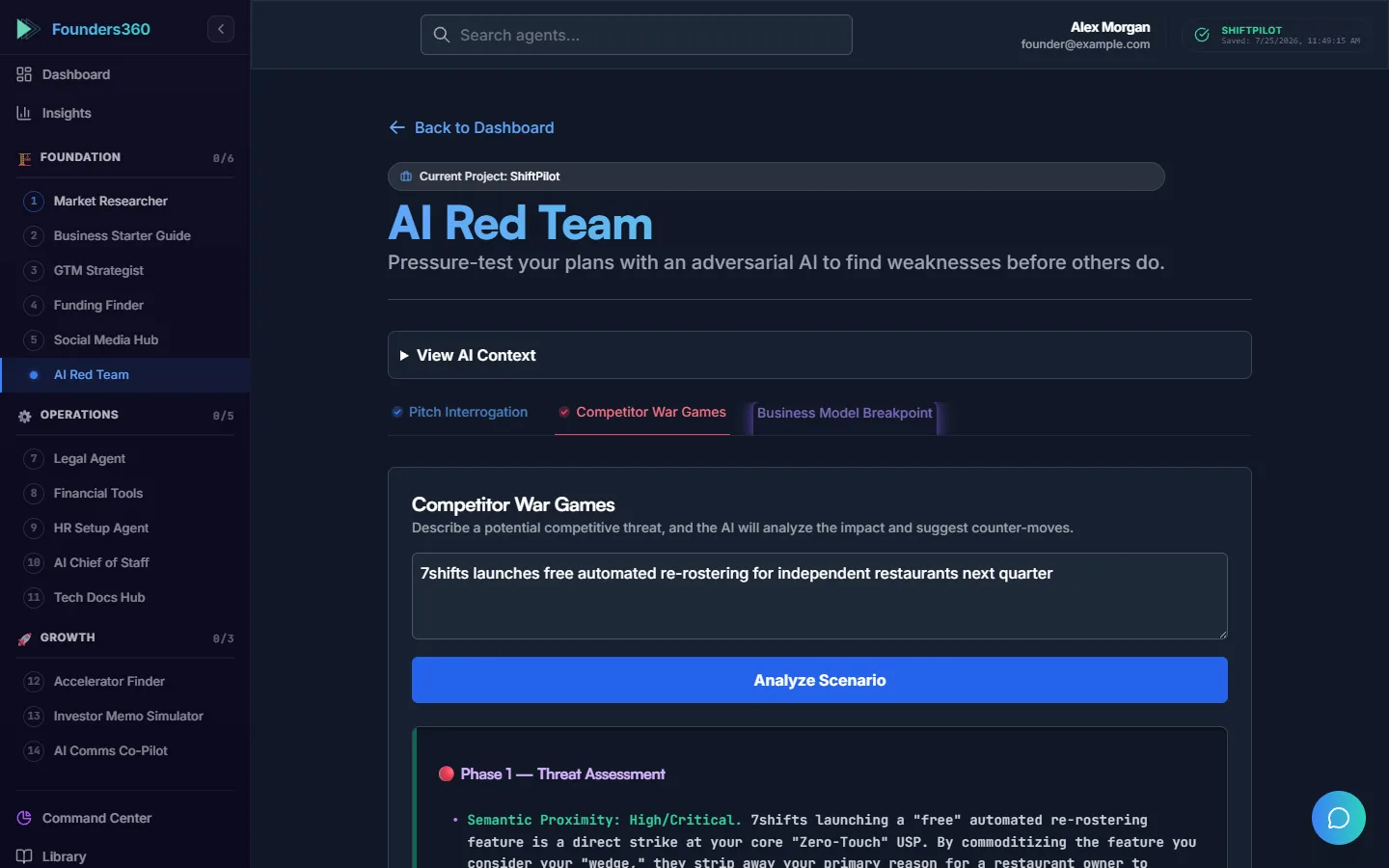
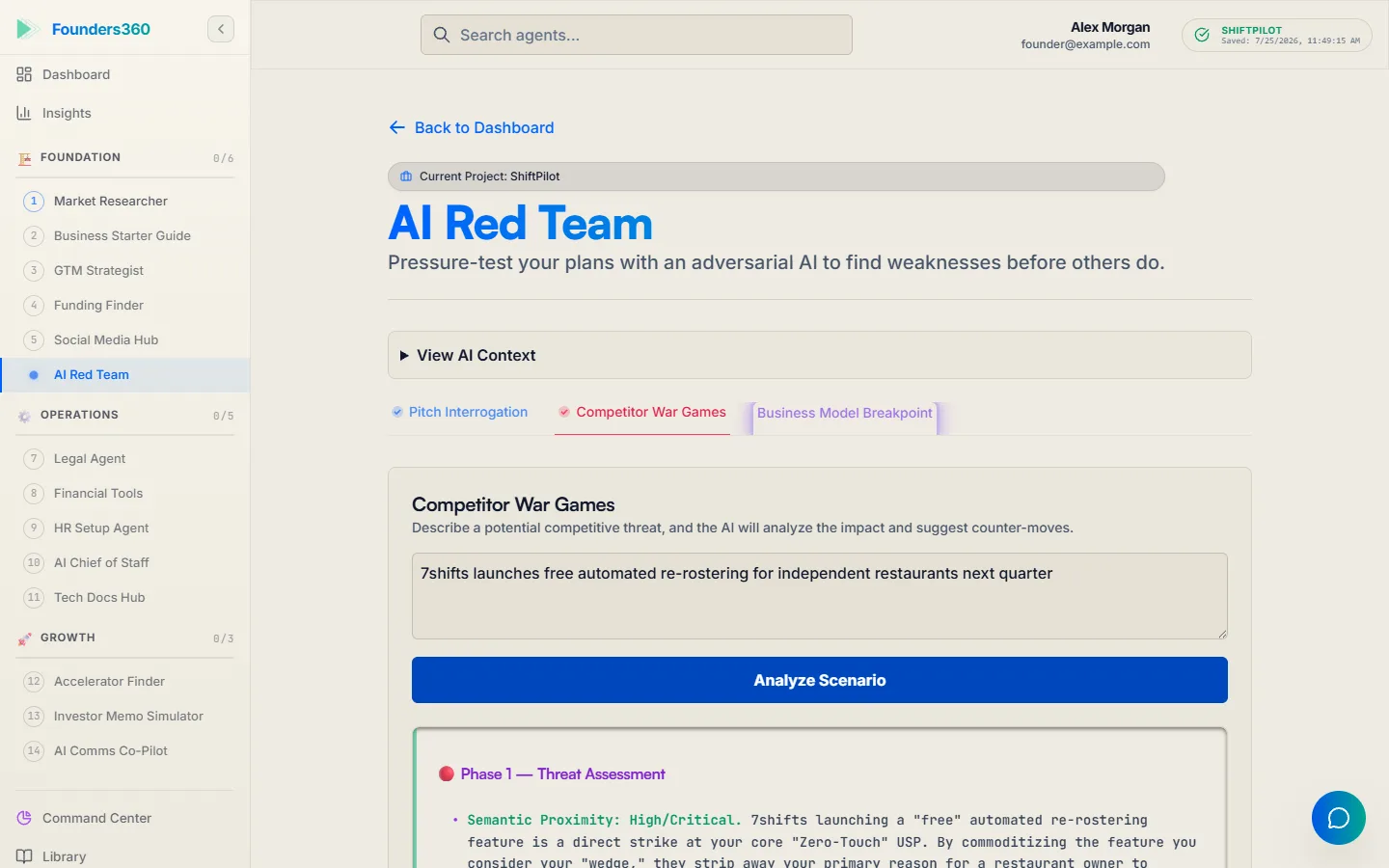
Before real meetings, rehearse. Angels ask blunt questions about traction and why now. The AI Red Team agent pressure tests your pitch against those questions, and the free AI VC at /vc-grill grills your pitch with no signup, which is a cheap way to find weak answers before an angel does.
Frequently Asked Questions
How do I find angel investors with no network?
Start with the people you do have: customers, advisors, classmates and founders one step ahead of you, and ask each whom they know who invests. Then use the Angel Capital Association directory, accelerator alumni and industry communities. It takes longer, but a short, specific cold note to a well matched angel still works.
How much do angel investors usually invest?
It varies by person, group and region, and published figures differ by dataset, so no single number is safe to plan around. Check each angel's past deals and plan your round as several checks, with a lead writing the largest.
Do I need an accredited investor to raise from angels?
In the U.S., many private startup rounds rely on exemptions that are built around accredited investors, so most of your angels will be accredited. Rule 506(c) requires you to verify status. Check the current SEC rules with a securities lawyer before you accept funds.
Is a warm intro really better than a cold email?
Usually yes, because a trusted introduction carries credibility a stranger lacks. A cold email still works when it is short, specific to that angel and carries one proof point.
How many angels should I contact?
Build a qualified list of roughly 40 to 60 names, in tiers, and work through it in a two to three week window. This is a working guideline rather than a rule.
What should I do if an angel says no?
Thank them, ask for feedback and ask whom else they would suggest. Keep them on your update list, since a no today can become a yes after your next milestone.
Tags
Related Articles
Term Sheet Explained: The Clauses Founders Must Understand Before Signing
A term sheet explained simply is a short, mostly non-binding offer that fixes the price and the control terms of a venture round. Most clauses are standard; a handful of economic and control terms decide who really wins.
7 min readFundraisingSAFE vs Convertible Note: Which Should Your Startup Use?
In a SAFE vs convertible note choice, the SAFE is simpler because it is not debt and has no interest or maturity date, while a note is a loan that converts into equity. This guide compares the terms side by side and shows when each one fits.
7 min readFundraisingHow to Write an Executive Summary for Investors (With Template)
To write an executive summary for investors, fit your problem, solution, market, traction, model, competition, team and ask on one page that a stranger can read in two minutes. This guide gives the order, a fill-in template and an illustrative example.
7 min readReady to Build Smarter?
Join thousands of solopreneurs using AI agents to scale their businesses.
Get Started Free