
How to Trademark a Business Name: Search, Classes and Filing in the US, Canada, UK and UAE
To trademark a business name, you search for similar marks, describe your goods or services, choose the right classes, and file with the trademark office in each country where you want protection. This guide covers the steps and official fees for the US, Canada, the UK and the UAE.
By Jay Kambo
To trademark a business name, you search for similar marks, describe the goods or services you sell under the name, and file an application with the trademark office in each country where you want protection. This guide walks through each step for the United States, Canada, the United Kingdom and the United Arab Emirates. This is general information, not legal advice, so talk to a trademark lawyer or agent before you file.
Is a trademark the same as a business name registration?
No. Registering a company or a business name with a government registry is a different thing from registering a trademark. The company registry lets you operate under that name, while a trademark gives you rights to use the name as a brand for particular goods or services.
The US Patent and Trademark Office makes this point in its trademark process guide, which lists trademarks as separate from patents, copyrights, domain names and business names. In other words, owning a domain or an incorporated company does not stop someone else from registering the same brand as a trademark.
If you are still at the stage of forming the company, start with our guide on how to incorporate a startup without a lawyer, then come back here to protect the brand itself.
What can you trademark, and should you do it now?
You can trademark a word, phrase, logo or other sign that identifies the source of your goods or services. Whether you should do it now depends on how much the name matters to you and how soon you will start selling.
A trademark is worth considering when the name is your main brand, when you plan to raise money or sell in several countries, or when a copycat would hurt you. It matters less for a side project you may drop in six months. See our breakdown of startup legal documents and their cost for where a trademark fits.
Before you file, the USPTO says to check that the mark can be registered, and GOV.UK says the UK Intellectual Property Office will tell you about any problems, which you must resolve before registration.
How do you search for existing trademarks before filing?
Search the official database in each country before you spend money on a filing. The search shows whether someone already holds a similar mark for similar goods or services, which is the most common reason applications are refused or later challenged.
- United States: The USPTO runs a Trademark Search system and links to guides on clearance searching and on likelihood of confusion. It also lists a Trademark ID Manual that you can use as a reference.
- Canada: The Canadian Intellectual Property Office says "a good first step is to do a search of existing trademarks" and advises you to "check for different possible versions of the trademark that you want to register", according to its trademarks guide. The guide suggests searching other spellings, including French ones.
- United Kingdom: GOV.UK explains how to check for existing UK trade marks by keyword, phrase or image, by registration number or by owner. It also points to the journal that lists applications accepted in the last week.
- United Arab Emirates: The government portal states that the Ministry of Economy and Tourism is the competent authority to register trademarks, as described on the UAE government portal. Ask the ministry or a registered agent how to search its records.
Trademark rights are national, so a registration in one country does not protect you in another. File first where you sell or plan to sell soon.
Search for more than the exact name: similar sounds, spellings, translations and names used for related goods or services. A confusingly similar mark can block you too.
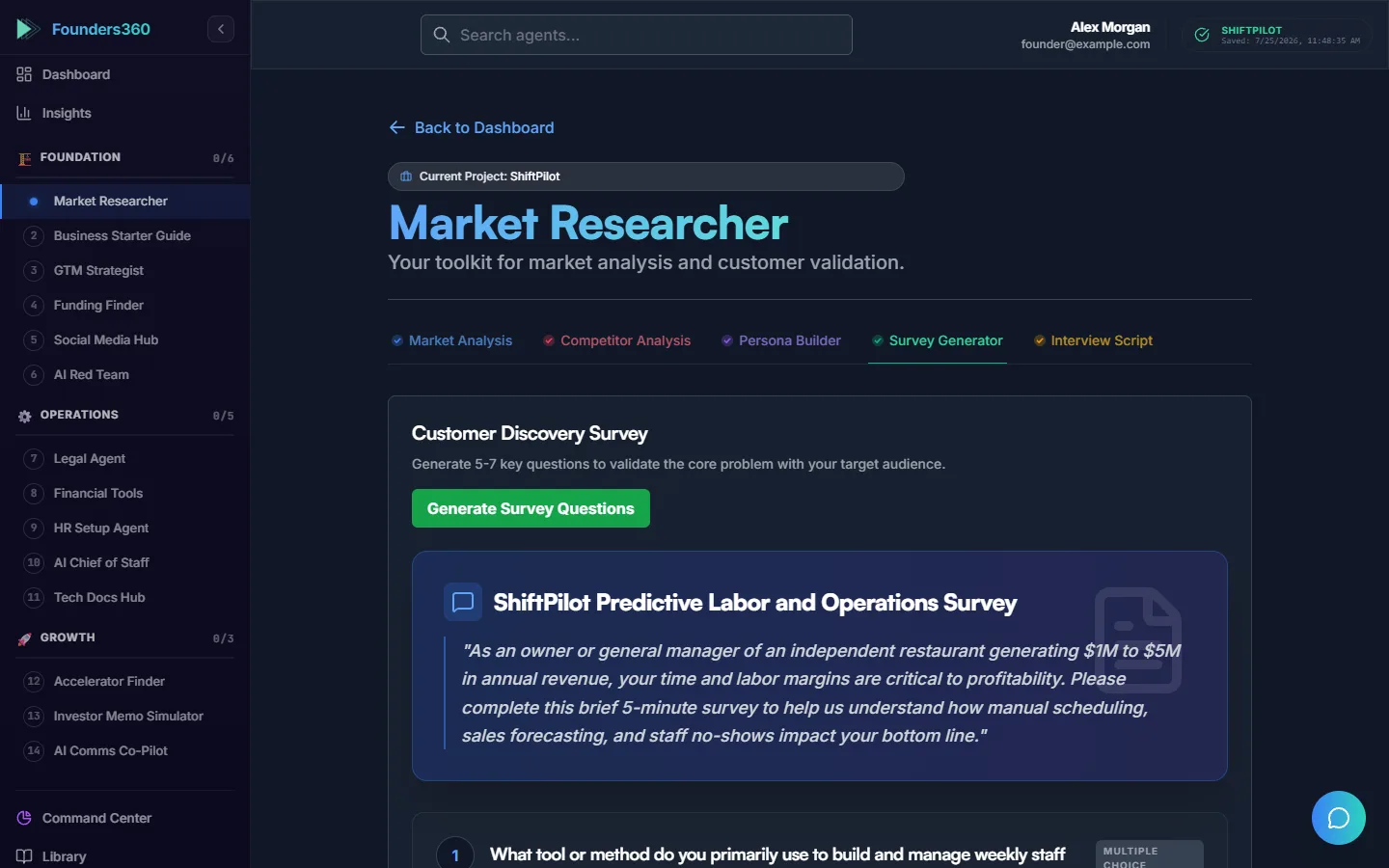
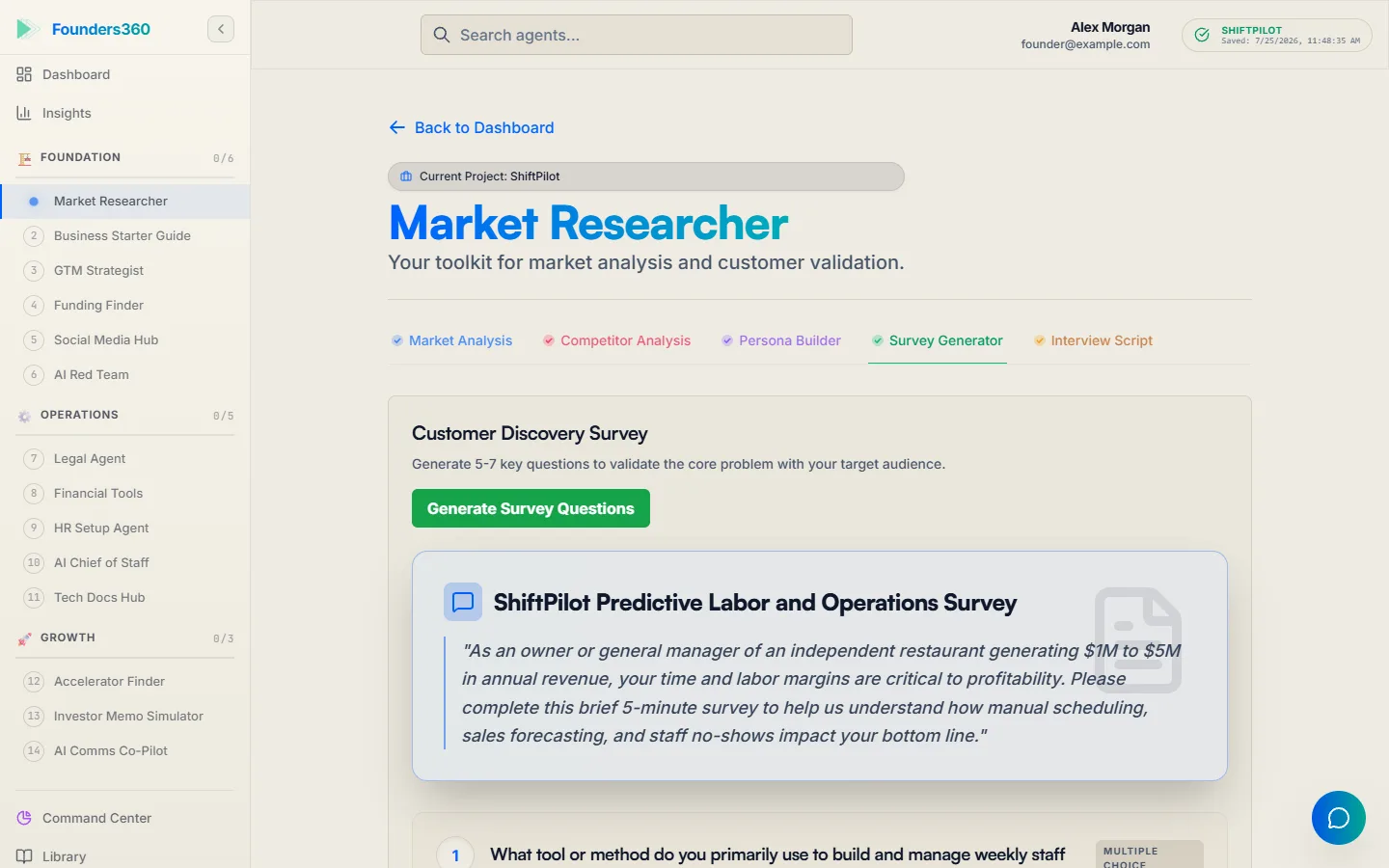
The Market Researcher in Founders360 can help you look into competitors in your space. Check every name you find in the official databases.
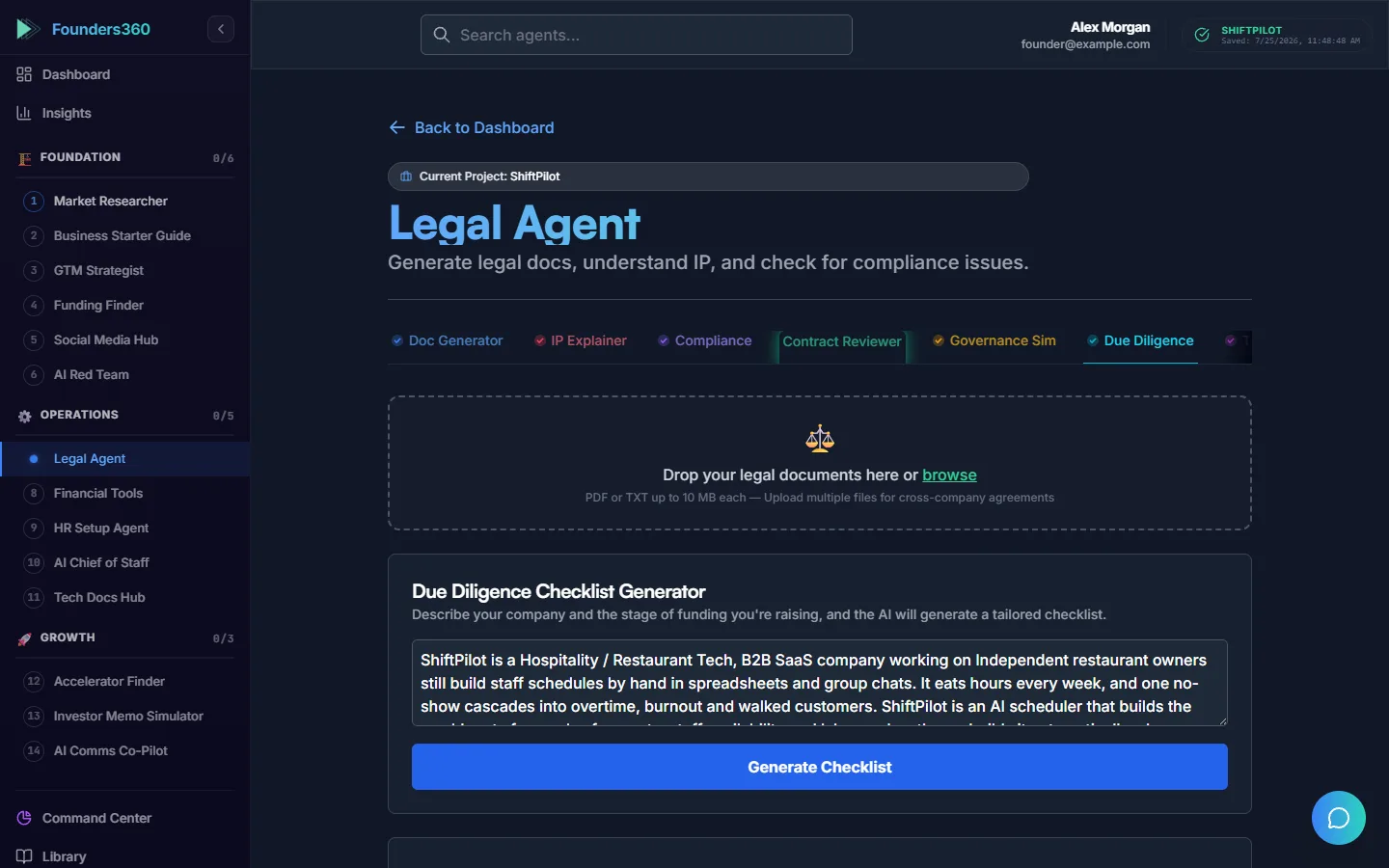
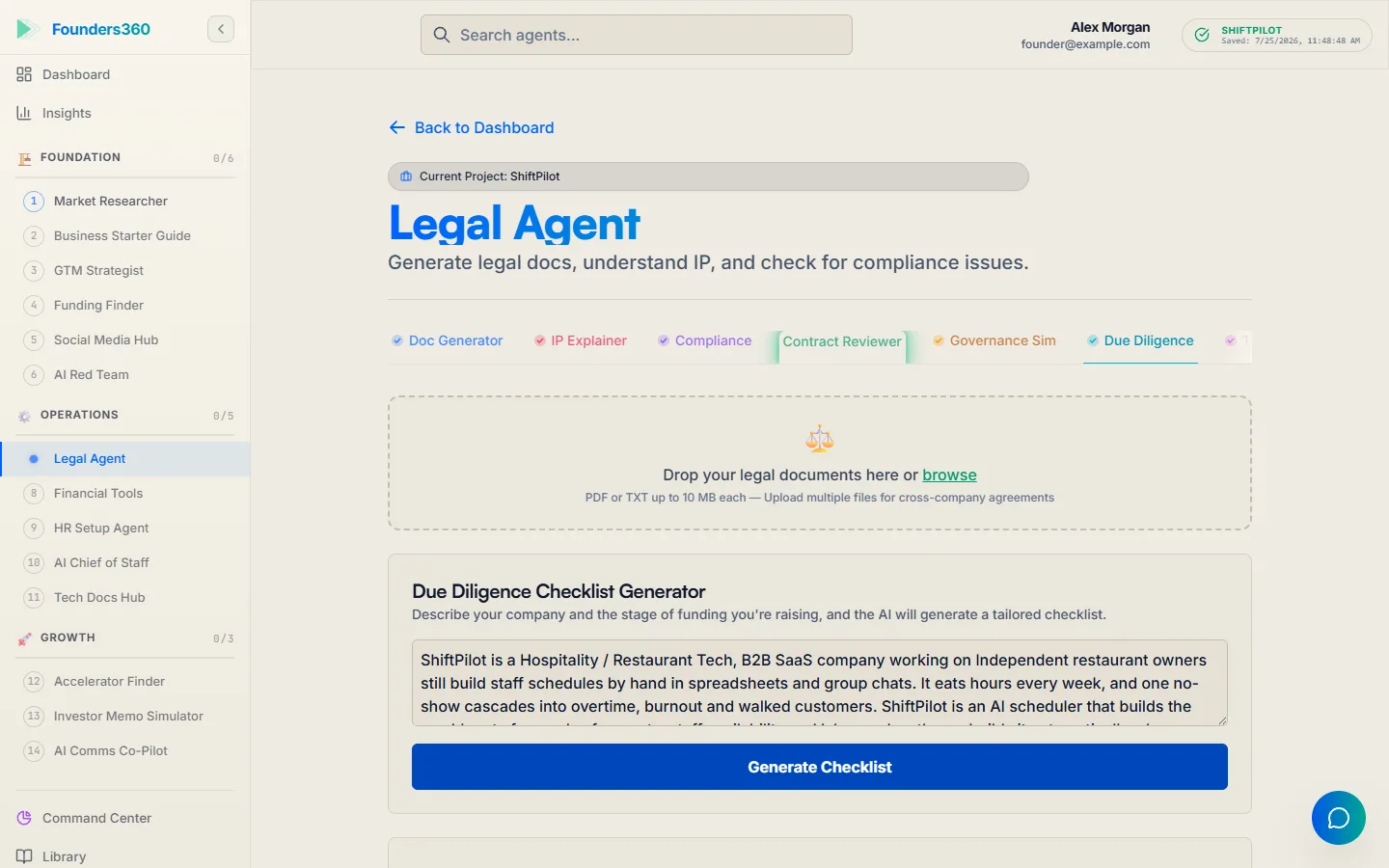
The Legal Agent in Founders360 can help you learn the basic terms of intellectual property. It is a starting point, not a replacement for an official search or a lawyer.
What are trademark classes and how do you choose them?
Classes are groups of goods and services, and you file for the classes that match what you will sell under the name. A mark is protected for the goods or services you list, so the class choice decides how wide your protection is and also how much you pay.
Each office handles this slightly differently:
- USPTO: The base application fee is charged "for each class of goods or services you include in your application", so two classes double the base fee. You describe your goods or services, and the USPTO provides an ID Manual of standard descriptions.
- CIPO: Your application needs a statement of goods and services "grouped according to the Nice Classification", and the trademarks guide notes that you cannot expand the list of goods or services after you file. List what you need carefully the first time.
- UK IPO: You must send "details of your trade mark and the goods or services you want to use your trade mark on", and the cost depends on how many types of goods or services you want to protect, as described on GOV.UK.
A practical way to choose: write one plain sentence about what you sell today and one about what you will sell in the next two or three years. File for the first now. Add the second only if the extra fee is worth it, because broad claims you do not use can cause trouble later.
How do you file a trademark in the United States?
You file online with the USPTO through its Trademark Center, and then you respond to any questions the examining attorney raises. According to the USPTO process page, the steps are:
- Get ready. Check that the mark can be registered and decide your goods or services and filing basis. Applicants whose domicile is outside the US must be represented by a US-licensed attorney.
- File and monitor. Apply in Trademark Center and check the status every three to four months. Keep your address and email current.
- Examination. An examining attorney reviews the application. If there are problems you receive an office action and must respond within three months, with an optional three-month extension for a fee.
- Publication and opposition. Approved marks are published, and other parties have 30 days to file an opposition or an extension request.
- Maintenance. After registration you must file maintenance documents to keep it active.
The filing basis matters. A use-based application relies on use in commerce. An intent-to-use application is for a mark you plan to use. For intent-to-use, the USPTO page says a notice of allowance issues about eight weeks after publication, and you then have six months to file a statement of use or an extension request. Allowance does not mean the mark is registered yet.
On cost, the USPTO says the base application fee is $350 for each class, and that you "may owe one or more additional fees" at filing and during examination. Read the current USPTO fee page before you pay, since fees change.
How do you file a trademark in Canada?
You file with CIPO online or by mail, with your name and mailing address, a representation or description of the trademark, a list of goods or services and the fee. CIPO's page on fees for trademarks lists the 2026 online fee as $491.06 for the first class and $149.04 for each additional class, in Canadian dollars. The same page lists higher 2027 amounts and says the amount you pay depends on when the Registrar receives payment.
Two rules to know from the trademarks guide. First, your registration lasts 10 years from the date of registration, and you can renew it every 10 years for a fee. Second, you must use the mark in Canada: if you do not, the registration could be expunged from the Register of Trademarks, and after three years the Registrar can start summary expungement proceedings.
How do you file a trademark in the United Kingdom?
You apply to the UK Intellectual Property Office, and GOV.UK says registration costs "at least £205", with the final cost depending on how many types of goods or services you cover. The GOV.UK page also says a trade mark lasts 10 years and must be renewed every 10 years to stay in force.
The Intellectual Property Office will tell you about any problems with your application, and you must resolve them before registration. Because the cost grows with the goods or services you cover, claim what you really need.
How do you trademark a business name in the UAE?
You apply to the Ministry of Economy and Tourism, which the UAE government portal names as the competent authority to register trademarks, and the portal says applications can be filed online through the ministry website. The portal links to Federal Decree-Law No. 36 of 2021 on trademarks, which is the law to check for the details.
UAE founders should check current fees and the length of protection with the Ministry of Economy and Tourism before filing, and consider a registered agent if they do not live in the UAE. If you are setting up in Dubai, our guide to how to set up a business in Dubai covers the wider company steps.
Frequently Asked Questions
How much does it cost to trademark a business name?
It depends on the country and the number of classes. The USPTO states a base fee of $350 for each class, CIPO lists $491.06 for the first class and $149.04 for each additional class for 2026 online filings, and GOV.UK says UK registration costs at least £205. Confirm current fees on the official pages linked above, and check UAE fees with the Ministry of Economy and Tourism.
Do I need a lawyer to file a trademark?
Not always, but a lawyer or agent helps with searches and classes. In the United States, applicants domiciled outside the country must have a US-licensed attorney, according to the USPTO.
How long does a trademark last?
In Canada, a registration lasts 10 years from the date of registration and can be renewed every 10 years, according to CIPO. In the UK, GOV.UK says a trade mark lasts 10 years and must be renewed. In the United States you must file maintenance documents to keep a registration active.
What is the difference between a trademark and a business name?
A business name registration lets you operate under a name, while a trademark protects the name as a brand for specific goods or services. The USPTO treats trademarks as separate from business names and domain names.
Can I trademark a name before I start selling?
In the United States, yes, with an intent-to-use application, which the USPTO describes as a route for marks you plan to use. In Canada, you must use the mark once registered or risk expungement. Rules differ by country, so check the one where you plan to file.
Tags
Related Articles
Privacy Policy and Terms of Service for Startups: What Each One Must Cover
A privacy policy tells people what data you collect and why, while terms of service set the rules for using your product. This guide explains what each document should cover for a startup website or app, and the basics of GDPR, CCPA and PIPEDA.
9 min readGuidesBreak-Even Analysis for Startups: How to Calculate Your Break-Even Point
Your break-even point is the amount you must sell before revenue covers all of your costs. This guide gives the formula, a step-by-step worked example with illustrative numbers, and shows how changes in price, cost and target profit move the result, so you can set realistic sales goals.
7 min readGuidesCompetitor Analysis for Startups: How to Do One, With a Template
A competitor analysis lists who your customers could choose instead of you, records what each offers, charges and does badly, and shows where you can win. This guide gives a seven-step method, a template table to copy, and advice on where to find reliable information.
8 min readReady to Build Smarter?
Join thousands of solopreneurs using AI agents to scale their businesses.
Get Started Free