
Email Marketing for Startups: Your First 1,000 Subscribers
A startup can reach its first 1,000 email subscribers by offering one useful thing, asking for permission clearly, and sending something worth opening. This guide covers where subscribers come from, what to send, and the CAN-SPAM, CASL and UK PECR consent basics.
By Jay Kambo
Email marketing for a startup means collecting addresses from people who asked to hear from you, then sending them messages that are worth opening. The first 1,000 subscribers rarely arrive by accident. They come from a clear offer, a visible sign-up form, and the habit of talking to people one at a time. This guide covers where subscribers come from, what to send, and the consent rules you must follow in the US, Canada and the UK.
Why does a startup need an email list at all?
An email list is an audience you own, while social media followers are borrowed. If a platform changes its rules or your account is restricted, your followers can disappear from your reach overnight. An email address you collected with permission stays with you.
Email also suits the early stage because it is direct. A subscriber has told you they are interested, so a message from you is a conversation with someone who raised their hand. For a founder still learning what customers want, replies to an email are some of the best research available.
Keep the goal modest. A list of 1,000 people who care about your topic is worth more than 10,000 people who signed up for a prize. Quality comes from a specific promise, and the next sections show how to make one.
How do you get your first 1,000 email subscribers?
Make one specific offer to one specific kind of person, and put the sign-up form where that person already looks. Vague pitches such as "subscribe for updates" rarely work. A clear promise does, for example "one page on how to price a service, every Tuesday".
Here are the sources that tend to work for a new startup, from closest to furthest:
- People you already talk to. Customers, people who answered your interviews, and contacts who asked to be kept informed. Ask each one directly whether they would like to receive your emails. Our guide to finding your first 10 customers shows how to build those first conversations.
- Your website. Put a short form on your home page, at the end of every article, and on a dedicated page. Say what people will receive and how often.
- A useful free resource. A checklist, template or short guide that solves one small problem. People trade an address for something they will use.
- Content people can share. Helpful articles and posts bring in strangers. Our guide to a build in public strategy explains how sharing your progress attracts readers who later subscribe.
- Communities and partners. Answer questions in places your customers gather, and swap guest posts with someone whose audience matches yours. Share your link where the rules allow, and never post it in places where it is unwelcome.
- Events and conversations. Webinars, meetups and talks work well if you ask attendees clearly whether they want to hear from you afterward.
The numbers add up slowly. Expect the first hundred to take the longest, and expect each new one to come a little faster as your content and reputation grow.
What do the US, Canadian and UK rules say about email consent?
The rules differ by country, and the safest habit is to ask permission before you send marketing email to anyone. The notes below summarize official pages. They are general information, not legal advice, so check the sources and ask a lawyer if your situation is complex. If your subscribers live in several countries, follow the strictest rules that apply.
United States: CAN-SPAM. The Federal Trade Commission publishes a CAN-SPAM compliance guide for business. It says you must not use false or misleading header information or deceptive subject lines, you must disclose clearly that a message is an advertisement, and you must include your valid physical postal address. Every message needs a clear way to opt out, and you must honor an opt-out request within 10 business days. The same guide states that each separate email in violation can be subject to penalties of up to $53,088, so mistakes are costly.
Canada: CASL. Canada's anti-spam law is stricter on consent. The government's CASL page says you must obtain consent before sending commercial electronic messages and be ready to prove it. Express consent means the person agreed, in speech or writing, and it lasts until they withdraw it. Implied consent applies only in limited cases, such as a recent purchase or inquiry, and it expires, generally after 2 years, or 6 months for inquiries. Each message must identify your business, include a mailing address and another contact method, and offer an easy unsubscribe that you process within 10 business days at no cost to the recipient.
United Kingdom: PECR. The Information Commissioner's Office explains in its guidance on electronic mail marketing that you generally need specific consent before sending marketing emails to individuals. A limited exception, called the soft opt-in, covers your own existing customers who bought a similar product from you, provided you gave them a simple way to opt out when you collected their details and in every message. It does not cover prospects or bought-in lists. You must not hide your identity, and every message needs a working way to opt out.
If you have subscribers in other countries, such as the UAE, check the current local rules with the relevant government authority before you send.
What is the safest way to collect email addresses?
Use a clear opt-in form that states what subscribers will get, and keep a record of when and how each person joined. This one habit satisfies the spirit of all three sets of rules above.
A good sign-up form has four parts:
- A plain promise: what you will send and how often.
- An unticked box or a deliberate click: the person takes an action to join. Do not pre-tick boxes.
- A link to your privacy policy: so people can see how you handle their details.
- A confirmation email: many founders use a double opt-in, where the new subscriber clicks a link to confirm. It is optional in most places, but it cuts down on typos and fake sign-ups.
Never buy a list, and never add someone because they gave you a business card without saying they wanted email. The ICO page notes that the soft opt-in does not cover bought-in lists, and CASL requires consent that you can prove. Also be careful about asking subscribers to forward your marketing to friends or to give you friends' addresses. The ICO guidance says that asking people to forward a marketing message still means you must comply with PECR, and it advises against collecting friends' details for marketing.
Pick an email tool that handles unsubscribes automatically, stores your sign-up records and adds your postal address to the footer. Most mainstream tools do. Our list of AI tools for startup founders includes writing helpers you can use to draft messages once the basics are in place.
What should a startup send to new subscribers?
Send a short welcome email right away, then a steady rhythm of useful messages. A welcome email sets expectations while the person has just joined and is paying attention.
A simple structure for your first five messages, which is illustrative and not a template you must follow:
- Welcome (day 0): thank them, deliver the promised resource, and say what is coming.
- Your story (day 2): who you are and why you are building this, in a few paragraphs.
- Your best advice (day 5): one lesson that solves a real problem for them.
- A customer problem (day 9): describe a common mistake and how to avoid it.
- A gentle offer (day 14): invite them to try your product, book a call or reply with a question.
After the welcome series, move to a regular schedule. Weekly or every two weeks is common. Choose a pace you can keep, and keep a consistent day and sender name so people recognize you.
Mix the content. A healthy rule of thumb is to give much more value than you ask for. Share lessons, customer questions, short how-to guides and honest updates on progress. Add a clear offer only now and then.
How do you write emails that people open and read?
Write as if you are sending a note to one person you respect. Short, plain emails usually beat polished newsletters at this stage.
- Subject line: make it specific and honest. CAN-SPAM requires that a subject line accurately reflect the message, so never promise something the email does not deliver.
- First line: say the point immediately.
- Length: keep it short enough to read on a phone in a minute or two.
- One action: end with a single next step, such as a reply, a link or a booking.
- Reply address: send from a real address and invite replies. Answer every reply yourself.
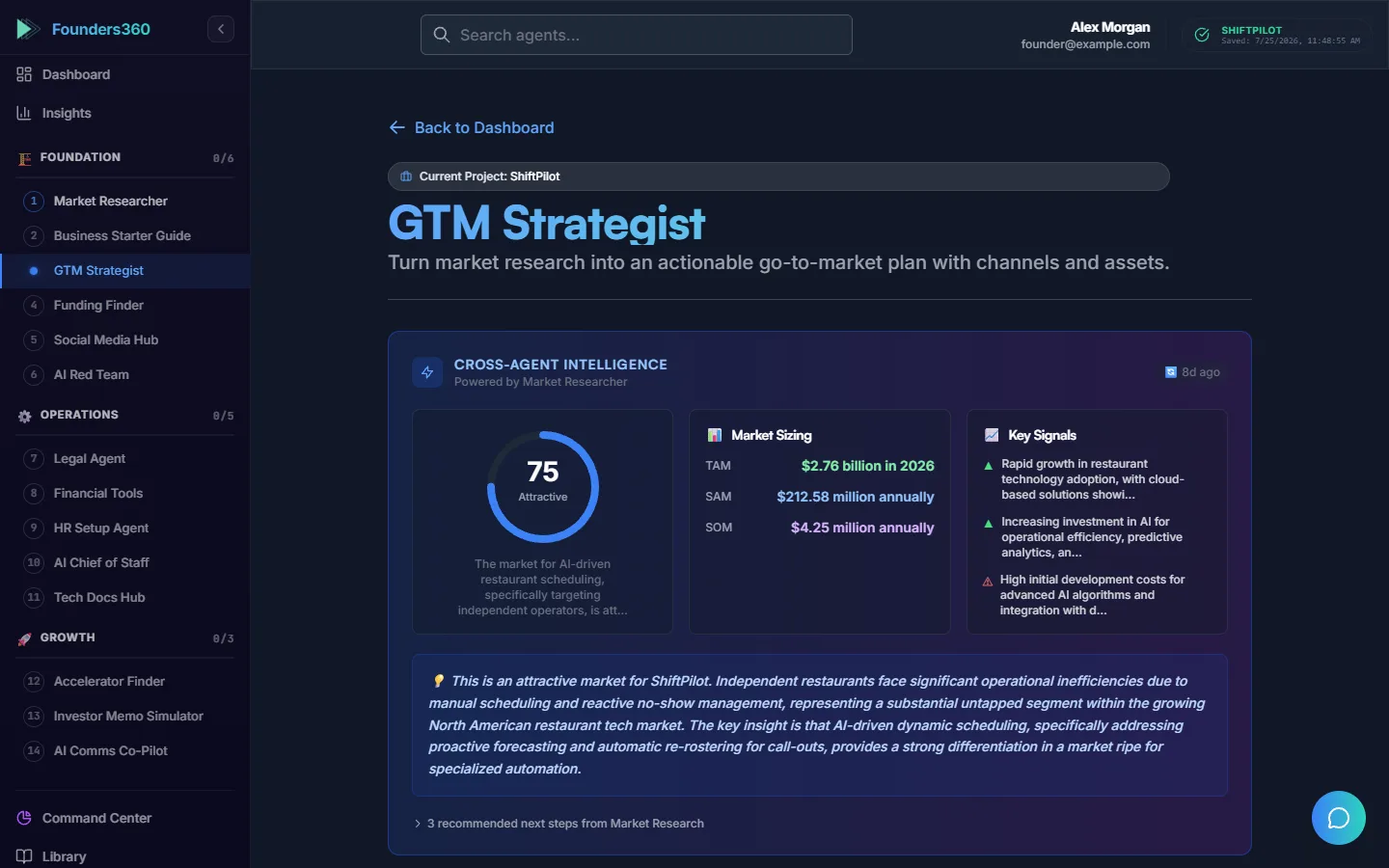
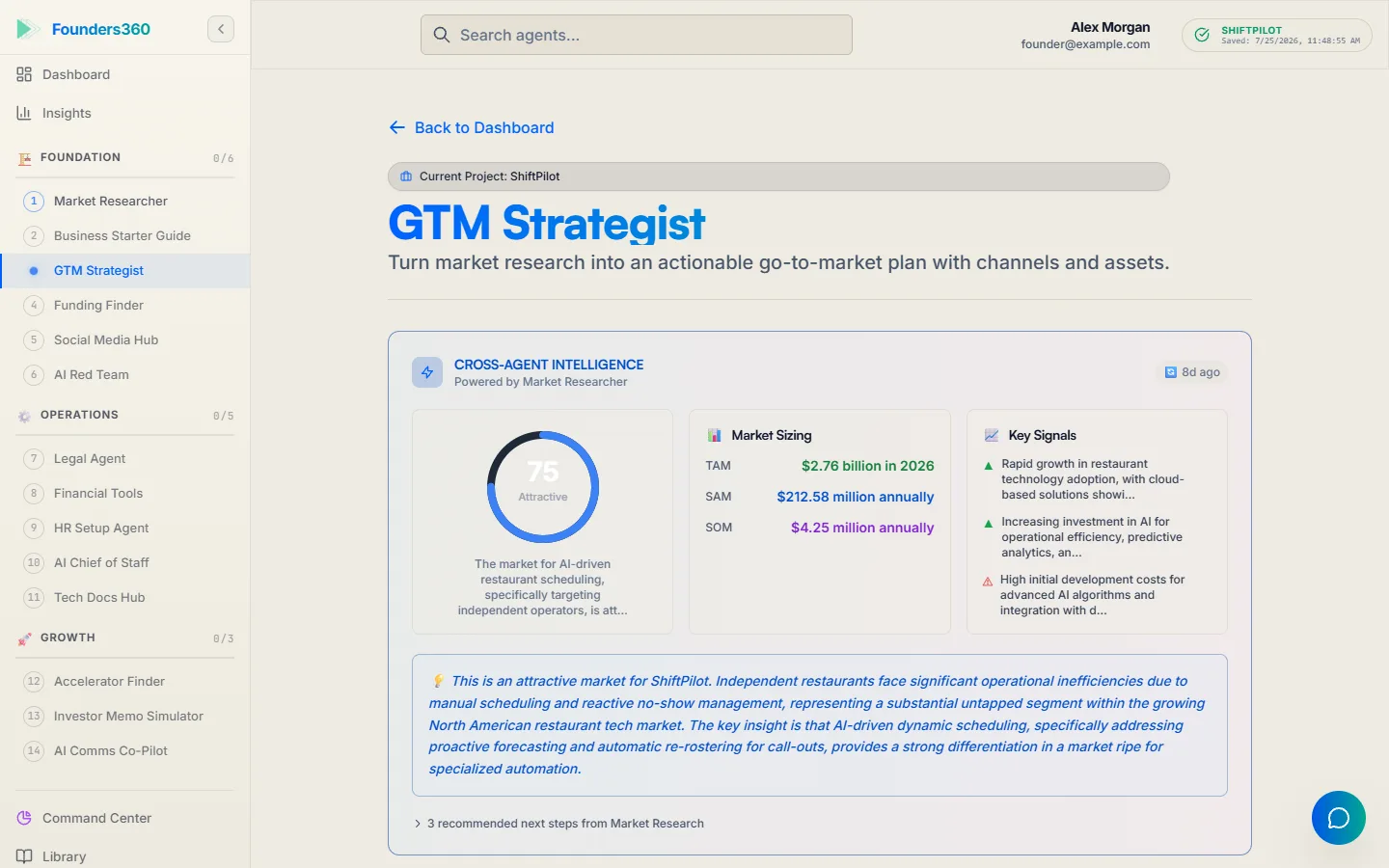
The Founders360 GTM Strategist can help you turn your market research into a go-to-market plan, which makes it easier to decide who you are writing for and which topics to cover.
How do you know if your email marketing is working?
Watch replies first, then sign-ups, then clicks. Replies tell you whether people care. Sign-ups tell you whether your offer is clear. Clicks tell you whether your content leads somewhere useful.
Review these each month:
- New subscribers per week and which source they came from.
- Unsubscribes: a few are normal. A sudden jump means you changed the promise or the pace.
- Replies and questions: collect these in one document, since they are free market research.
- Customers who came from email: this is the number that matters most.
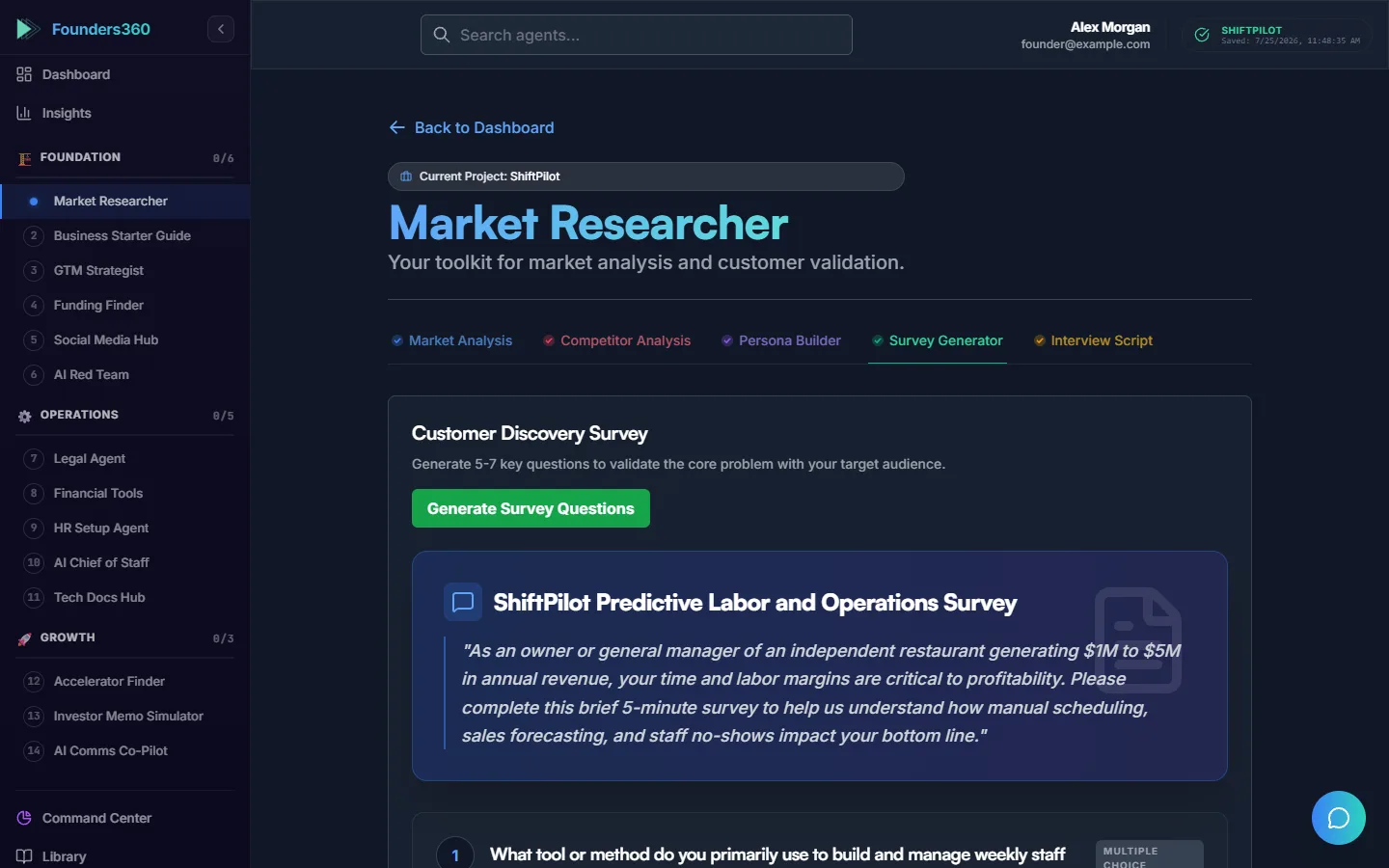
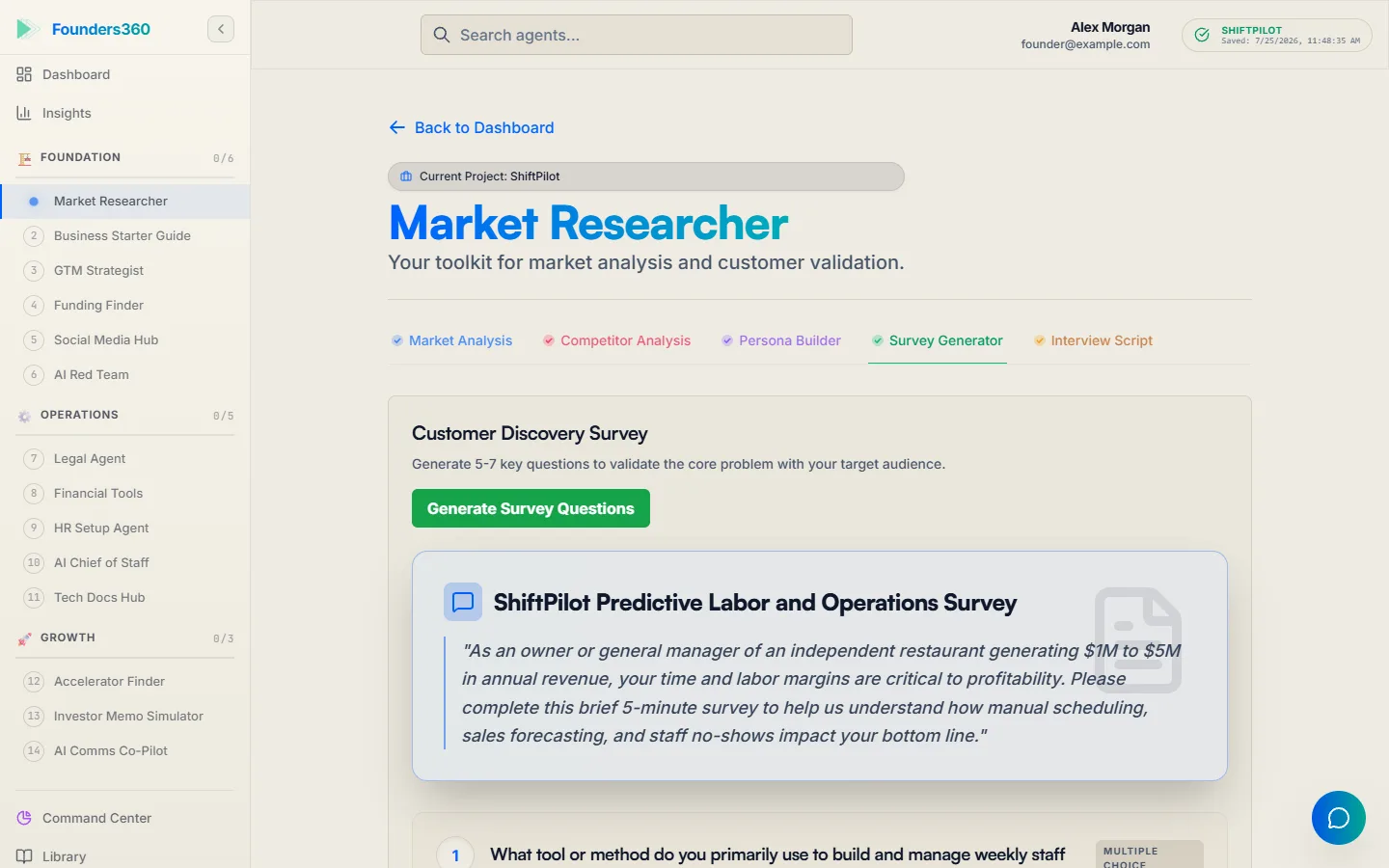
The Founders360 Market Researcher can help you analyze your market and prepare customer interview questions, which can point to topics for your next messages. Treat its output as a starting point and confirm with real conversations.
Frequently Asked Questions
How long does it take to get 1,000 email subscribers?
It depends on your audience, offer and effort, so no honest single number exists. Most founders reach the first 100 through direct conversations and their own network, then grow faster as content and referrals build. Focus on the quality of your promise before worrying about the date.
Can I email people who gave me their business card?
Not safely for marketing. The rules differ by country, but the careful habit is to ask first. In the UK, the ICO says you generally need specific consent, and in Canada the CASL page says you must get consent and be ready to prove it. A short personal email asking whether they would like to subscribe is the safe route.
Do the rules apply to business-to-business email?
Check your country and the recipient. The FTC guide says CAN-SPAM makes no exception for business-to-business email. The ICO notes that in the UK you can email companies and other corporate bodies, but sole traders and some partnerships count as individuals. Canada's CASL covers commercial electronic messages generally. Because the details vary, ask for consent and always include an unsubscribe link.
What must every marketing email include?
Include clear sender details, an honest subject line, your postal address and a working unsubscribe. The FTC guide lists accurate header information, an honest subject line, an ad disclosure, a valid postal address and an opt-out. CASL and PECR add their own identification and unsubscribe rules.
How fast must I process an unsubscribe request?
The FTC guide says within 10 business days for CAN-SPAM, and the Canadian government page also says 10 business days for CASL. The ICO says to act promptly. In practice, use a tool that removes people instantly.
Tags
Related Articles
SEO for Startups: A Practical First 90 Days Plan
SEO for a new startup is mostly a sequence of small, boring jobs done in the right order. This 90-day plan follows Google's own Search Central guidance: make the site findable, pick a few real questions, write helpful pages, tidy titles and links, and measure patiently.
9 min readGrowthStartup KPIs to Track at the Early Stage (and the Ones to Ignore)
An early-stage startup should track one main metric that shows the value it delivers, plus three to five supporting numbers such as revenue, customers, churn, cash runway and the cost of winning a customer. This guide explains each one, how to calculate it, and which numbers to ignore for now.
9 min readGrowthHow to Measure Product-Market Fit: Signals, Surveys and Metrics
To measure product market fit, combine one survey (the share of users who would be very disappointed to lose your product) with a retention curve that flattens and organic growth you did not pay for. This guide shows each signal and a one-month scorecard.
7 min readReady to Build Smarter?
Join thousands of solopreneurs using AI agents to scale their businesses.
Get Started Free