
Employee Stock Option Pool Explained: How Big It Should Be and How It Dilutes You
An employee stock option pool is a block of shares set aside for future hires. This guide explains what it is, how to size it from a hiring plan, why investors usually want it counted before their money goes in, and how it changes what founders own.
By Jay Kambo
An employee stock option pool is a block of company shares set aside to give to future employees, advisors and contractors as stock options. It matters to founders because the pool is usually counted before a new investor puts money in, so it lowers the founders' ownership, not the investor's. This article explains how the pool works, how to size it and how to see its real cost in your cap table. It is general information, not legal or tax advice.
What is an employee stock option pool?
An option pool is a number of shares the company reserves so it can grant options to people it has not hired yet. Instead of creating shares each time someone joins, the company sets aside a block once, and each grant draws from it.
An option gives the holder the right to buy shares at a fixed price later, usually after a vesting period. The pool is the stock of shares available for those grants. Shares in the pool that are not yet granted are unissued, which matters for dilution, as you will see below.
If you are new to ownership tables, our cap table template guide shows how founders, investors and the pool appear together on one page.
Why do startups create an option pool?
Startups create a pool because early employees often accept lower salaries in return for a share of the upside. A pool lets you offer that share without renegotiating ownership every time.
Investors also want one in place. They want to see that the company can attract people after their money arrives, so a funding round often comes with a request to create or enlarge the pool. For how the round itself works, see our term sheet explained for founders, which covers the other terms that arrive alongside it.
The pool also helps you plan. Writing a hiring plan and turning it into a share count forces a useful question: who do we need in the next 12 to 24 months, and what will we offer each of them?
How big should an employee option pool be?
It should be as big as your hiring plan needs through the next funding round, and no bigger. There is no legal minimum and no single correct figure.
A guide from Allied VC says "a 10% pool is common, not mandatory" and that there is "no legal requirement for any specific pool size." It advises listing each role you plan to hire over the next 12 to 18 months and totaling the expected grants as a percentage of the cap table, which gives you a data-backed number to bring to a negotiation, according to its guide to pre-money and post-money option pools. It also suggests starting with a smaller pool and agreeing to increase it when hiring milestones are met.
AngelList makes a similar point. Its option pool article says a hiring plan "can be a useful tool to negotiate a smaller option pool", and that the ideal pool is large enough to hire top talent but not so large that it is overly dilutive. It adds that companies past Series B or C rounds typically do not need to grow their pools as quickly, because they are seen as less risky to employees.
Here is a simple method:
- List the roles. Write down every hire you expect before the next round.
- Give each role a rough grant. Use a percentage of the company that suits the role and seniority.
- Add them up. The total, plus a small buffer, is your target pool.
- Compare it with what the investor asks for. If the numbers differ, show your plan.
Be wary of any claim that a "standard" size exists. LTSE says hiring needs "should drive the size of the pool, not any supposed standard", in its analysis of the option pool shuffle.
What is the option pool shuffle, and why is the pool in the pre-money?
The option pool shuffle is the practice of counting the new pool in the pre-money valuation, so the dilution falls on existing shareholders and not on the new investor. It is the norm: LTSE says "the tradition of putting the option pool in the pre-money has become the norm."
Pre-money valuation is the value of the company before the investor's money goes in. If the pool is created inside that number, the investor's percentage is not reduced by it. The founders' percentage is, and the real value placed on the founders' existing shares is lower than the headline pre-money suggests.
AngelList walks through an example with 8 million shares outstanding, a $2 million raise, an $8 million pre-money valuation and a pool of 20 percent of the post-money valuation. The effective valuation of the existing shares is $6 million, the value per share is $0.75 rather than the $1.00 implied by the headline, and ownership ends at 60 percent for founders, 20 percent for new investors and 20 percent for the pool. The lesson from the article is to watch the effective valuation, not just the headline number, since a lower pre-money with a smaller pool can be better than a higher pre-money with a larger pool.
How does the option pool affect founder dilution?
The pool reduces founder ownership by the size of the pool, and it does so before the investor's shares are counted. Dilution is the drop in your percentage when new shares are created.
An illustrative example
These numbers are invented to show the arithmetic and are not a forecast. Suppose two founders own all 10 million shares. An investor puts in $2 million at an $8 million pre-money valuation, so the company is worth $10 million after the money goes in and the investor owns 20 percent. The investor also asks for a 10 percent pool.
- Pool counted in the pre-money (the usual way): the investor keeps 20 percent, the pool is 10 percent and the founders hold 70 percent.
- Pool added after the investment, shared by everyone: the pool is still 10 percent of the company, but it dilutes the investor too. The investor ends at 18 percent and the founders at 72 percent.
Two percentage points may not sound like much, but on a larger exit, or after several rounds, the gap grows. LTSE's worked example shows the same effect: a 20 percent pool plus a 20 percent Series A dilutes both founders by 40 percent, and cutting the pool to 10 percent raises each founder's payout at a $50 million exit from $18,750,000 to $19,444,446.
Unused options matter too. LTSE notes that investors share in the benefit of unused options, since they go away at exit, so founders should size the pool carefully. If part of the pool is never granted, that part never reaches anyone, but it still counted against you at the round.
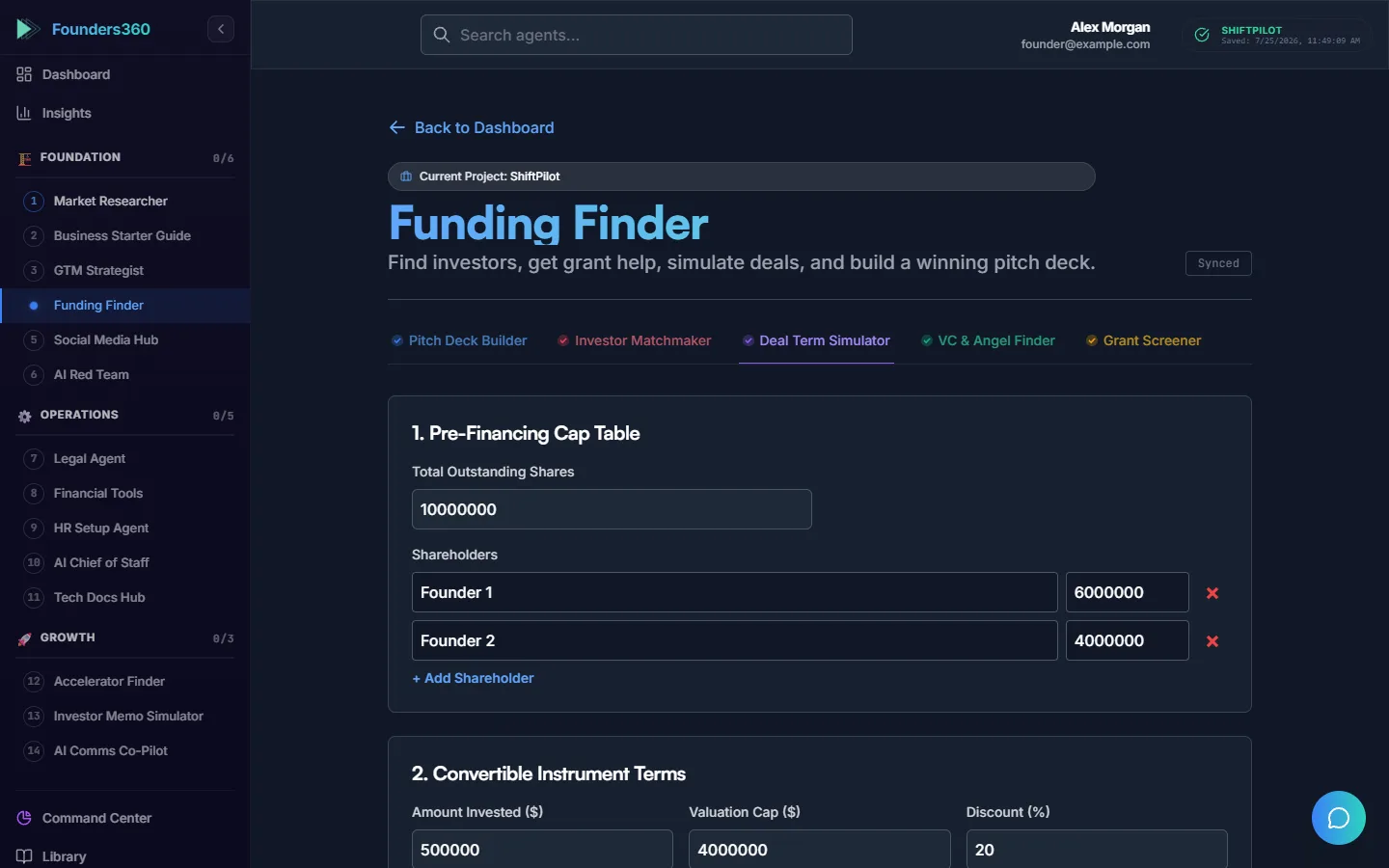
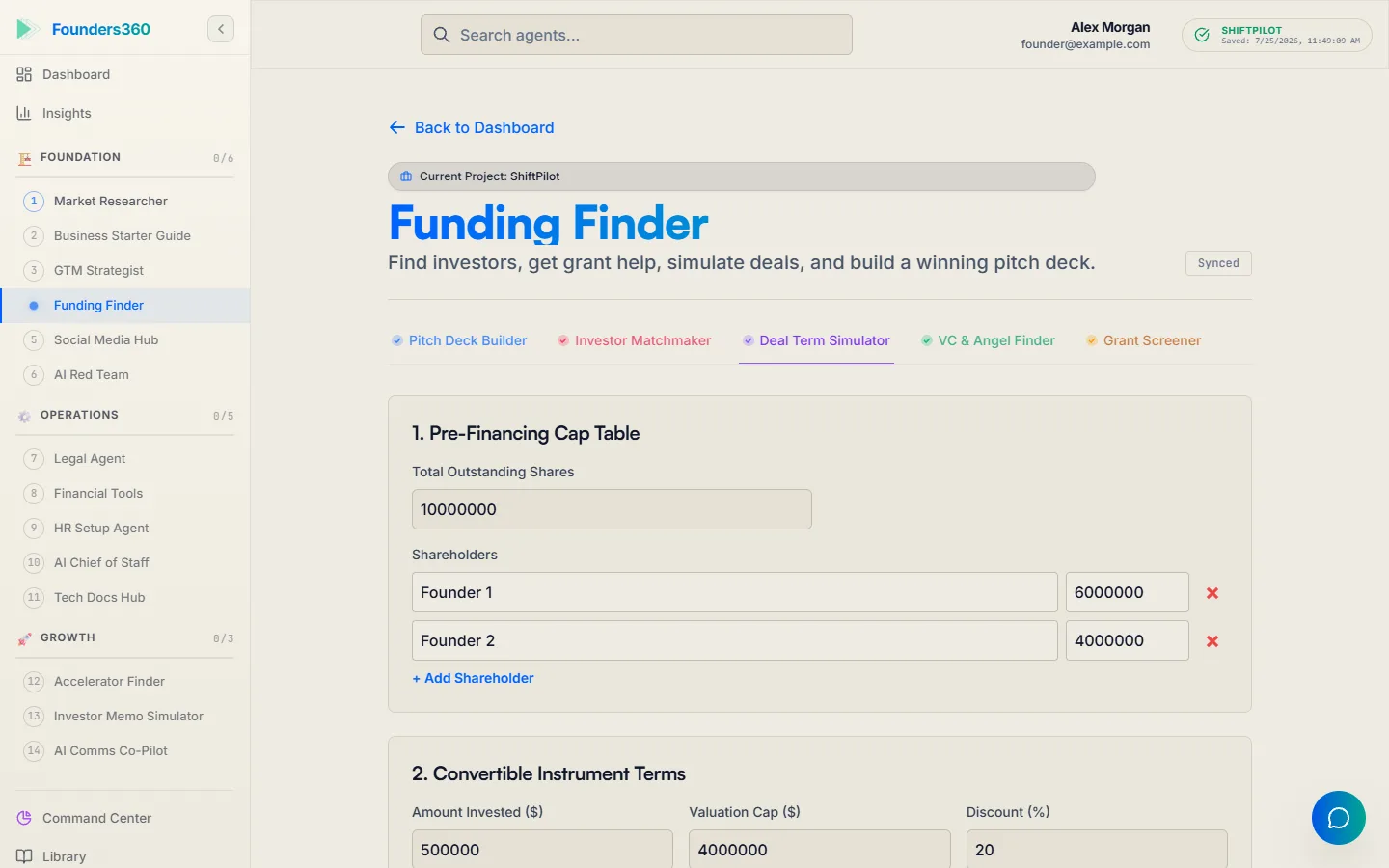
To try these numbers on your own cap table, you can use the Deal Term Simulator in Funding Finder, and our guide to SAFEs, caps and dilution at pre-seed shows how earlier rounds interact with the pool.
How can founders negotiate the pool size?
Bring a hiring plan, propose a smaller pool, and ask where the pool sits. The best defence against an oversized pool is a bottom-up plan that shows what you will really grant.
Ideas from the guides above:
- Build the plan first. Allied VC advises totaling expected grants as a share of the cap table and using that figure.
- Ask for a pool that grows with milestones. Start smaller and agree to expand when certain hiring targets are met.
- Push for the pool to sit after the investment. As the example shows, that spreads some of the dilution to the investor.
- Compare effective valuations. AngelList suggests that a lower pre-money with a smaller pool can beat a higher pre-money with a larger one.
- Do not accept "market standard" as an argument. LTSE advises not letting investors decide the size for you.
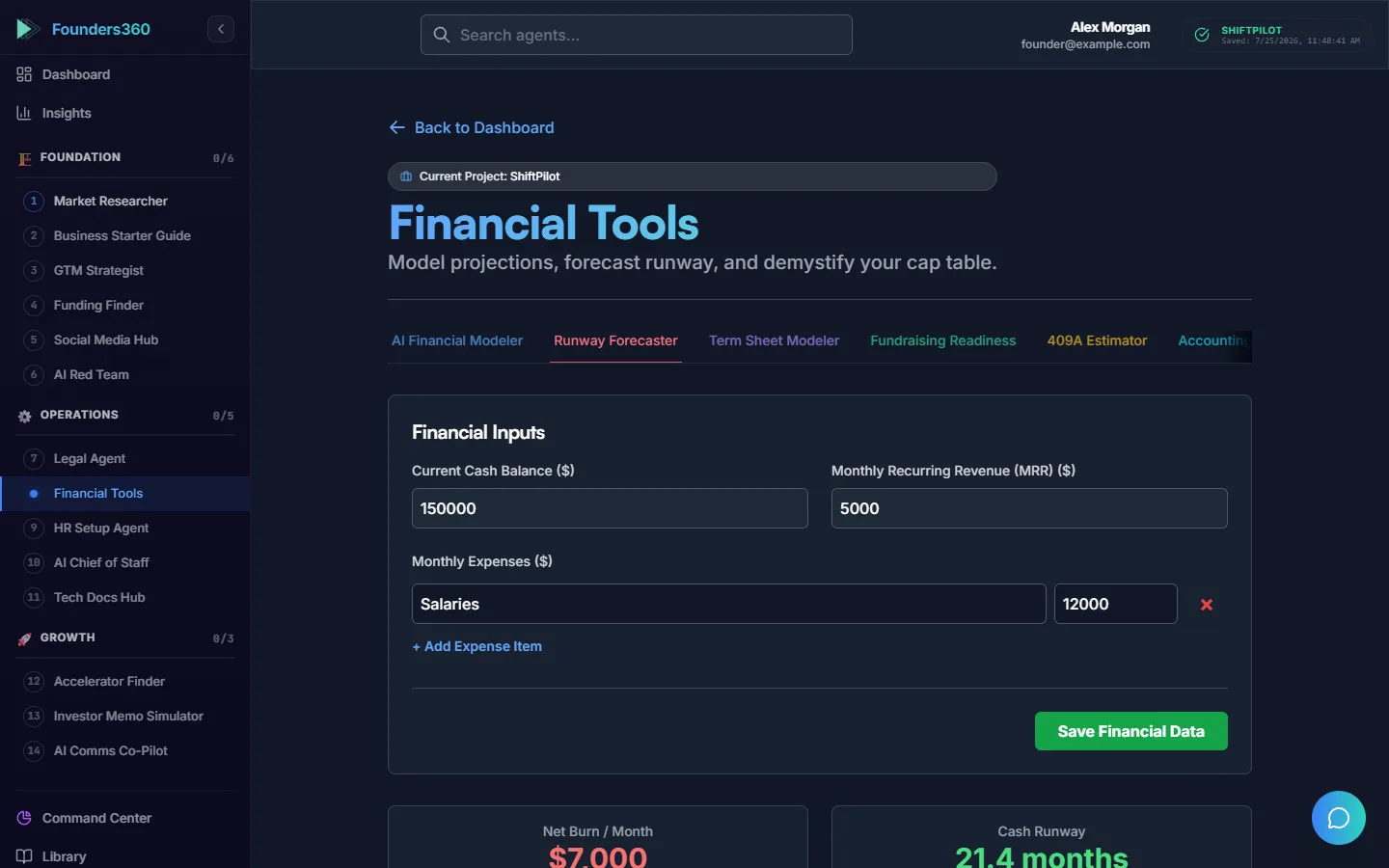
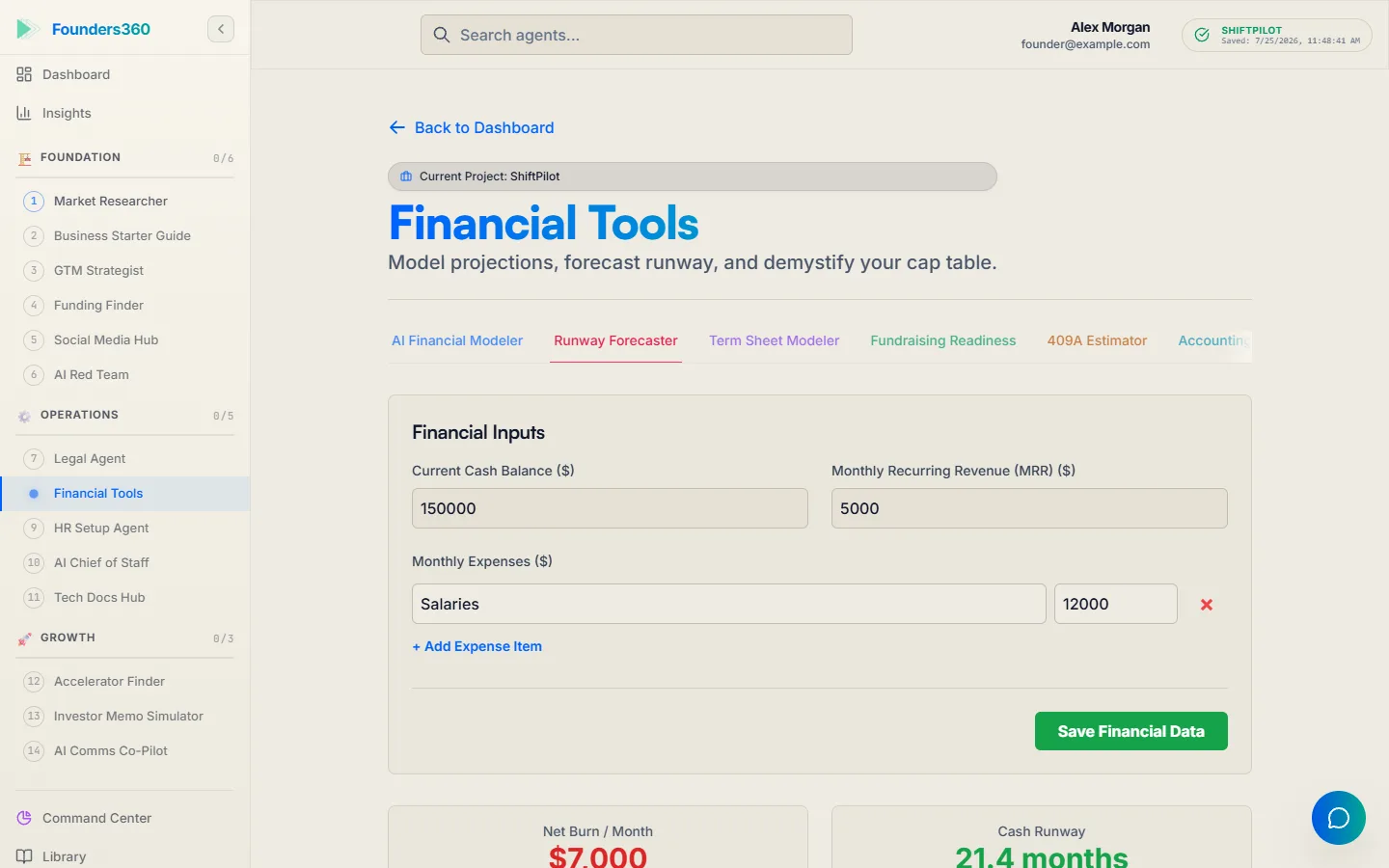
The Term Sheet Modeler in Financial Tools is another place to compare pool sizes.
Be realistic as well. Investors have their own reasons to want a pool, and a plan that shows you are thinking about hiring helps your case.
How do employees get taxed on stock options?
Tax treatment depends on the country and the type of option, so employees and founders should get local tax advice. For US readers, the IRS explains the two main types on its stock options page.
According to that page, for incentive stock options you generally include nothing in your gross income when you receive or exercise the option, although you may be subject to alternative minimum tax in the year you exercise. For nonstatutory options with no readily determinable fair market value, there is no taxable event at grant, but at exercise you must include the fair market value of the stock received, minus what you paid, in income.
The IRS page applies to the United States only. Other countries, including Canada, the UK and the UAE, have their own rules, so check local guidance before promising options in an offer letter. Our startup HR checklist for a first hire covers other points to settle in an offer.
For founders, the 83(b) election applies to restricted stock rather than options, so do not mix the two. Options usually have an exercise price and no ownership until you exercise.
Frequently Asked Questions
What is an employee stock option pool?
It is a block of shares a company reserves for future grants of stock options to employees, advisors and contractors. Setting it aside once means the company does not need to create new shares or renegotiate ownership each time someone joins.
How big should an option pool be?
Size it from your hiring plan through the next funding round. Allied VC says a 10 percent pool is common but not mandatory and that there is no legal requirement for any specific size. AngelList says a hiring plan can be used to negotiate a smaller pool. Use these as reference points, not rules.
Does the option pool dilute founders or investors?
Usually founders. When the pool is created before the investment, it is counted in the pre-money valuation, so existing shareholders absorb the dilution. LTSE notes this has become the norm. If the pool is created after the investment, the investor is diluted too.
What is the option pool shuffle?
It is the practice of placing the new pool in the pre-money valuation so that the effective valuation of the founders' shares is lower than the headline number. AngelList's example shows $8 million headline pre-money becoming a $6 million effective valuation with a 20 percent post-money pool.
What happens to unused options in the pool?
Unused options stay unissued. LTSE notes that unallocated options go away at exit and that investors share in the benefit. Keeping the pool close to your real plan reduces the cost to founders.
Tags
Related Articles
How to Get a Small Business Loan: US, Canada and UK Options
A new business can get a small business loan by choosing the right program, preparing a clear plan and applying through an approved lender. This guide covers US SBA loans, the Canada Small Business Financing Program and UK Start Up Loans, and explains when a loan beats giving up equity to investors.
9 min readFundraisingTerm Sheet Explained: The Clauses Founders Must Understand Before Signing
A term sheet explained simply is a short, mostly non-binding offer that fixes the price and the control terms of a venture round. Most clauses are standard; a handful of economic and control terms decide who really wins.
7 min readFundraisingSAFE vs Convertible Note: Which Should Your Startup Use?
In a SAFE vs convertible note choice, the SAFE is simpler because it is not debt and has no interest or maturity date, while a note is a loan that converts into equity. This guide compares the terms side by side and shows when each one fits.
7 min readReady to Build Smarter?
Join thousands of solopreneurs using AI agents to scale their businesses.
Get Started Free