
Customer Discovery Interview Questions and How to Run the Interviews
Good customer discovery interview questions ask about the past, not the future: the last time the problem happened, what it cost, and what the person tried. This playbook gives you a question list, rules for running the conversation, and a way to turn notes into decisions.
By Jay Kambo
The best customer discovery interview questions ask about what a person has already done, not what they say they might do. "Tell me about the last time this problem came up" teaches you more than "Would you buy this?" because the second question invites a polite yes that means nothing. This playbook gives you the questions to ask, the ones to avoid, and a simple way to run interviews and turn what you hear into decisions.
What is a customer discovery interview?
A customer discovery interview is a short, structured conversation where you learn how a person handles a problem today, so you can decide whether it is worth solving. It is not a sales call and it is not a survey. You are collecting facts about their life, their habits and their money.
The goal is to test your assumptions before you build. You want to learn who has the problem, how often it happens, what it costs, what they use now, and what they already tried. Rob Fitzpatrick, author of The Mom Test, describes his book as a guide to learning if a business is a good idea "when everyone is lying to you." People are rarely dishonest on purpose. They are being kind, and kindness gets in the way of facts, which is why the way you ask matters more than anything else.
You do not need a product to do this. In fact, an early interview works best before there is a product to defend. If you are still deciding whether an idea is worth pursuing, our guide to validating a startup idea without spending money shows where interviews fit.
What are the rules for asking good questions?
Follow three rules: talk about their life and not your idea, ask about specific past events and not hypotheticals, and listen more than you talk. Y Combinator partner Eric Migicovsky teaches these ideas in his Startup School talk on talking to users, and Y Combinator's recap of that lecture makes the same points.
Do not pitch. The recap quotes the advice that an interview is "not the time to be pitching the product," because the aim is to learn about the user's life, not to sell.
Ask about specifics that have already happened. Asking whether someone would use a feature you have not built gives weak information, since people are poor at predicting their own future behaviour. Ask about the last time the problem occurred instead, and what they did next.
Listen more than you speak. Founders tend to talk too much, so take notes, leave silences, and let the other person fill them. A useful target is for the other person to speak for most of the conversation. When they drift into opinions or general statements, steer back to a real example with a question such as "When did that last happen?"
What questions should I ask in a customer discovery interview?
Start with the hardest part of the job, then move to the last time it happened, what they tried, and what they do not like about it. Migicovsky suggests five core questions, as summarised in the recap above:
- What is the hardest part about doing the thing you are trying to solve?
- Tell me about the last time you encountered this problem.
- Why was this hard?
- What, if anything, have you done to try to solve this problem?
- What do you not love about the solutions you have already tried?
You can add questions that make the answers concrete and measurable. These follow-ups are our own suggestions, not part of the Y Combinator list:
- How often does this happen in a normal month?
- What did it cost you, in time or money, the last time?
- Who else was involved, and who decided what to do?
- What did you use to get it done, and what do you pay for it?
- If this problem disappeared tomorrow, what would change for you?
- Who else should I talk to about this?
The last question is a quiet way to fill your pipeline. Every interview should end with one or two names. Notice that none of these questions mention your product. If you find yourself describing it, stop and return to their story.
Which interview questions should I avoid?
Avoid questions about the future, questions that hint at the answer you want, and any question a polite person can answer with a compliment. They produce data that feels good and means nothing.
Questions to drop:
- "Would you use a product that does X?" People say yes to be kind.
- "Do you think this is a good idea?" You are asking for praise, and you will get it.
- "How much would you pay for this?" Guesses about a hypothetical price are unreliable. Ask what they pay now for the current workaround.
- "Do you have this problem?" This leads the witness. Ask them to describe the work and see if the problem appears without your help.
- Long, double-barrelled questions with three questions inside them.
The Y Combinator recap makes the point plainly: compliments are some of the worst data you can collect, and so is fluff such as hypotheticals and generic statements. Treat both as noise and bring the conversation back to specifics. A compliment is not a customer. A commitment, such as a follow-up meeting, an introduction to a colleague, a deposit or a trial, is a better sign than praise.
Who should I interview, and how do I find them?
Interview people who have the problem right now, starting with one or two and building from there. Migicovsky notes that every good research approach "begins with just one or two people," and suggests starting with yourself, then friends and coworkers, and moving outward.
Friends and family are fine for practice, but they are poor evidence because they want you to succeed. Move quickly to people you do not know. Places to find them include professional and community groups, online forums where people complain about the problem, local business associations, past colleagues, and the introductions you collect at the end of each interview.
Be specific about who counts. A segment such as "owners of small cleaning companies with two to ten staff" is much easier to find and compare than "small businesses." Our template for an ideal customer profile helps you write that down so every interview targets the same kind of person.
When you reach out, be honest and brief. Say that you are researching a problem, you are not selling anything, and you would like 20 minutes. Offer something in return where you can, such as sharing what you learn. Many people will say yes to a short, respectful request.
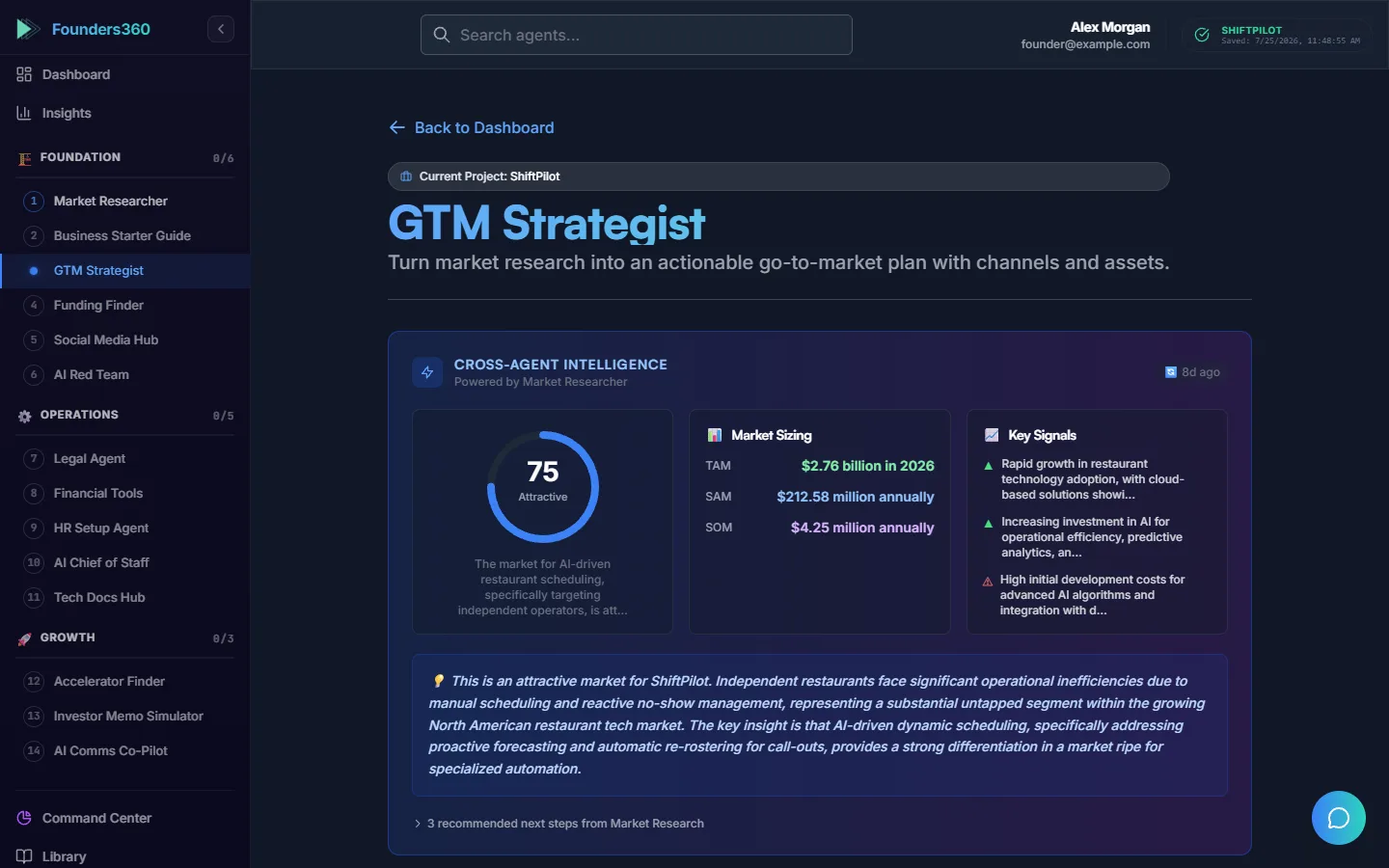
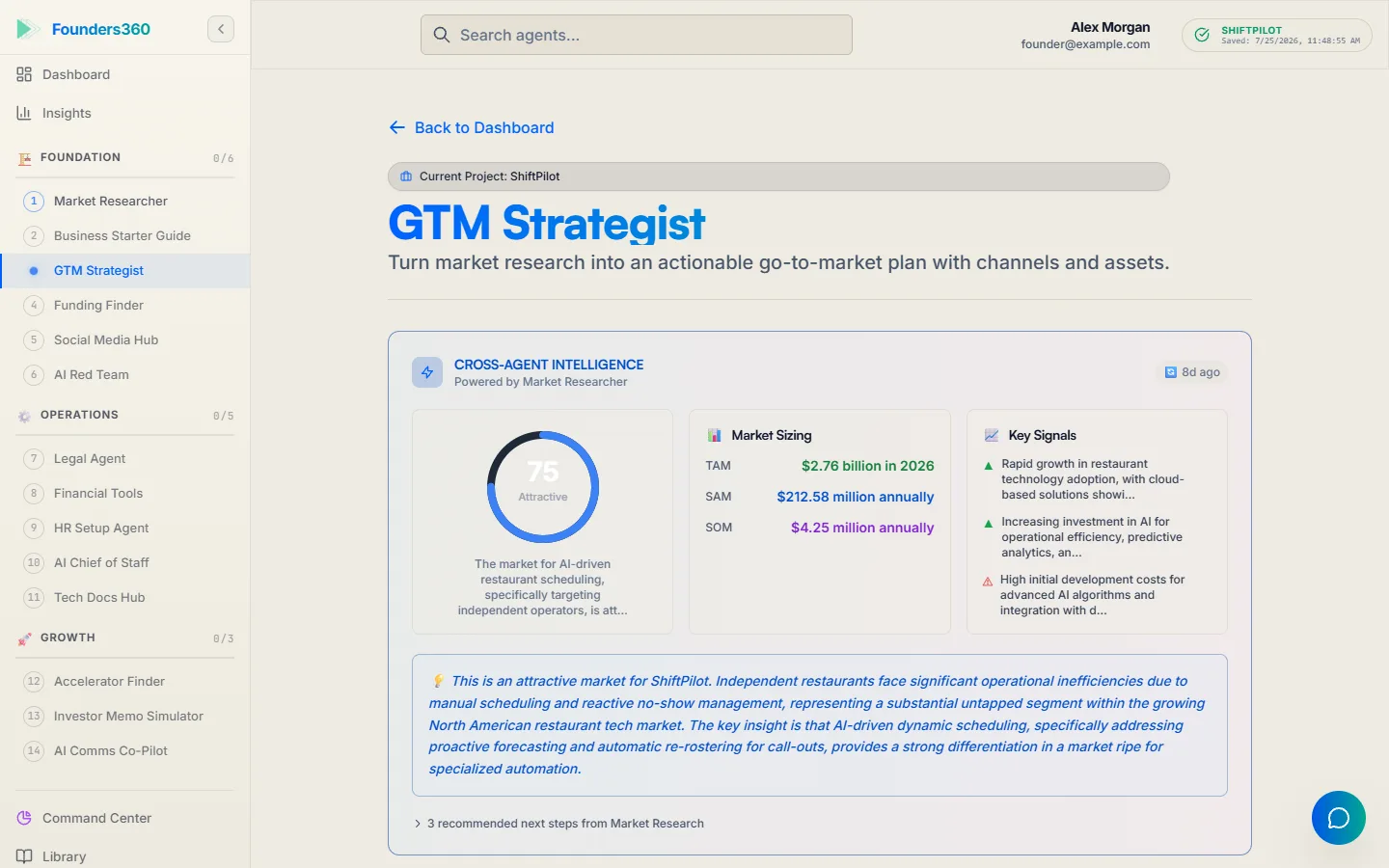
If you are unsure who to approach first, the Founders360 GTM Strategist agent can help you think through go-to-market questions. Test anything it suggests against real conversations.
How do I run the interview itself?
Keep it short, keep it casual, and follow the person back to specific stories. Migicovsky suggests that a 10 to 15 minute first interview can give you some of the best information, so a 15 to 30 minute conversation is enough for most early interviews. Do not wait until you have a perfect script.
A simple structure:
- Open (two minutes). Thank them, explain that you are learning about a problem, and ask permission to take notes.
- Context (five minutes). Ask about their role and a typical week, so you understand the setting.
- The story (ten to fifteen minutes). Ask for the last time the problem happened and walk through it step by step, asking why at each stage.
- What they tried (five minutes). Ask what they use now, what they pay and what frustrates them.
- Close (two minutes). Ask who else you should talk to, and whether you can come back with questions later.
Take notes on exact words, not your interpretation. The phrases people use are the language for your website and your sales emails. If a second person can join silently to take notes, you can focus on listening. Record the call only with clear permission, and follow the privacy rules where you and they live, since they differ between countries.
Aim to hold a few interviews each week and review them together. One conversation is an anecdote. Repeated stories from similar people are a pattern.
How do I turn interview notes into decisions?
Sort every note into facts, quotes and guesses, then look for the same problem told the same way by several people. Write each interview up the same day while it is fresh.
Use a simple table with one row per person and columns for who they are, the problem in their words, how often it happens, what it costs, what they use now, and what they said they would do next. After five or ten rows, patterns appear. Questions to ask of the table:
- Do at least several people describe the same problem unprompted?
- Is it painful enough that they have already spent time or money on it?
- Do they have the budget and authority to fix it?
- Are they similar enough that one product could serve them all?
Migicovsky recommends asking questions that produce numbers for three facts: how much the problem costs the customer today, how often they face it, and how large their budget is for solving it. If the problem is rare, cheap or already solved well, change direction before you build.
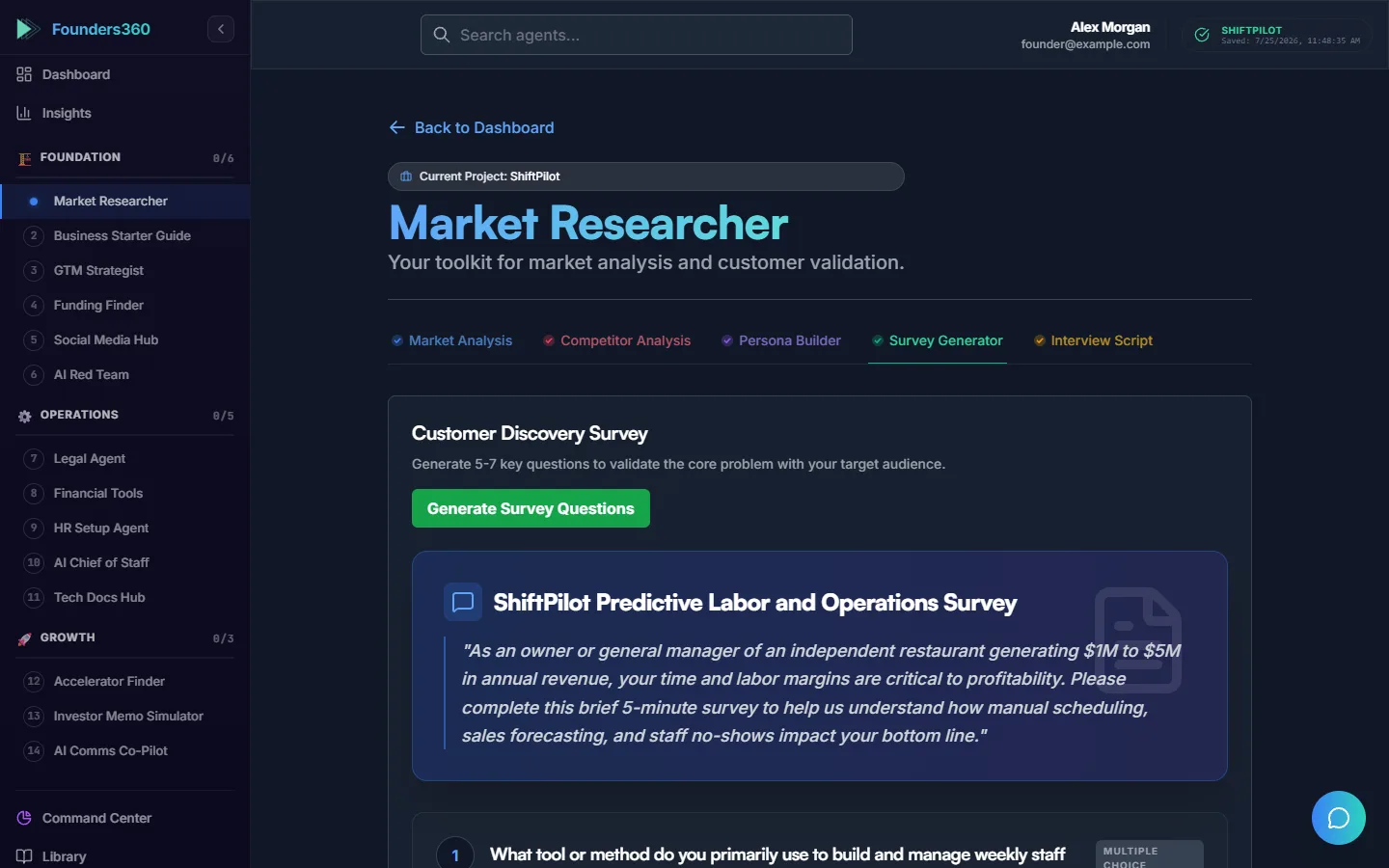
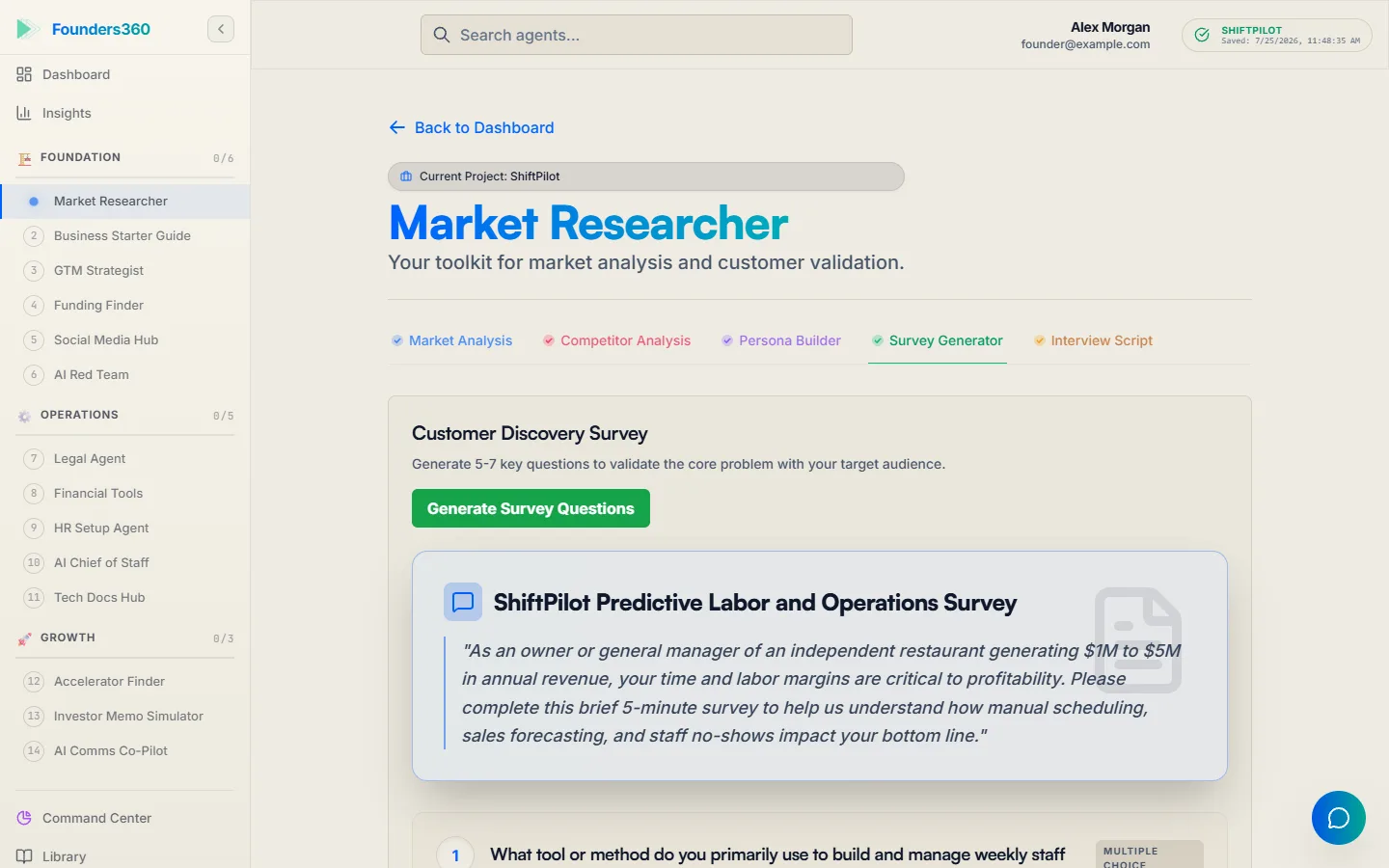
The Founders360 Market Researcher agent can support general market research, and your interview notes remain the evidence to check it against. Then decide what to do next: narrow your segment, rewrite the problem statement, or move on to a test such as a landing page, a prototype or a paid pilot. When you are ready to sell, our guide to finding your first 10 customers for a B2B startup picks up where interviews end.
Frequently Asked Questions
How many customer discovery interviews should I do?
There is no magic number. Start with one or two, then keep going until you hear the same problems repeated by people in the same segment and new interviews stop surprising you. The pattern matters more than the count.
Can I do customer discovery interviews over email or a survey?
Surveys help you measure something you already understand, but they are poor at discovering what you do not know. A live conversation lets you follow a surprising answer with a why. Use calls or video chats, and keep surveys for later, when you know what to count.
Should I tell people about my product during the interview?
Not at the start. Pitching turns the conversation into a reaction to your idea instead of a description of their life. If you have something to show, keep it for the end, after you have heard their story, or arrange a separate follow-up.
Should I pay people for their time?
It depends on who they are and how long the interview takes. For busy professionals, a small thank-you or a gift card can help, and sharing your findings is often valued. Make clear that payment is for their time and not for a particular answer.
What if people say they love my idea?
Treat it with caution. Compliments feel good but tell you little. Ask what they do about the problem today, and look for a commitment such as another meeting, an introduction or a trial. If you want to check whether the signals add up to real demand, read our guide on how to measure product-market fit.
Tags
Related Articles
How to Run a Paid B2B Pilot Program That Turns Into a Contract
A paid B2B pilot is a short, limited trial of your product with one customer, with agreed goals and a price, designed to end in a contract. This playbook covers who to pilot with, how to set scope and success criteria, how to price and time it, and how to close the conversion.
9 min readPlaybooksHow to Find a Co-Founder: Where to Look and How to Test the Fit
The best way to find a co-founder is to decide what you need, search where people already work on startups, and then test the fit with a short trial project before anyone gets equity. This guide covers each step in plain words.
8 min readPlaybooksHow to Price Your Product or Service as a New Founder
To price a product or service as a new founder, work out your costs first, then check what customers value and what alternatives charge, pick a starting price, and treat it as a test. This playbook covers the three main methods, tiers and a simple way to test and change prices.
9 min readReady to Build Smarter?
Join thousands of solopreneurs using AI agents to scale their businesses.
Get Started Free