
How to Price Your Product or Service as a New Founder
To price a product or service as a new founder, work out your costs first, then check what customers value and what alternatives charge, pick a starting price, and treat it as a test. This playbook covers the three main methods, tiers and a simple way to test and change prices.
By Jay Kambo
To price a product or service as a new founder, start with your costs so you know the lowest price you can survive on, then learn what the product is worth to customers and what the alternatives charge, and set a first price that you treat as a test. Almost nobody gets the number right on day one, and that is fine. This playbook shows you how to reach a defensible first price, how to build tiers, and how to change the price later without losing trust.
What are the main ways to price a product or service?
There are three main methods: cost-plus, value-based and competitor-based pricing, and most businesses blend them. Each answers a different question, so it helps to know what each one tells you before you choose.
Cost-plus pricing asks what it costs you to deliver the product. In the words of Stripe's guide to price-setting methods, "you add a fixed percentage on top of your costs." Stripe gives a retail example of a product bought for 10 pounds and sold for 15 after a 50 percent markup. It is simple and it protects your margin, but it ignores what customers are willing to pay.
Value-based pricing asks what the product is worth to the buyer. The same Stripe guide describes the goal as matching "price with perceived value" and capturing more of it. This method often supports a higher price than cost-plus, but it needs real conversations with customers before you can use it.
Competitor-based pricing asks what the alternatives charge. Stripe describes it as using "your competitors' prices as a benchmark," after which you decide where you want to sit relative to them. It is quick, but it can leave you copying a rival whose costs and goals are nothing like yours.
A practical way to combine them: your costs set the lowest sensible price, the value to the customer suggests the highest price they would accept, and competitor prices show where buyers expect to land in between. The sections below turn that into steps.
How do I work out what it costs to deliver my product?
Add up every cost of delivering one unit of the product or one hour of the service, then add a share of your fixed costs. Do this before you look at anyone else, because it tells you the price below which you lose money.
Start with direct costs: materials, software or cloud fees, payment processing, delivery, and the time of anyone who helps deliver the work. If you sell a service, include your own time at a realistic hourly rate, not zero. Founders who price their own labour at nothing usually find they have built a job that pays less than a salary.
Then spread your fixed costs, such as tools, insurance and a workspace, across the number of customers you expect in a typical month. A short worked example, which is illustrative only: if delivering a service costs 40 per customer and your monthly fixed costs of 600 are spread over 30 customers, each customer carries 20 of fixed cost, so the break-even price is 60. Any price under 60 loses money, however friendly it looks on a pricing page.
Our guide to unit economics for early-stage startups goes deeper on contribution margin and how to read these numbers once you have paying customers.
How do I price based on the value my customer gets?
Find the cost of the problem you solve, then charge a small share of the value you create. The method is simple to describe and takes real conversations to carry out.
Ask customers how they handle the problem today and what it costs them in money, hours or missed sales. Hours are easy to turn into money: if your product saves a small business owner five hours a month and that owner values an hour at 30, the saving is worth 150 a month (illustrative numbers). A price well below that figure feels like a good deal to the buyer and still leaves you room for a healthy margin.
Value also depends on who is buying. A tool that saves a sales team time is worth more to a company that sells high-value contracts than to one that sells small items, so the same product can justify different prices for different groups. That is the reason many founders offer more than one plan, which the tiers section below covers.
If you have not yet talked to buyers, do that first. Our guides to finding your first 10 customers and to defining an ideal customer profile show how to find the right people and what to ask them.
How do I use competitor prices without copying them?
Use competitor prices as a map of buyer expectations, not as a target. List the direct competitors, meaning products that do the same job, and the indirect ones, meaning anything customers use instead, including spreadsheets and doing it by hand. Write down what each charges, how it charges (per month, per user, per project), and what the cheapest and most expensive plans include.
Look for patterns. If every rival charges per user per month, buyers will expect that shape, and a flat fee may surprise them in a good or a bad way. If the prices cluster tightly, there is an accepted range, and a price far outside it needs a clear reason, such as a much better result or a narrower, more specialised offer.
Prices change often, so note the date you collected them. A good habit is to record the plan names, the price, what is included, and the date in a simple table that you review every few months.
Do not assume the lowest price wins. Stripe's guide to market pricing warns that the more you rely on market pricing alone, "the harder it is to avoid being dragged into price wars." A newcomer that competes only on being cheaper also has the least room to absorb a price cut from a larger rival.
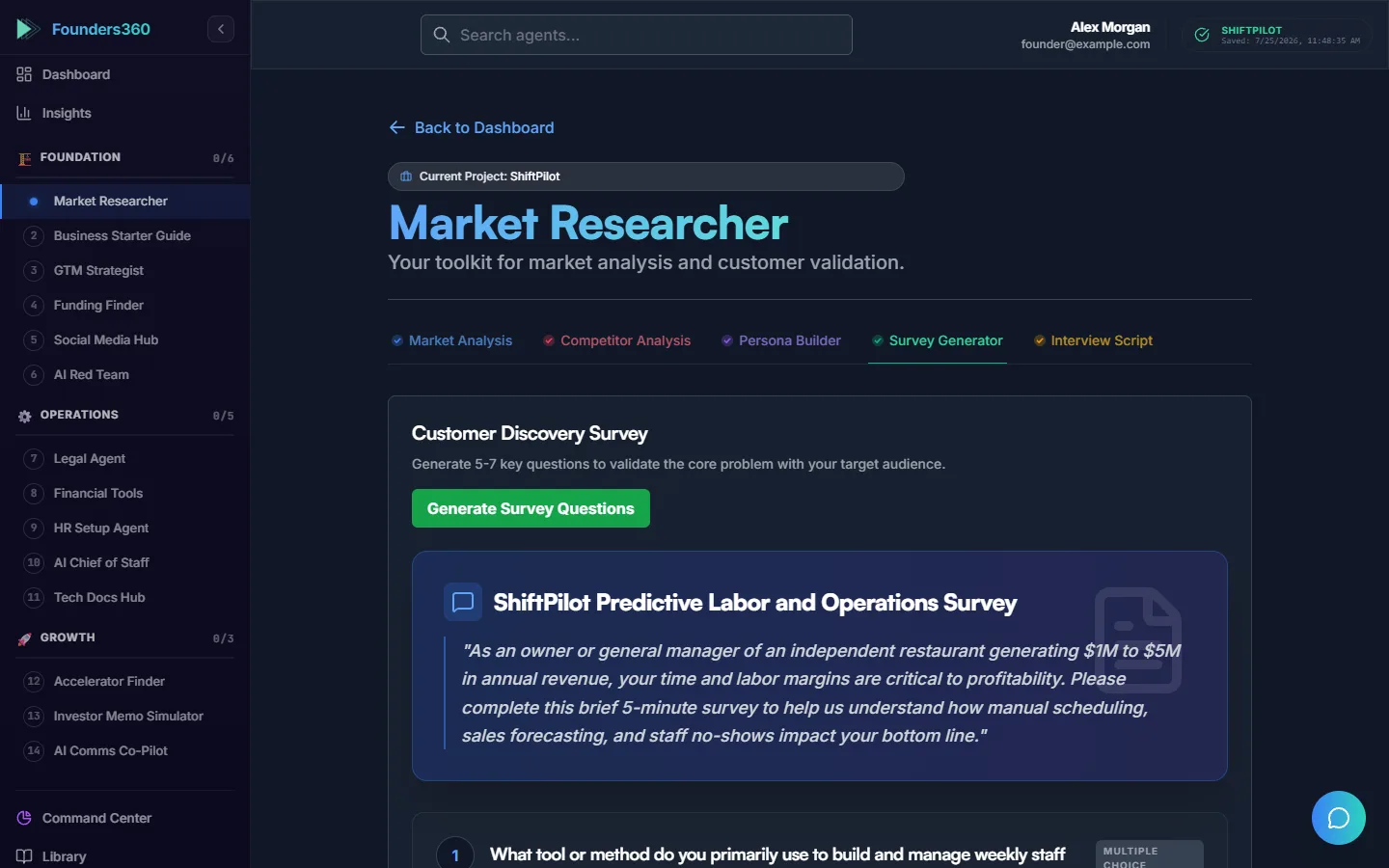
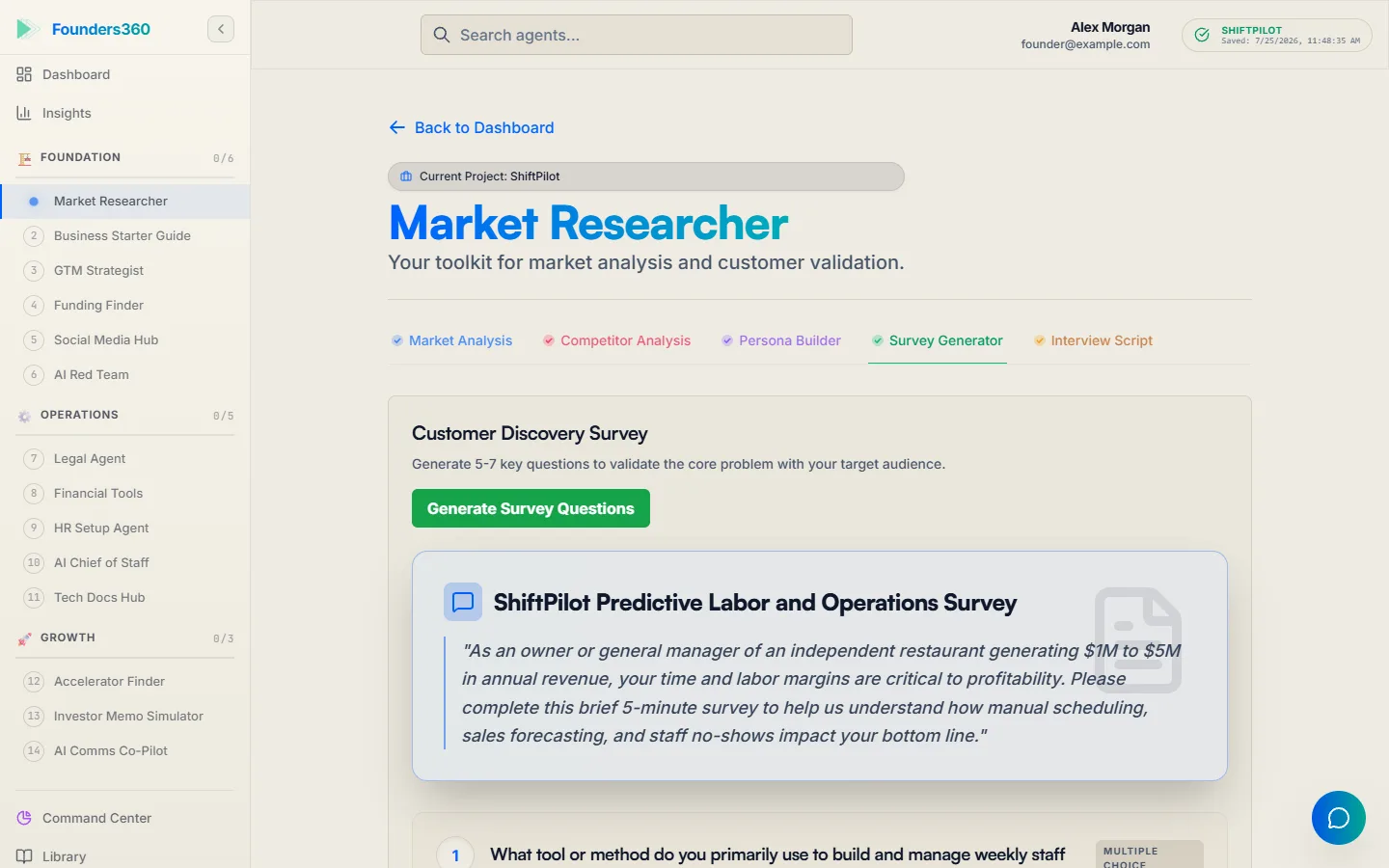
The Founders360 Market Researcher agent can help with general market research on a first pass. Check anything it suggests against the prices and plans you find yourself.
How do I choose my first price?
Pick one number you can defend in a sentence, then label it as a working price. Stripe advises in its practical guide to pricing a product to set an initial price "based on your cost structure, value proposition and competitive context," and to treat it as "a working hypothesis."
A simple routine for choosing it:
- Write down your break-even price from the cost section.
- Write down the value the customer gets, as a monthly or per-project figure.
- Write down the range of competitor prices for the same job.
- Choose a price between your break-even and the customer value, inside or just above the competitor range, and leave room for a discount you can afford.
Resist the urge to start very low to win customers. A low price attracts buyers who care most about price, it is hard to raise later, and it can signal that the product is less serious than it is. If you are unsure between two numbers, choose the higher one for new customers, because you can always offer an introductory discount, and you cannot easily take back a price that was too low.
Say the price out loud on a customer call and watch the reaction. Instant agreement without any questions often means the price is too low.
How do I build pricing tiers that make sense?
Build tiers around how much value different customers get, and keep them to three or fewer at the start. The same Stripe guide lists tiered plans for casual versus frequent users as one form of segmented pricing, and it also warns that pricing differences "can trigger backlash if they feel unfair," so the logic behind each tier should be easy to explain.
Choose one thing that grows with value, such as the number of users, projects, customers served or reports generated. Tie the tiers to that, not to a pile of small features. A starter plan covers the core job for a small user, a middle plan covers a growing business, and a top plan adds support and higher limits for heavy users.
Check each tier with a simple question: would a customer in this group feel the price is fair for what they get, and could they explain to a colleague why they chose it? If either answer is no, simplify.
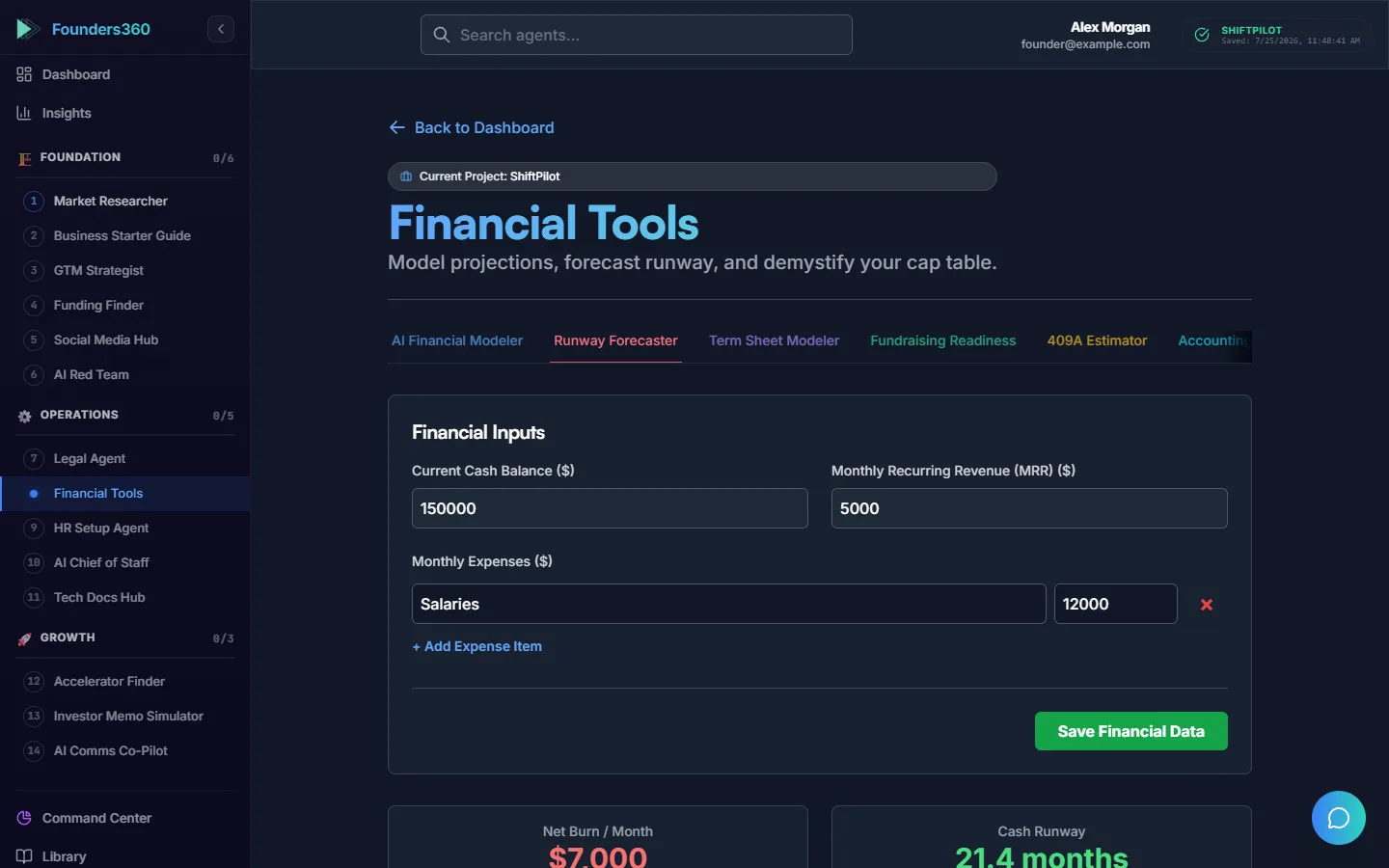
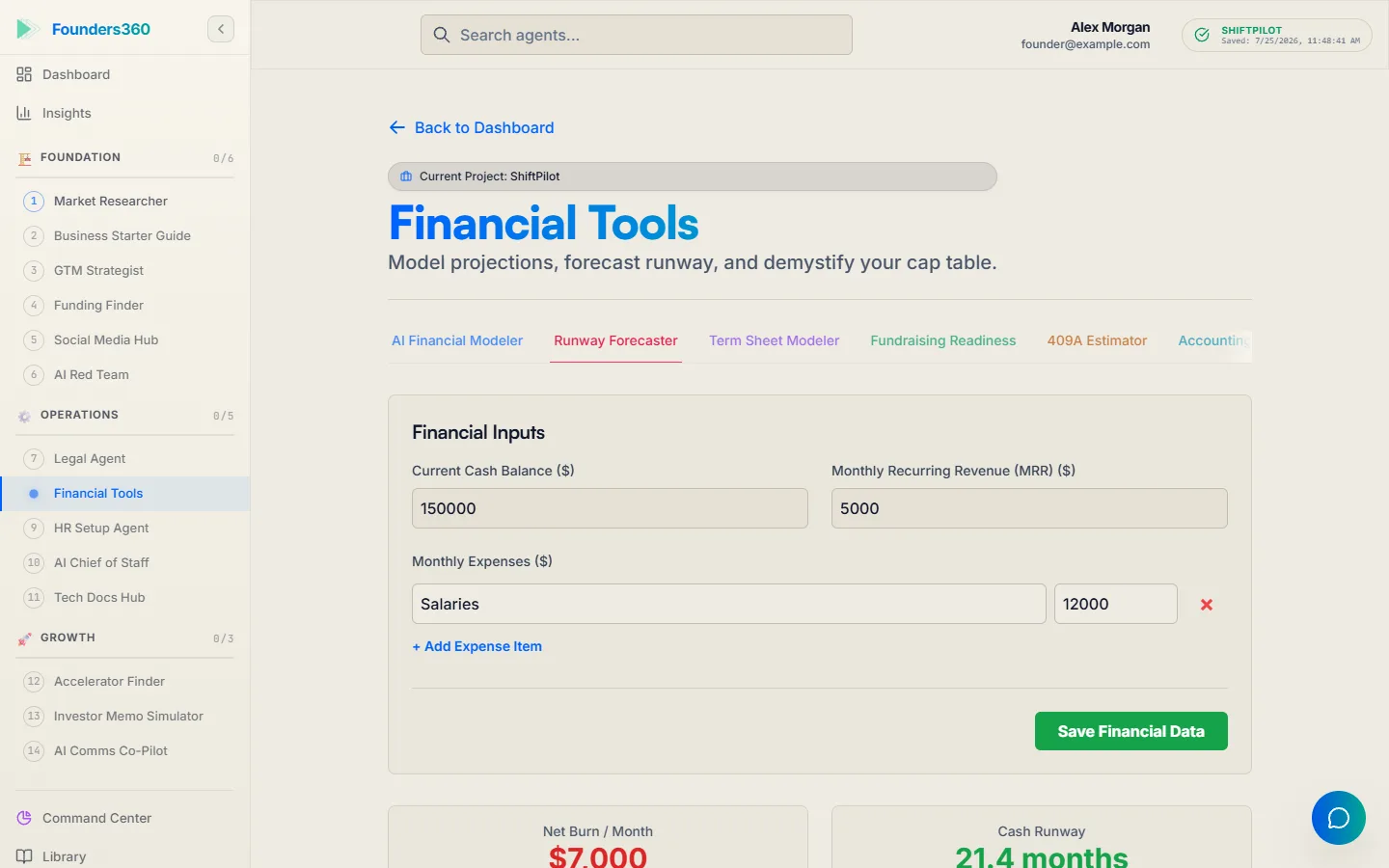
When you model how many customers might pick each tier and what that means for monthly revenue, keep the numbers in a spreadsheet or use a tool built for it. The Founders360 Financial Tools agent is one option for general financial planning alongside your spreadsheet.
How do I test and change my price over time?
Run small, deliberate tests and watch what happens to sign-ups, cancellations and deal size. The Stripe guide recommends that you "A/B test different prices across cohorts, markets or segments," try different plan structures, and "monitor what happens to conversion, retention, average deal size, and churn."
With a small number of customers, formal tests are hard to run, so use simpler ones. Quote different prices to different new prospects over a few weeks and record the response. Offer two plan structures, such as a bundle and separate options, and see which one people choose. Ask every customer who declines whether the price was the reason, and write down the answer in their words.
Stripe also reminds founders that "rarely will your first pricing version be your best," and that adjusting prices is not easy, so plan for the change from the start. Tell early customers in writing that the introductory price applies for a stated period. When you raise prices later, explain what has improved and give notice. Customers notice when prices change without a clear reason, and an unexplained increase is the fastest way to lose their goodwill.
Pair price tests with a check on whether people really want the product at all. Our guide on how to measure product-market fit explains how to read retention and feedback so you do not mistake a price problem for a product problem, or the other way round.
Frequently Asked Questions
What is the easiest way to price a new product?
The easiest way is cost-plus pricing: add up your costs to deliver the product, then add a margin you are happy with. It gives you a safe lowest price. Before you launch, compare it with what customers value and what competitors charge, because cost-plus alone ignores both.
Should I charge less than my competitors to win customers?
Not as a default. A lower price attracts buyers who care mostly about price, and it leaves less room for a response from a larger rival. Compete on a clearer result or a narrower focus first, and use a limited introductory offer if you need a nudge.
How many pricing tiers should a startup offer?
Three or fewer is a good start. Base each tier on one measure that grows with value, such as users or projects, and make sure you can explain in one sentence why each tier costs what it does.
How do I know if my price is too low?
Warning signs include customers agreeing instantly with no questions, very few objections of any kind, and margins that disappear once you count your own time. Test a higher price with the next few prospects and compare the response.
Can I change my price after I launch?
Yes, and you should expect to. Treat the first price as a working hypothesis, tell early customers how long any introductory price lasts, and give notice with a clear reason when you raise it.
Tags
Related Articles
How to Run a Paid B2B Pilot Program That Turns Into a Contract
A paid B2B pilot is a short, limited trial of your product with one customer, with agreed goals and a price, designed to end in a contract. This playbook covers who to pilot with, how to set scope and success criteria, how to price and time it, and how to close the conversion.
9 min readPlaybooksHow to Find a Co-Founder: Where to Look and How to Test the Fit
The best way to find a co-founder is to decide what you need, search where people already work on startups, and then test the fit with a short trial project before anyone gets equity. This guide covers each step in plain words.
8 min readPlaybooksCustomer Discovery Interview Questions and How to Run the Interviews
Good customer discovery interview questions ask about the past, not the future: the last time the problem happened, what it cost, and what the person tried. This playbook gives you a question list, rules for running the conversation, and a way to turn notes into decisions.
9 min readReady to Build Smarter?
Join thousands of solopreneurs using AI agents to scale their businesses.
Get Started Free