
How to Find a Co-Founder: Where to Look and How to Test the Fit
The best way to find a co-founder is to decide what you need, search where people already work on startups, and then test the fit with a short trial project before anyone gets equity. This guide covers each step in plain words.
By Jay Kambo
To find a co-founder, first write down the skills and hours you are missing, then look where people already build startups, and then test the fit with a short, defined project before either of you commits. Most of the mistakes happen in the last step, because people agree to share a company after a handful of friendly chats. This playbook shows how to do it more carefully, step by step.
Do you actually need a co-founder?
Not always. A co-founder is worth finding when there is a clear gap you cannot fill yourself or hire for, and when you want someone to share the risk and the long hours. If the gap is a task, such as a logo or a website, hire a contractor instead.
Ask yourself three questions:
- What skill is missing? Typically it is building the product, selling it or running operations.
- Can I cover it another way? A contractor, an advisor or an AI assistant may handle part of the gap. Our guide to the AI co-founder explains where software helps and where it does not.
- Do I want to share ownership and decisions? A co-founder owns a real part of the company, so this is a long commitment.
If you decide to go alone, that is a valid choice. You can also start solo and add a partner once something is working.
What should you look for in a co-founder?
Look for someone whose skills fill your gaps, who can commit the hours you need, and who shares your view of how to run a startup. Write these down before you meet anyone, because a written list protects you from choosing someone just because you get along.
Y Combinator shared data from its co-founder matching platform on what founders say they want. In its October 2021 post on what people want in a co-founder, covering roughly the platform's first three months, the data shows that 79 percent of founders care that a co-founder can commit a certain number of hours over the next few weeks, though only 15 percent treat it as a must-have. It also reports that 74 percent prefer shared interests, with 13 percent calling it a must-have, and that 62 percent prefer a co-founder who does engineering. These are self-reported preferences from one platform, so read them as a picture of what founders say, not a rule.
The same post reports that 68 percent of matches are made up of a technical founder paired with a non-technical founder, which suggests that complementary skills are common.
A simple list to adapt:
- Skills: the two or three things you cannot do well.
- Time: full time or part time, and from when.
- Money: how long each of you can go without a salary.
- Values: how you handle risk, conflict and money decisions.
- Goal: a company you want to grow big, or one you want to keep small and steady.
Where can you find a co-founder?
Start with people you already know, then widen to places where founders gather. Warm introductions beat cold messages, because someone can vouch for the person.
- Your own network. Former colleagues, classmates and people you have built things with. You already know how they work.
- Co-founder matching platforms. Y Combinator runs a free service. According to its co-founder matching page, anyone who is looking for a co-founder can sign up, you can have an idea or just be exploring, and it is described as "a completely free product." You invite people whose profiles fit, and if they accept it counts as a match. Check the page for current details.
- Accelerators and startup programs. People who join cohorts are often looking for partners. Our guide on how to choose a startup accelerator helps you pick one worth joining.
- Events, hackathons and meetups. Working on a problem for a weekend shows you how someone behaves under pressure far better than a coffee does.
- Online communities. Founder forums and professional networks can work, but expect more filtering and more video calls.
Be honest in your post or profile. Say what you are building, what stage you are at, what you bring and what you are looking for. A clear message draws better replies than a vague one.
How do you start the conversation?
Lead with the problem and your plan, then ask for a short call. Keep the first message brief, specific and easy to answer. A good outline is: who you are, what you are working on, what gap you are hoping to fill, and one question about their experience.
On the first call, listen more than you sell. Ask what they want from the next two years, what they would do if the idea failed and what they have built before. People rarely say they are flaky; they show it in vague answers about time and money.
Y Combinator's post on co-founder matching compares this stage to online dating, and says it will take more than one video call to decide whether to co-found a company with someone. Plan for several conversations, ideally some in person.
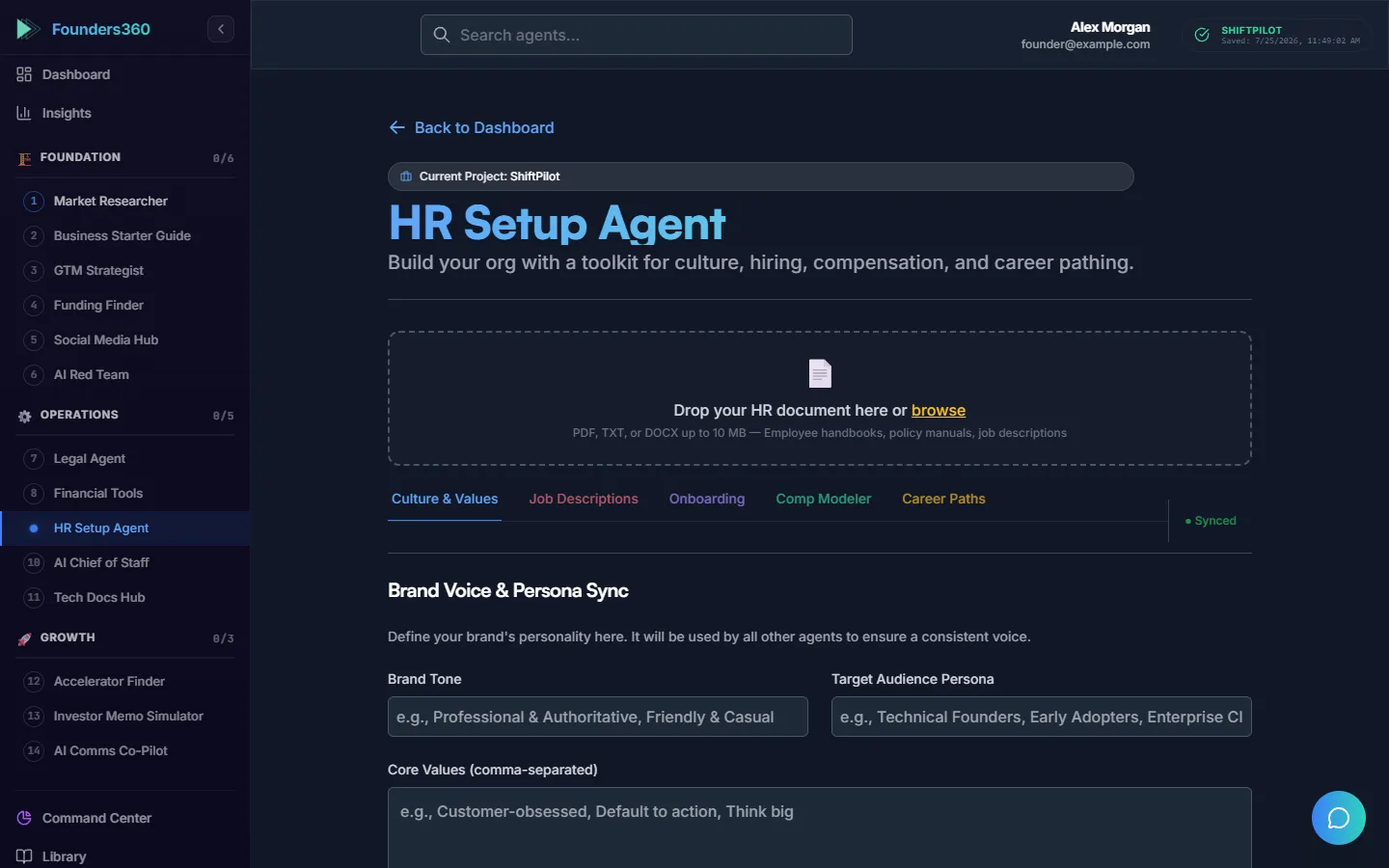
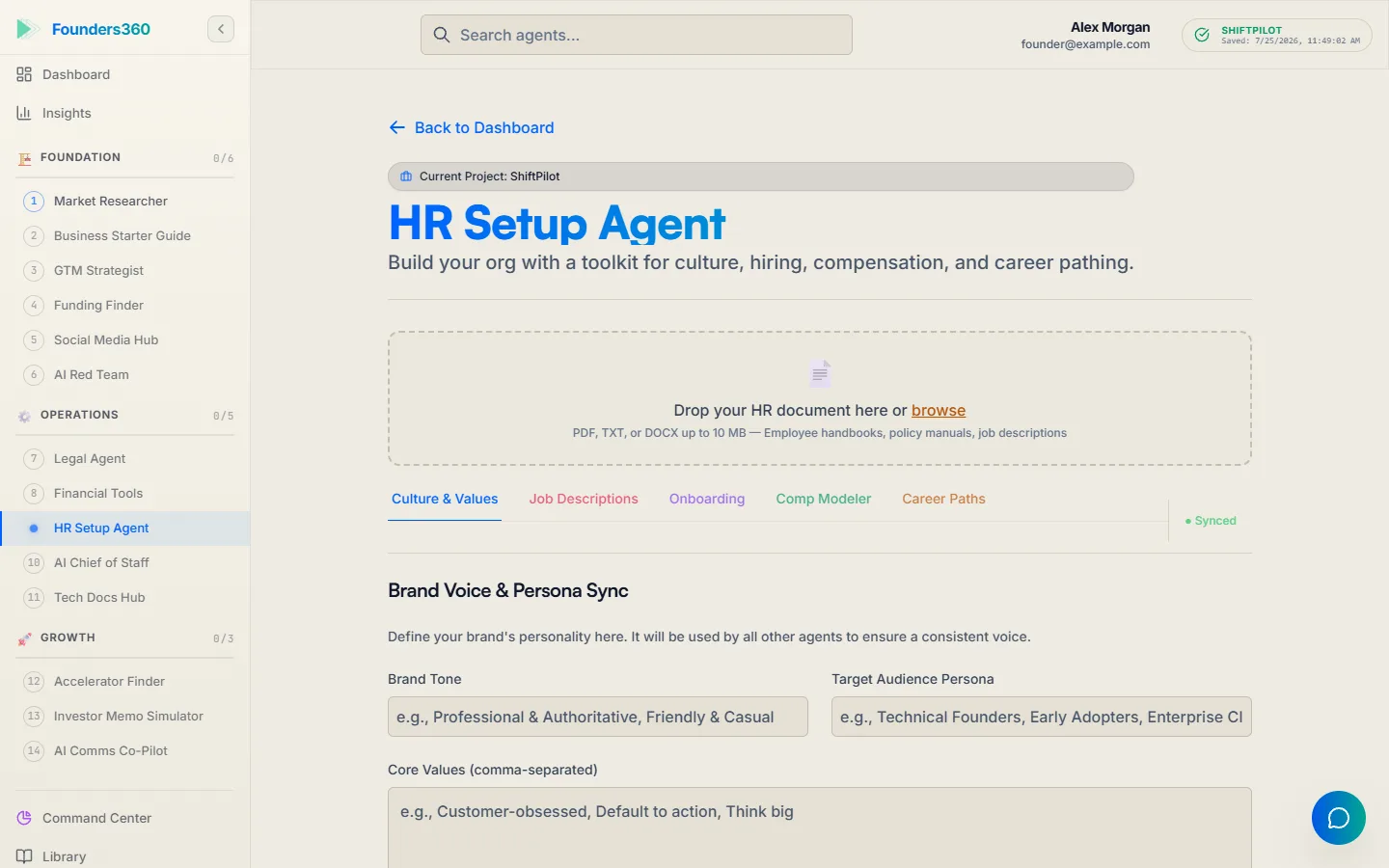
Writing down roles early helps. The HR Setup Agent in Founders360 is one place to start that conversation, although a plain shared document works just as well.
How do you test the fit before you commit?
Run a short trial project with clear goals and a decision date, then decide together. This is the most useful step, and it is also the one people skip.
Y Combinator recommends it directly. Its co-founder matching post encourages founders to "work together on a time-boxed trial project with clear expectations and goals." In another YC post, does co-founder matching work, one pair ran a month-long trial that ended with a go or no-go decision, and the post says the decision was easy.
How to run your own:
- Pick a small, real task. For example, build a landing page, run ten customer interviews or write a first financial plan. It should need both of you.
- Set the time box. Two to four weeks is a reasonable range to try. Agree on hours per week.
- Define success in advance. Write what done looks like and who does what.
- Hold a weekly check-in. Note what went well and what felt hard.
- Decide on a date. Meet, say what you saw, and choose to go ahead, adjust or part as friends.
During the trial, watch for how each person handles three things: deadlines, disagreement and bad news. These show more than any interview.
What questions should you ask before agreeing?
Ask about time, money, roles, conflict and exit before you talk about equity. The same "does co-founder matching work" post describes a pair who both answered all 50 questions in First Round's co-founder questionnaire and found deep alignment on "all the important things", such as conflict resolution and culture. You can use any structured list for the same purpose.
Questions that matter:
- How many hours a week can you give, starting when?
- How long can you go without a salary?
- Who has the final say on product, sales and money?
- What happens if we disagree and cannot settle it?
- What would make you want to leave, and how should we handle that?
- Do you have other commitments, such as another job or another startup?
Write the answers in a shared note. Differences are normal. What matters is that you find them now, and not after you have started to spend money.
How should you split equity and protect yourself?
Agree on a split that reflects the roles and the future commitment, and put vesting in place so ownership is earned over time. Vesting means shares are earned gradually, so a co-founder who leaves early does not walk away with a large share.
Do not settle equity on the first call, and do not leave it until later. Our co-founder agreement and vesting guide covers splits, vesting and the paperwork. For US founders, the 83(b) election explained covers a tax deadline that comes with restricted stock.
A written agreement also helps with the harder topics: what happens if one person stops working, who owns the code and brand, and how you would buy someone out. Have a lawyer review it. This is general information, not legal advice, and the rules differ in the US, Canada, the UK and the UAE.
What are the warning signs that a co-founder is not the right fit?
Walk away, or slow down, if you see vague commitment, pressure to decide quickly, or avoidance of difficult topics. These signs matter more than a polished résumé.
- Unclear hours. They say yes to everything but cannot say when they will start.
- No skin in the game. They want equity now but will not take a trial project.
- Conflict avoidance. They agree in meetings and then do something else.
- Mismatched goals. One wants a quick sale and the other a ten-year company.
- Trouble with feedback. They respond to questions as attacks.
If you spot one, name it in a calm conversation. Sometimes it is a misunderstanding. If it repeats, treat it as an answer.
Keep a simple record of your search: who you spoke to, what you learned and what you decided. It makes the final choice calmer.
Frequently Asked Questions
Where is the best place to find a co-founder?
Start with people you already know and have worked with, because you can see how they behave. Then try matching platforms such as Y Combinator's free co-founder matching, accelerator cohorts and events. No single place is best for everyone.
How long should I know someone before becoming co-founders?
There is no fixed number, but plan for several conversations and a trial project. Y Combinator says deciding whether to co-found with someone will take more than one video call, and it recommends a time-boxed trial project with clear goals.
What is a co-founder trial project?
It is a short, real piece of work that two possible co-founders do together before committing, with set goals and a date to decide. Examples include building a landing page or running customer interviews. It shows how you collaborate under real conditions.
Should a co-founder be technical?
It depends on your gap. In Y Combinator's October 2021 data, 62 percent of founders preferred a co-founder who does engineering, and 68 percent of actual matches paired a technical founder with a non-technical one. Choose the skill you lack, not a label.
When should we talk about equity?
After the trial and the main questions, and before you spend money or quit your job. Use vesting so ownership is earned over time. Our co-founder agreement guide explains how.
Tags
Related Articles
How to Run a Paid B2B Pilot Program That Turns Into a Contract
A paid B2B pilot is a short, limited trial of your product with one customer, with agreed goals and a price, designed to end in a contract. This playbook covers who to pilot with, how to set scope and success criteria, how to price and time it, and how to close the conversion.
9 min readPlaybooksCustomer Discovery Interview Questions and How to Run the Interviews
Good customer discovery interview questions ask about the past, not the future: the last time the problem happened, what it cost, and what the person tried. This playbook gives you a question list, rules for running the conversation, and a way to turn notes into decisions.
9 min readPlaybooksHow to Price Your Product or Service as a New Founder
To price a product or service as a new founder, work out your costs first, then check what customers value and what alternatives charge, pick a starting price, and treat it as a test. This playbook covers the three main methods, tiers and a simple way to test and change prices.
9 min readReady to Build Smarter?
Join thousands of solopreneurs using AI agents to scale their businesses.
Get Started Free