
How to Write a Value Proposition (With a Simple Template)
A value proposition says which customer you serve, which need you meet, and why your offer is better than the alternatives, in one or two plain sentences. This guide shows how to write one in four steps, gives a fill-in template with illustrative examples, and explains how to test it.
By Jay Kambo
A value proposition is a short statement of the value your business creates for a specific customer and why that customer should choose you over the alternatives. If you can say it in one or two plain sentences, a stranger can decide in seconds whether your product is for them. This guide shows how to write a value proposition in four steps, gives you a simple template to fill in, and explains how to test it before you put it on your website.
What is a value proposition?
A value proposition defines the kind of value a company will create for its customers. That is the wording used by Harvard Business School's Institute for Strategy and Competitiveness, which also calls it "the element of strategy that looks outward at customers." In other words, it is about the buyer, not about your features or your history.
The same source says a value proposition answers three questions: which customers you are going to serve, which needs you are going to meet, and what relative price will give customers acceptable value and your company acceptable profit. It adds that your answers must differ from those of your competitors, and that you must be able to explain what makes yours unique.
For a new founder, this gives a useful test. If your statement could be pasted onto a competitor website without anyone noticing, it is not yet a value proposition. It is a slogan.
A value proposition is not the same as a tagline, a mission or a list of features. A tagline is short and catchy, a mission explains why you exist, and features describe what the product does. The value proposition connects them by saying what the customer gets and why it matters. If you want to go further into how to place your product against alternatives, read our guide to writing a startup positioning statement.
Why does a clear value proposition matter?
It helps a visitor decide quickly whether your product is for them, and a visitor who cannot tell will usually leave. The same words guide your website, your sales emails, your pitch and your product decisions, so a vague statement causes vague results everywhere.
A clear value proposition also forces choices. To write one you have to pick a customer, which means leaving others out. You have to pick a need, which means saying no to others. Founders often resist this because they fear losing buyers, but a statement that tries to speak to everyone usually speaks to no one.
It also helps your team and anyone who works with you. When a freelancer, an advisor or a new hire asks what you do, one shared answer saves many conversations. And it gives you a standard for deciding what to build: if a feature does not support the promise, it can wait.
How do I write a value proposition in four steps?
Pick one customer, name their problem in their words, describe the result you deliver, and say why you are different. Work through the steps in order, and write rough answers before polishing anything.
- Pick one customer. Be specific about who they are. "Owners of small bookkeeping firms with fewer than ten staff" is a customer. "Businesses" is not. If you have several groups, choose the one that feels the pain most and write a separate statement for the others later.
- Name the problem in their words. Use phrases from real conversations, not marketing language. If you have not spoken to customers yet, do that first. Our guide to defining an ideal customer profile helps you describe who to talk to.
- Describe the result you deliver. Say what changes for the customer: time saved, money earned, risk reduced, or a task they no longer have to do. Prefer a result they can picture over a general claim such as "better" or "smarter."
- Say why you are different. Compare yourself with what the customer does today, including spreadsheets, doing nothing or hiring someone, and not only with named competitors. Pick the difference that matters most to them, not the one you are proudest of.
A useful check at each step is to ask whether the customer would say yes to it. If a sentence is true but the customer does not care, remove it.
What is a simple value proposition template?
Use this fill-in-the-blank structure and then smooth the wording into natural speech. It is a basic template of our own, built from the three questions above, and you can change the order to suit you.
For [specific customer] who [problem or need in their words], [product name] is a [category] that [main result]. Unlike [what they use now], we [main difference].
A shorter version for a website headline and sub-heading:
Headline: the result the customer gets, in plain words. Sub-heading: who it is for and how it works, in one sentence. Three bullets: the proof or the main benefits, each with a concrete detail.
Here is an illustrative example, with an invented business, to show the shape. A bookkeeping firm for dentists might write: "For dental practice owners who dread month-end paperwork, Clear Ledger is a bookkeeping service that delivers finished monthly accounts within five working days. Unlike general accountants, we only work with dental practices, so we already know your costs and your tax categories." The business, the promise and the timeline in that example are made up for teaching, and your own promise must be one you can actually keep.
Notice what the example avoids: it does not say "best," "innovative" or "world-class," and it names a real customer, a real result and a real difference.
How can the value proposition canvas help?
The value proposition canvas helps you check that what you offer matches what a customer needs, one segment at a time. Strategyzer describes the canvas as a way to map one customer segment and design an offer that fits it.
It has two sides. The customer profile lists the jobs customers are trying to get done, the pains they hit along the way, and the gains they are after. The value map lists what you offer, how it relieves the pains, and how it creates the gains. Strategyzer asks you to draw the matches between the two sides and test them against evidence, and states that "fit is a claim until customers confirm it."
That last point matters. A canvas filled in alone at your desk is a set of guesses. Draw it, then test it in conversations, and change it when customers disagree. If you prefer a single-page business plan to a segment-level canvas, our comparison of the Lean Canvas and the Business Model Canvas shows where a value proposition sits in each.
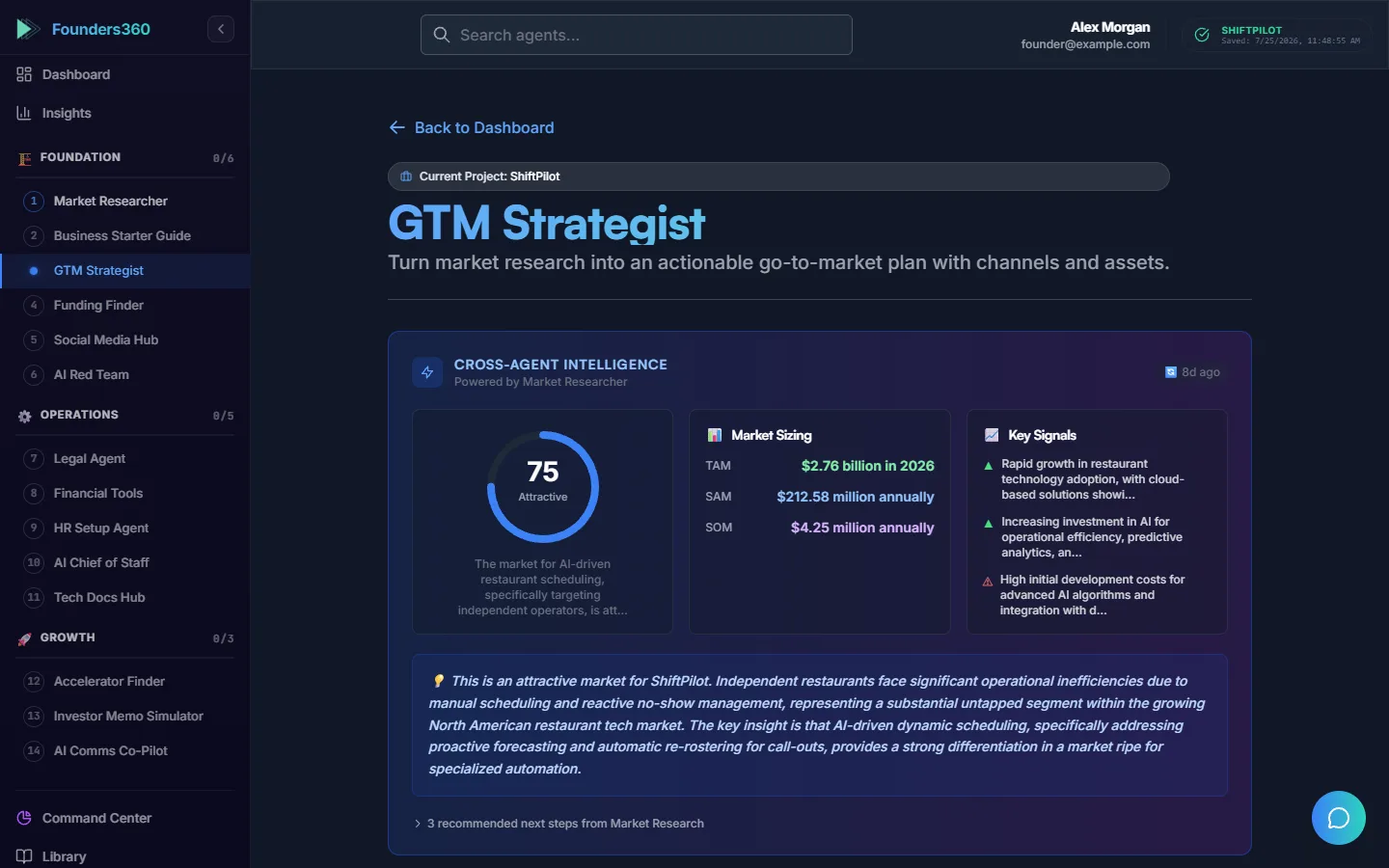
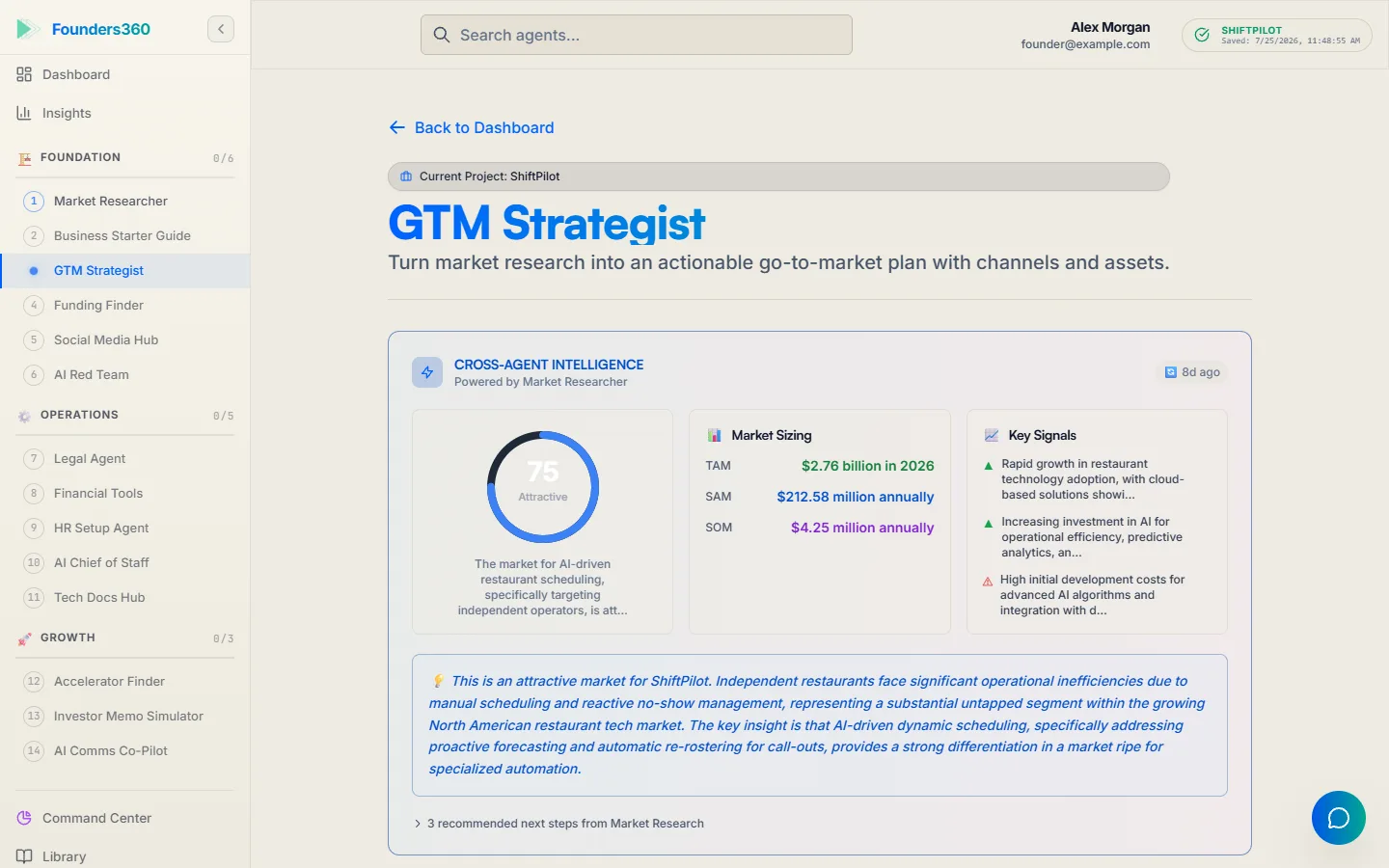
The Founders360 GTM Strategist agent can help you think through go-to-market questions. Take anything it suggests into interviews and revise it with what you hear.
How do I test and improve my value proposition?
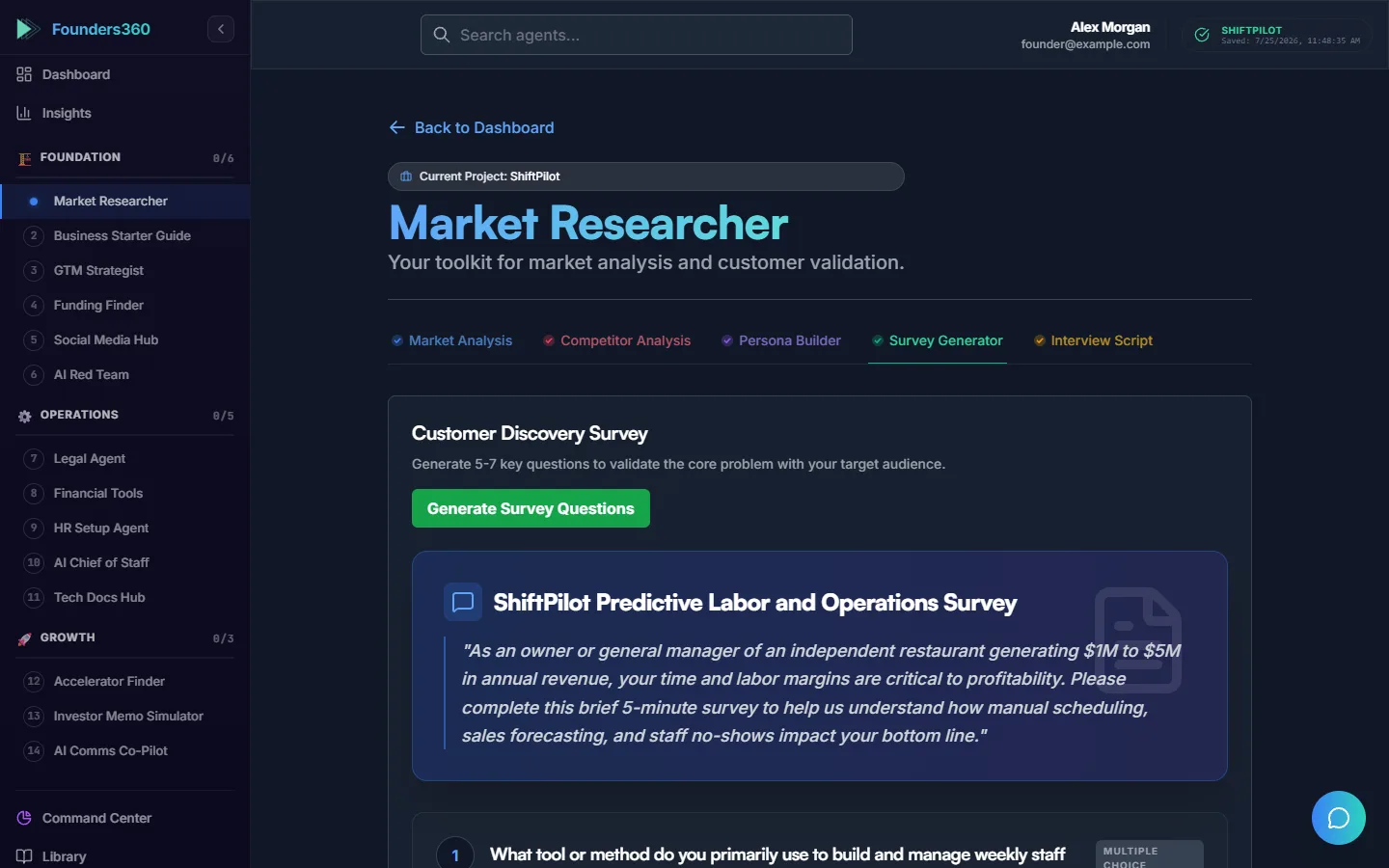
Say it to real customers and watch whether they understand it, lean in and ask a follow-up question. A statement that reads well to you may confuse a stranger, so test it on people in your target segment.
Simple tests you can run this week:
- The five-second test. Show a page with your headline and sub-heading to someone in your target group for a few seconds, then hide it and ask what the product does and who it is for. If they cannot say, simplify.
- The competitor swap. Replace your name with a competitor name. If the statement still works, add a detail only you can claim.
- The call test. Use the statement to open sales or discovery calls and note which words make people nod and which make them ask what you mean.
- The proof test. For every claim, ask what evidence you have. If the claim is not supported yet, soften it or collect proof first, for example from a small pilot.
Keep the words your customers use back to you. When someone says "so it is basically a way to stop chasing invoices," that sentence is probably better than yours. Update the statement as you learn, and date each version so you can see what changed. Where you are researching the competitor side of the picture, a tool from our list of the best AI market research tools for startups can speed up the first pass, though you still need real conversations to confirm what buyers care about.
What mistakes make a value proposition weak?
The usual mistakes are speaking to everyone, listing features instead of results, and using words that mean nothing. Check your draft against this list.
- Too broad. "For businesses of all sizes" gives the reader no reason to think it is for them.
- Features, not results. "Cloud-based dashboard with real-time reports" describes the product. "Know your cash position before you pay anyone" describes the result.
- Empty claims. Words such as "leading," "seamless" and "powerful" tell the reader nothing. Replace them with a number, a time or a named outcome you can support.
- Not different. If a competitor could say the same, you have not yet found your edge.
- Too long. If you cannot say it in two sentences, you probably have more than one idea. Split them and test each one.
- Promises you cannot keep. A bold claim that your product cannot deliver costs you trust and refunds. Make a smaller promise and exceed it.
Frequently Asked Questions
What is the difference between a value proposition and a tagline?
A value proposition explains who you serve, what need you meet and why you are better than the alternatives. A tagline is a short, memorable phrase for branding. You can build a tagline from your value proposition, but it does not replace it.
How long should a value proposition be?
One or two sentences for the core statement, plus a few supporting bullets on a website if you need them. If it takes a paragraph to explain, it is not yet clear enough.
Can a startup have more than one value proposition?
Yes, if you serve more than one type of customer, since each group has different needs. Write a separate statement for each and start with the group that matters most. Strategyzer advises mapping one customer segment at a time.
How do I write a value proposition before I have customers?
Start from interviews with people who have the problem, and write a first draft from what they tell you. Label it as a hypothesis and test it. Do not wait for sales before you start, because the testing is how you find out what the right words are.
Is a unique value proposition the same as a value proposition?
The terms are used almost interchangeably. Harvard Business School's strategy institute stresses that your answers must differ from those of your competitors, which is the idea behind the word unique. The difference is where the uniqueness comes from: a particular customer, a particular need or a particular way of delivering it.
Tags
Related Articles
Privacy Policy and Terms of Service for Startups: What Each One Must Cover
A privacy policy tells people what data you collect and why, while terms of service set the rules for using your product. This guide explains what each document should cover for a startup website or app, and the basics of GDPR, CCPA and PIPEDA.
9 min readGuidesBreak-Even Analysis for Startups: How to Calculate Your Break-Even Point
Your break-even point is the amount you must sell before revenue covers all of your costs. This guide gives the formula, a step-by-step worked example with illustrative numbers, and shows how changes in price, cost and target profit move the result, so you can set realistic sales goals.
7 min readGuidesCompetitor Analysis for Startups: How to Do One, With a Template
A competitor analysis lists who your customers could choose instead of you, records what each offers, charges and does badly, and shows where you can win. This guide gives a seven-step method, a template table to copy, and advice on where to find reliable information.
8 min readReady to Build Smarter?
Join thousands of solopreneurs using AI agents to scale their businesses.
Get Started Free